

Searching with flexible dates, using calendars, date grids, and plus or minus day windows, is one of the fastest ways to cut airfare costs. Instead of pricing one fixed itinerary, you compare a whole range of departure and return days at once, which usually surfaces fares that are meaningfully cheaper than the date you’d have picked by default. Tools like Google Flights’ date grid, price graph, and Explore map, plus airline low fare calendars, make this possible in a few clicks. The catch: it works best when your travel window has some give, and it does almost nothing for fixed events or sold-out peak dates.
TL;DR:
- Flexible date searches work best when your travel schedule has some flexibility, especially for off-peak or shoulder days.
- Using a date grid or price graph helps identify the cheapest departure and return combinations within a broad range of dates.
- Running searches early in the week and monitoring fare changes can lead to deeper discounts, especially on low-demand days.
- Booking two one-way tickets or checking alternative airports can occasionally yield significant savings over standard round-trip fares.
- Peak seasons and sold-out flights limit the effectiveness of flexible date searches, making fixed plans more practical during busy times.
Table of Contents
- How Does Flexible Date Flight Search Work?
- Where Can You Search for Flexible Flight Dates?
- What’s the Best Workflow for Booking Flexible Flights?
- Which Advanced Tactics Unlock Bigger Savings?
- When Won’t Flexible Dates Save You Money?
- Should You Search Flexible or Lock In Your Dates?
- Book Flexible Date Flights Through Global Holiday Planner
- Sources
- FAQ
How Does Flexible Date Flight Search Work?
Airfares aren’t static. They shift by day, sometimes by triple digits, based on demand, competing sales, and how full a specific flight already is. A date grid takes that chaos and lays it out visually, usually as a matrix of departure dates across the top and return dates down the side, with a price in every box. Scan the grid and the cheapest combination jumps out immediately, often a Tuesday departure paired with a Wednesday return instead of the Friday to Sunday trip you originally typed in.
The price graph does something similar but as a timeline. It plots fares across several weeks so you can see the dips and spikes at a glance, which is useful when you know the month you want to travel but not the exact days.
Duration ranges add another layer of control. Rather than locking in a 7 night trip, entering a range like 7 to 9 nights tells the search tool to check every combination inside that window and show you the cheapest one. Entering zero in the duration field tells the tool you want a same-day round trip, which is handy for quick business hops or day trips.
A few things to keep in mind as you read these grids:
- Weekend shortcuts (often a toggle for “weekend” trips) auto-fill typical Friday to Sunday or Saturday to Monday combinations.
- Green or shaded boxes usually flag some of the lower fares in the grid, not necessarily the absolute cheapest fare available across the whole calendar.
- A displayed fare on the grid may no longer be available once you click through, especially with budget carriers that price basic economy separately from bags and seat selection.
Pro Tip: *Before you fall in love with a fare, check whether it’s refundable.
Where Can You Search for Flexible Flight Dates?
Not every booking site handles date flexibility the same way, and picking the right tool for the job saves real time.
Google Flights is the strongest all-around option for flexible-date searching. Its date grid and price graph work globally, and its Explore mode lets you leave the destination blank, drop a pin on a map, and see the cheapest fares to dozens of cities within your date window. It’s also the easiest tool for setting up ongoing price tracking once you’ve found a range you like.
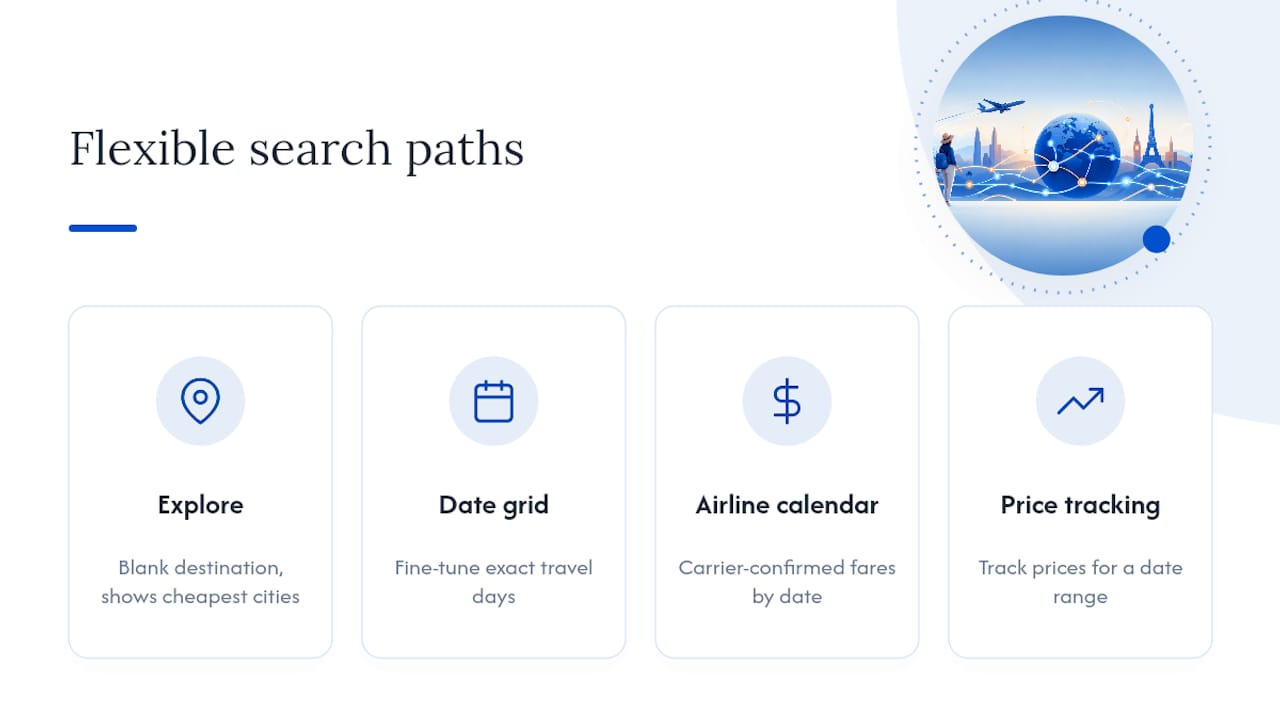
Airline low fare calendars are worth a separate check, even after you’ve used a metasearch tool. The Southwest Low Fare Calendar is a good example: it shows carrier-confirmed seat availability by date, which sometimes reveals a sale that hasn’t fully propagated to third-party search engines yet. Because it comes straight from the airline, the fare you see is the fare you can actually book, not an estimate.
For pure inspiration, an “Anywhere” or map-based search beats a route-specific one. If you’re flexible on both dates and destination, this is where you’ll find the surprising fares, a random Tuesday in March priced far below your assumptions.
Pro Tip: Use Explore mode first to find a cheap window and destination, then switch to a route-specific date grid to fine-tune the exact days once you’ve picked a place.
If your idea of flexible travel extends beyond flights, into multi-day tours or packaged trips, broader flexibility strategies apply the same logic to itineraries, not just airfare.
What’s the Best Workflow for Booking Flexible Flights?
A good flexible-date search follows a sequence. Skip steps and you’ll either waste time or miss the cheapest combination sitting one day away from what you searched.
- Decide how much flexibility you actually have. A weekend trip usually means a 2 to 3 night range. A weeklong vacation means 7 to 9 nights. A business day trip means entering zero for same-day travel.
- Start broad if you’re not set on a destination. Run an Explore or Anywhere search across your date window to see which cities are cheapest to reach right now.
- Narrow to a date grid once you have a route. If you already know where you’re going, skip straight to the date grid for that specific city pair and scan for the lowest combination.
- Test plus or minus day combinations manually. Even a strong date grid can miss a fare if a sale posted in the last hour. Shift your search a day or two in each direction before committing.
- Check one-way pricing separately. Booking two one-way tickets on different carriers is occasionally cheaper than a round trip, especially on routes with multiple budget airlines competing.
- Compare alternate airports. If your city has more than one airport, or a nearby city does, run the same date grid against that second airport code.
- Set a price alert and wait if you can. Once you’ve found a promising range, track it for a few days before booking rather than grabbing the first decent number you see.
- Read the fare rules before you pay. Confirm whether the ticket is refundable, what the change fee looks like, and whether a basic economy fare blocks a seat assignment or carry-on bag.
Pro Tip: Run your search on a weekday morning if you can. Airline pricing systems tend to update overnight, and a lot of sale fares get released early in the week before demand catches up.
This sequence takes maybe 15 minutes once you’ve done it a couple of times, and it’s the difference between booking the first fare you see and booking the fare that was actually available that week.
Which Advanced Tactics Unlock Bigger Savings?
Once you’ve mastered the basic date grid, a few higher-effort tactics can squeeze out more savings, though each comes with a trade-off worth understanding before you commit.
- Alternate airports and multi-city searches. Flying into a secondary airport 60 to 90 minutes from your actual destination can undercut the main airport fare by a wide margin, particularly on routes served by low-cost carriers.
- Split-ticketing. Booking two separate one-way tickets, sometimes on different airlines, occasionally beats a single round-trip fare. The risk: if your first flight is delayed or canceled, the airline has no obligation to protect your second, unconnected ticket.
- Midweek and red-eye departures. Tuesday, Wednesday, and red-eye flights consistently price lower than Friday evening or Sunday afternoon departures, since business travelers dominate those peak windows and leisure travelers can dodge them.
- Factoring in ancillary fees. A $180 basic economy fare with a $35 bag fee and a $25 seat selection fee isn’t actually $180. Always add the fees you know you’ll pay before comparing it against a pricier fare that already includes a bag.
Longer routings with a connection can sometimes undercut a nonstop fare, but it’s worth weighing that against the added travel time and, for some travelers, the environmental cost of an extra takeoff and landing, a trade-off that aviation and government transport bodies have started publishing clearer methodology around.
For a deeper set of tactics beyond date flexibility alone, from booking windows to loyalty tricks, these insider flight tips round out the picture.
When Won’t Flexible Dates Save You Money?
Flexible-date search has real limits, and knowing them saves you from chasing a discount that isn’t there.
- Peak season and major events. If everyone else wants the same dates you do, whether it’s a holiday week or a city hosting a major event, the whole calendar can be uniformly expensive with no cheap days to find.
- Sold-out inventory. A date grid can only show prices for seats that still exist. Once a flight sells out, flexibility can’t conjure a seat that isn’t there.
- Minimum-stay and overnight-connection rules. Some cheap fares require a minimum stay or route you through an overnight layover. Read the itinerary details, not just the headline price.
- Flexible tickets are a different thing entirely. A “flexible fare” is a ticket type that lets you change your travel dates after booking, usually for a fee premium. That’s not the same as a flexible-date search, which just helps you find the cheapest dates before you buy.
Should You Search Flexible or Lock In Your Dates?
If price is the priority and your calendar has any give at all, run the flexible search every time. It costs you nothing but a few extra minutes, and the savings usually justify it. Fix your dates only when you’re booking around a wedding, a conference, or another commitment with zero wiggle room. Pair flexible searching with a price alert and a firm decision window, so a good fare doesn’t slip past you while you’re still comparing.
— Global
Book Flexible Date Flights Through Global Holiday Planner
Running a date grid search is only half the job. Booking it fast, before the fare moves, is the other half. Global Holiday Planner’s flight search compares options across airlines side by side, so once your flexible-date search turns up a promising window, you can check the real total cost, not just the headline fare, in one place instead of bouncing between five browser tabs.

The platform is designed to support different trip scenarios, from last-minute getaways to extended vacations with flexible dates, aiming to offer competitive pricing without extensive searching. If a flexible search turns up a great fare to somewhere you hadn’t considered, the platform’s budget destination guides can help you figure out what to do once you land. Once you’ve locked in a date range that works, head to the flights page and run your search there to compare fares and book before the price changes.
Sources
- Search with flexible travel dates – Google Help
- Find Cheap Flights Worldwide & Book Your Ticket – Google Flights
- Southwest Low Fare Calendar | Southwest Airlines
FAQ
What Does “Flexible Date Flight” Mean?
A flexible date flight search means checking fares across a range of possible departure and return days instead of one fixed pair of dates. It usually surfaces cheaper combinations than a single fixed search, since airfare shifts by day based on demand.
Which Airlines Offer Fully Flexible Flights?
Most major airlines and low-cost carriers offer a fully flexible fare class, typically the top economy tier or business class, that allows date changes without a change fee. This is different from a flexible-date search tool, which finds the cheapest dates before you book rather than letting you change dates after.
How Do You Search for Flexible Flight Dates?
Use a date grid or price graph, available on Google Flights, and enter a duration range like 7 to 9 nights instead of a fixed number. You can also check an airline’s own low fare calendar to confirm the fare is actually bookable at that price.
Can Global Holiday Planner Help Me Book Flexible Date Flights?
Yes. Global Holiday Planner’s flight search tool lets you compare fares across airlines once your flexible-date search has narrowed down a good window, so you can book the real total cost quickly instead of comparing multiple sites manually.