
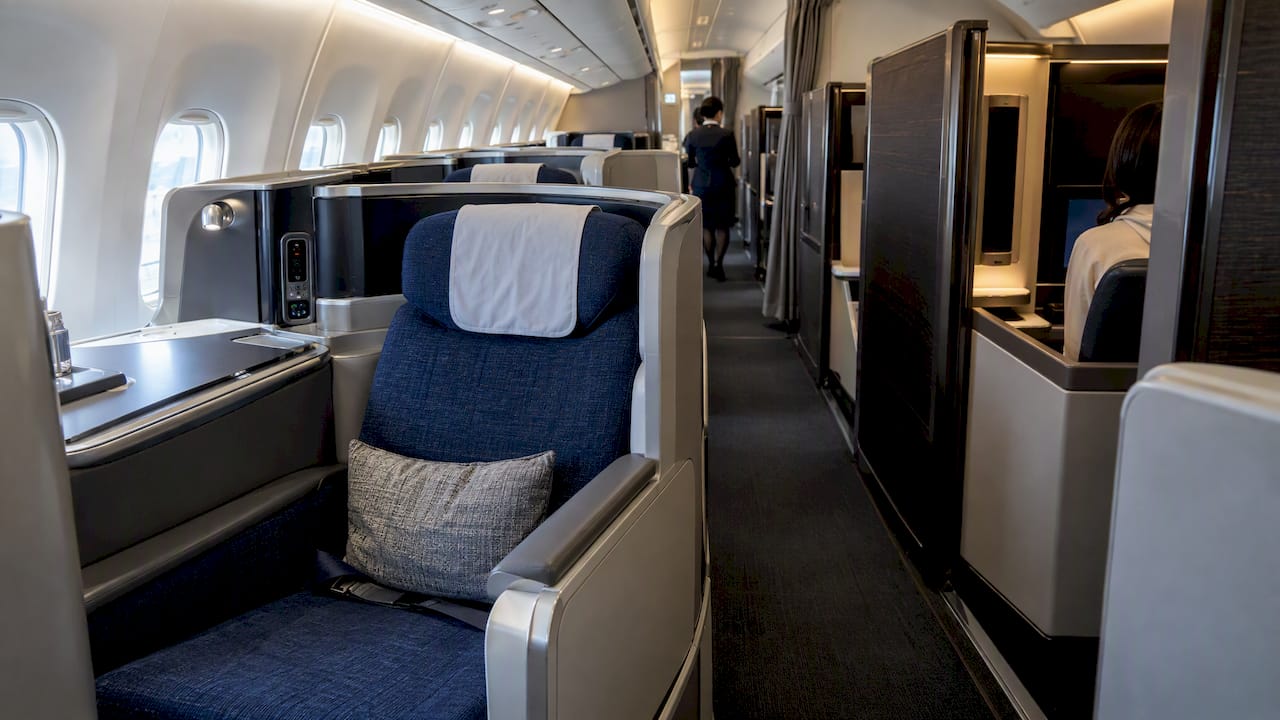
First class is the more private, more personalized cabin, with fewer seats, more crew attention and better ground service. Business class is the cabin most travelers should actually buy: a lie-flat seat on long-haul flights at a smaller premium. But the labels are unreliable. On a US domestic flight, “first class” is usually a wide recliner, and on many international routes the best seat on the plane is now sold as business class. The class name tells you less than the aircraft and seat map do.
Below we break down where the two cabins really differ, when the jump is worth the money, and how to check a specific flight before you pay.
TL;DR
- International first class beats business on privacy, on-demand dining and ground service, but the gap is smaller than the gap between economy and business.
- On US domestic flights, “first class” is a different product from international first, and it often sits below long-haul business class.
- Airlines are phasing out international first in favor of suite-style business seats, so research the aircraft, not the label.
- For most trips business class is the sweet spot. First class makes sense as a milestone purchase or when miles cover most of the cost.
- Awarding yourself a ticket with miles usually beats buying economy and hoping for an upgrade.
Table of Contents
- The short answer: what separates the two cabins
- Why the label misleads: domestic vs international
- Business class benefits: what the extra money buys over economy
- First class benefits: where it pulls ahead
- Is first class worth it?
- Worked example: how to compare two fares properly
- How to pay less for either cabin
- Our perspective
- Compare cabins on your actual route
- FAQ
- Sources
The short answer: what separates the two cabins
Both are premium cabins, but they can offer different experiences and seats depending on the airline, as NerdWallet’s guide to premium cabins points out. There is no industry standard that says a first class seat must be better than a business class seat. What you can say in general:
| Business class | First class | |
|---|---|---|
| Seat (long-haul) | Usually lie-flat, often with direct aisle access | Lie-flat, frequently an enclosed suite with more space |
| Cabin size | Larger cabin, more passengers | Cabins of only 4 to 6 seats on some aircraft, so more privacy |
| Dining | Scheduled meal service | Often on-demand, with a higher crew-to-passenger ratio |
| Airport | Priority services and business lounges | May include dedicated escorts and higher-end lounges with spa or dining features |
| Price | Large premium over economy | Higher again, often by a wide margin |
| Availability | Offered on most long-haul routes | Offered by fewer airlines, and fewer every year |
The first-class advantages in the table, from the dedicated airport escort to the on-demand dining and the smaller cabin, come from Condé Nast Traveler’s comparison. They vary by airline, so treat them as typical rather than guaranteed.
Why the label misleads: domestic vs international
This is the single biggest source of confusion. Condé Nast Traveler notes that first class on domestic US flights can look completely different from the over-the-top international cabins, especially in Asia or the Middle East. Travel + Leisure puts it plainly: domestic first offers an experience similar to premium economy, while international first is in another league.
Two practical consequences:
- A domestic first class fare does not buy you a bed. On most US domestic flights the seat is a large recliner, as USA Today’s cabin explainer describes. Expect more legroom and better snacks, not a suite.
- You will rarely see both classes on the same domestic plane. Forbes Advisor notes that, usually, only an international flight offers first and business on the same aircraft, with American Airlines Flagship flights the domestic exception.
So if you are comparing a transcontinental “first” fare with a transatlantic “business” fare, you are not comparing a better cabin with a worse one. You are comparing two different products that happen to share a vocabulary.
Business class benefits: what the extra money buys over economy
Compared to economy, business class typically features amenity kits, better meal service and lie-flat seats. In practice the benefits that matter most are:
- Sleep. On an overnight flight, a lie-flat seat is the difference between arriving functional and arriving wrecked. Yes, you can sleep properly in a business class seat when it is a flat-bed model. On short-haul or older aircraft with angled seats, it is much less comfortable, so check the seat type.
- Space to work. For a corporate traveler, arriving ready for a meeting is a business need rather than a luxury, a point made in Million Mile Secrets’ worth-it analysis. A table, power and quiet matter.
- Ground time. Priority check-in, lounge access and early boarding take the friction out of the part of the trip that most often goes wrong.
- Food that suits the day. If you are on a work trip, planning your meals around the schedule helps too. This business travel meal planning guide covers eating well around long travel days and meetings.
If you travel for work often, our business travel booking tips cover how to save money and avoid delays on the whole itinerary, not just the seat.
First class benefits: where it pulls ahead
When an airline still sells a true international first class, the extras are real, though they are about privacy and personalization more than raw comfort:
- A smaller cabin. Some first class cabins have only 4 to 6 seats, per Condé Nast Traveler, so the cabin is quieter and calmer.
- More crew per passenger. That allows meals when you want them rather than on a fixed cart schedule.
- Better ground experience. Dedicated airport escorts and exclusive lounges, sometimes with spa or dining features that business class does not get, are common first class perks.
- More space. An enclosed suite or a larger private seat, depending on the aircraft.
There is a ceiling, though. Simple Flying observes that airlines can only do so much beyond a spacious seat or flat bed, a big screen and room to dine. Once the bed is flat, what first class adds is service and privacy, which is why the jump from business to first is usually smaller than the jump from economy to business.
Is first class worth it?
It depends on the purpose of the trip, and experts say as much. For business travelers, a lie-flat seat can be a necessity. For leisure travelers, first class is better seen as a milestone purchase that sets the mood for a special occasion rather than a standard travel utility.
A simple way to decide:
- Buy business class if you need to sleep, work or land fresh and the fare difference to first is large. For most premium travelers it is the sweet spot.
- Buy first class if the trip is the occasion (an anniversary, a honeymoon, a once-in-a-lifetime route), if the price gap is small, or if miles cover most of the cost.
- Skip both if your trip is under about five hours or you are cost-driven. A cheaper step up may be enough: our guide on premium economy vs economy shows when a roughly 50% fare increase pays off.
If the occasion is a celebratory trip to the islands, this look at flying first class to Hawaii for less is worth a read before you price it up.
Worked example: how to compare two fares properly
Say you are offered two options for a long-haul trip: a business fare on Airline A and a first fare on Airline B. Do not compare the names. Compare these five things:
- Aircraft type and seat model. Look up the seat map for the exact flight. Airline A’s flagship business seat may beat Airline B’s older first class, as Simple Flying notes in discussing how airline products vary.
- Seat configuration. Is it lie-flat, does it have direct aisle access, and is it in a suite or an open cabin?
- Ground services. Which lounge, and is the first class lounge a separate one?
- Total price including fees. Add taxes, carrier charges and any seat selection cost.
- Your flexibility. Refundable or changeable fares cost more. Check what you actually get.
This approach follows the advice of travel experts such as Katy Nastro, quoted by Travel + Leisure: research the specific aircraft and seat map rather than relying on the class name. Airlines are phasing out international first class in favor of suite-style business class, so the best seat may carry the business label.
How to pay less for either cabin
Use miles for an award ticket, not an upgrade
Buying an economy ticket and upgrading with miles is often a losing strategy. Policies have become restrictive, and you may need an expensive full-fare ticket or a cash co-pay. View from the Wing recommends booking an award ticket directly instead, a piece written in 2014 that still reflects how the logic works for most travelers. Check the current rules of your own program before you plan around it.
Look at partner airlines
Redeeming miles for partner airline business or first class often delivers more value than redeeming them on the airline’s own flights. The Miles Market cites values of 2 to 5 cents per point on partner premium cabins, against 1.2 to 1.5 cents for typical economy redemptions. For example, Prince of Travel’s Virgin Atlantic guide lists one-way ANA awards at 52,500 Virgin Points in business and 72,500 in first on the region it describes. Charts change, so confirm before you transfer points.
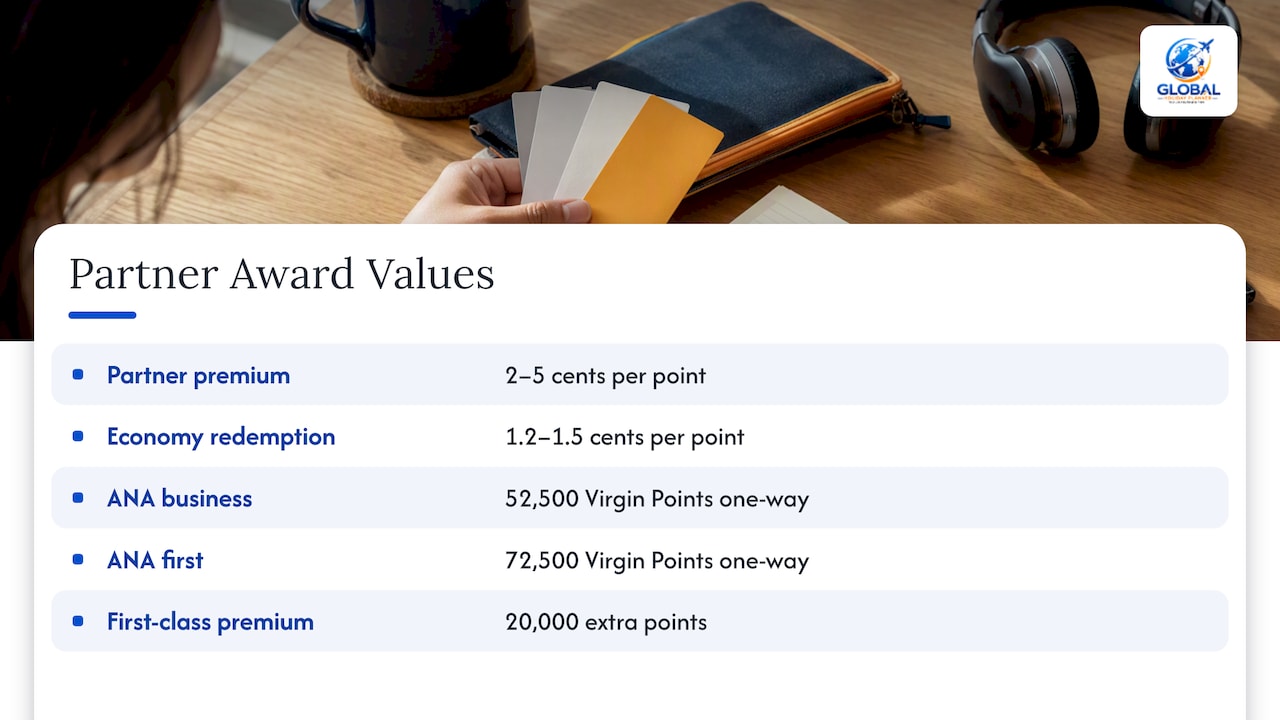
That chart shows why first can be tempting on miles: 20,000 extra points for a much better product. When cash prices have a far wider gap, first on points can be better value than first on a credit card.
Bid, buy up or book flexible
If you do not have miles, you have other levers. Our guide to upgrade bidding explains when bidding 20 to 40% above your fare beats buying up at the airport. Flexible dates can also shift premium fares noticeably, so try our date grid method for flexible-date flights.
Our perspective

We compare flights for a living, and the pattern we see is that travelers shop by cabin name when they should shop by seat. A business class fare on a modern aircraft with a flat bed and aisle access is often a better buy than a first class fare on an older plane. A domestic “first” fare is a different thing altogether.
Our view is this: decide what the trip needs. If it needs sleep and an arrival-ready day, business class does the job. If the journey is part of the celebration, first class can earn its price. Then compare real itineraries side by side, including the full cost with fees, rather than the marketing name. That is how we build our comparisons, and why we suggest checking the aircraft before you click buy.
— Global
Compare cabins on your actual route
Our flight search lets you compare fares across airlines for your dates in one place, so you can see how premium cabin prices stack up against economy and premium economy before you decide. If your trip also involves a hotel or ground transfer, you can book an airport transfer to complete the arrival.
FAQ
Is first class worth it over business class?
Usually not on price alone. The jump from business to first is typically smaller than from economy to business, so business class is the sweet spot for most travelers. First class is worth considering for a special occasion, when the fare gap is small, or when you are paying with miles.
Can you sleep in a business class seat?
Yes, if the seat is lie-flat, which is standard on most modern long-haul business cabins. Seats on short-haul flights and older aircraft may only recline, so check the seat type for your specific flight before you book.
Is first class on a domestic US flight the same as international first class?
No. Domestic first class is generally a larger recliner seat, closer to premium economy in experience according to Travel + Leisure. International first class can offer suites, on-demand dining and dedicated ground service.
Should I buy economy and upgrade with miles?
Often no. Upgrade rules tend to be restrictive and may demand expensive tickets or cash co-pays. Booking an award ticket directly is usually the better route, but check your own airline program’s current terms.
Sources
- Business Class vs. First Class: What’s the Difference? | Condé Nast Traveler
- Business Class vs. First Class: Key Differences and Booking Tips | Travel + Leisure
- The Guide to Business & First Class Flights | NerdWallet
- Understanding premium economy, business and first class | USA Today
- First Class vs. Business Class | Forbes Advisor
- Flying First Class? Is It Worth The High Price? | Simple Flying
- Is First Class Worth the Cost? | Million Mile Secrets
- Should I Book an Award Ticket, or Buy a Ticket and Upgrade With Miles? | View from the Wing
- How to Redeem Airline Miles in 2026 | The Miles Market
- The Essential Guide to Virgin Atlantic Flying Club | Prince of Travel