
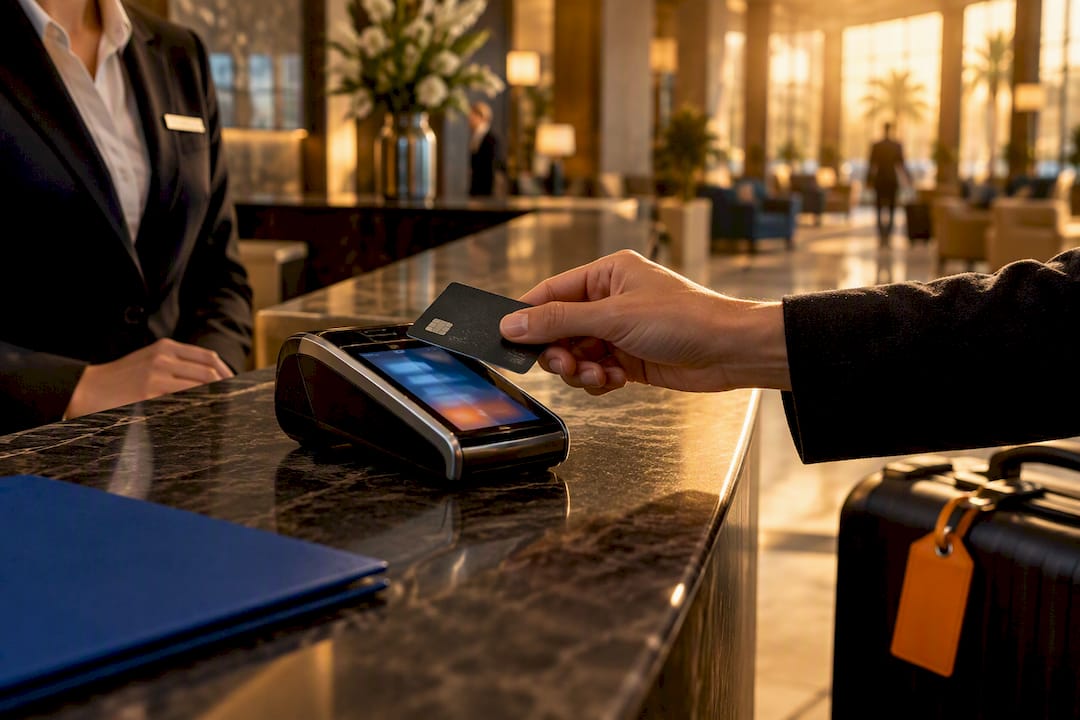
For most trips with any uncertainty, pay at the hotel. Prepay only when your dates are locked and the discount is real money, not a rounding error. The trade-off comes down to three things: flexibility, the size of the prepaid discount, and currency risk. Watch for nonrefundable fine print, pre-authorization holds on your card, and dynamic currency conversion at checkout. Global Holiday Planner lets you compare both rate types side by side before you commit.
TL;DR:
- Prepaying is beneficial only when your travel dates are fixed and the discount exceeds 10-20 percent; otherwise, flexibility often outweighs savings.
- Nonrefundable prepaid rates can lead to total loss if plans change, and refunds may take 5 to 10 business days or longer if booked through a platform.
- Paying at the hotel allows for cancellation flexibility and avoids locking in exchange rates, but may result in higher prices and pre-authorization holds.
- Always check the merchant of record and cancellation policies before booking to prevent unexpected charges or disputes at check-in.
- Comparing live rates and terms side by side helps identify the truly cheapest and most flexible option for your specific trip.
Table of Contents
- Pay At Hotel vs Prepaid: A Quick Decision Checklist
- Pros and Cons of Prepaid (Pay Now) Bookings
- Pros and Cons of Pay at Hotel (Pay Later) Bookings
- How Do You Avoid Payment Surprises at Check-In?
- Which Payment Option Fits Your Trip Type?
- How Hotel Payment Processing Actually Works
- Why We Recommend Comparing Rate Rules Before You Book
- Compare Rates and Book With Confidence
- Sources
- FAQ
Pay At Hotel vs Prepaid: A Quick Decision Checklist
Five factors decide this, and most travelers only think about the first one.
- Certainty of travel dates. If there’s any real chance you’ll change plans, that uncertainty has a price, and it usually costs more than the prepaid discount saves.
- Size of the discount. Prepaid hotel rates typically run 10 to 20 percent cheaper than pay-later rates for the same room.
- Refundability. Some prepaid rates allow free cancellation up to 24 or 48 hours out. Others are locked the moment you pay.
- Merchant of record. Know whether you’re paying the hotel directly or a booking platform, since that determines who issues your refund.
- Currency exposure. Booking in a foreign currency months ahead locks in today’s exchange rate, for better or worse.
Here’s the simple math: treat the discount as the price of giving up your option to cancel. If there’s a 15% chance you’ll need to change the booking and the prepaid discount is only 10%, pay at the hotel. If the discount is 20% and you’re certain about your dates, prepay. When the discount percentage is smaller than your honest cancellation odds, flexibility wins every time.
Pros and Cons of Prepaid (Pay Now) Bookings
Prepaid means your card gets charged the moment you confirm the reservation. The booking platform or hotel becomes the merchant of record right then, which matters later if something goes wrong and you need a refund.
What you gain:
- A lower headline price, often 10 to 20 percent below the pay-later rate for the same room
- A locked rate, so price swings between booking and arrival don’t touch you
- A faster checkout with one transaction instead of a card held in reserve
What you risk:
- Many prepaid rates are fully nonrefundable, meaning a canceled trip means a lost payment
- Refunds on eligible cancellations can take 5 to 10 business days to post, longer if the merchant of record is an online travel agency working through a full billing cycle
- If the same room drops in price later, you can’t rebook at the lower rate. You already paid.
- Booking in a foreign currency locks in that day’s exchange rate, which can work against you if rates shift before your trip
Pro Tip: Prepaying doesn’t shield you from incidental holds at check-in. Hotels routinely place a separate pre-authorization for incidentals regardless of how you paid for the room, so budget extra available credit even on a fully paid reservation.
Prepaid makes sense for a weekend trip with firm dates, a conference with fixed dates, or a peak-season stay where rooms sell out and the discount is meaningful.
Pros and Cons of Pay at Hotel (Pay Later) Bookings
“Pay at hotel” doesn’t always mean no card activity until you walk in. Most properties still verify your card at booking and may place a temporary authorization closer to arrival, and the label itself is a payment path, not a guarantee about when charges happen.
What you gain:
- Flexibility to cancel or change plans without losing money, as long as you’re inside the cancellation window
- Refunds that are simpler because there’s usually no prepaid charge to reverse in the first place
- No early currency-conversion bet. Your card gets charged at checkout, at that day’s rate, instead of locking in a rate months out
What to watch for:
- The headline price is usually higher than the prepaid equivalent for the identical room
- Some properties still require a deposit or place a hold to confirm the reservation is real
- Miss the cancellation cutoff and the hotel can charge you anyway, sometimes for the full first night
A pending authorization and a posted charge look similar on a bank app, but they’re not the same thing. A hold reduces your available balance temporarily and drops off after checkout, typically within a few business days depending on your card issuer. A posted charge is money that has actually left your account. If you’re not sure which one you’re looking at, call your card issuer before assuming you’ve been overcharged.
How Do You Avoid Payment Surprises at Check-In?
Most bad surprises trace back to one thing: nobody read the rate terms before booking. Here’s how to fix that.
- Read the cancellation deadline first. It’s usually stated in local time at the property, not your home time zone, and missing it by hours can cost you the whole first night.
- Check who the merchant of record is. If it’s an online travel agency, your refund and dispute process runs through them, not the hotel’s front desk.
- Ask the property directly whether they’ll place an authorization at check-in and how much it will be. A simple email or phone call before you travel avoids a nasty surprise on arrival.
- Decline dynamic currency conversion. When a card terminal offers to charge you in your home currency, say no and pay in local currency instead. Your card network’s exchange rate almost always beats the terminal’s marked-up version.
- Use a no-foreign-transaction-fee card for both prepaid and pay-later bookings if you travel internationally with any regularity.
- If a charge looks wrong, save every confirmation email, call the property first, and only escalate to your card issuer’s dispute process if the hotel can’t resolve it.
Pro Tip: Screenshot the rate rules page at the moment you book. Cancellation policies displayed online can change, and having your own copy settles disputes fast.
Which Payment Option Fits Your Trip Type?
The right answer changes with the shape of the trip, not just your general preference.
- Weekend and local getaways: Prepaid usually wins here. Short trips close to home carry less risk of disruption, so locking in the discount rarely backfires.
- International or multi-leg trips booked months out: Favor pay at hotel. The farther out you book, the more can change: flight delays, itinerary shifts, visa issues. Flexibility is worth more than the discount.
- Event weekends and peak season: Prepaid can be smart when rooms are genuinely scarce and the discount is wide, since waiting to pay later might mean no room at all.
- Business travel: Follow your company’s travel policy first, but flag that incidental holds and pre-authorizations still apply even on a corporate card, and those holds can tie up personal spending limits if you’re not using a dedicated travel card.
Travel insurance is worth a second look if you’re prepaying for something expensive and nonrefundable, since it covers exactly the risk you’re taking on by locking in that rate.
How Hotel Payment Processing Actually Works
Every hotel charge, whether prepaid or pay-later, moves through the same basic pipeline: a payment gateway encrypts your card data, a processor routes it to your bank for approval, and the funds eventually land in the hotel’s or platform’s merchant account before payout.
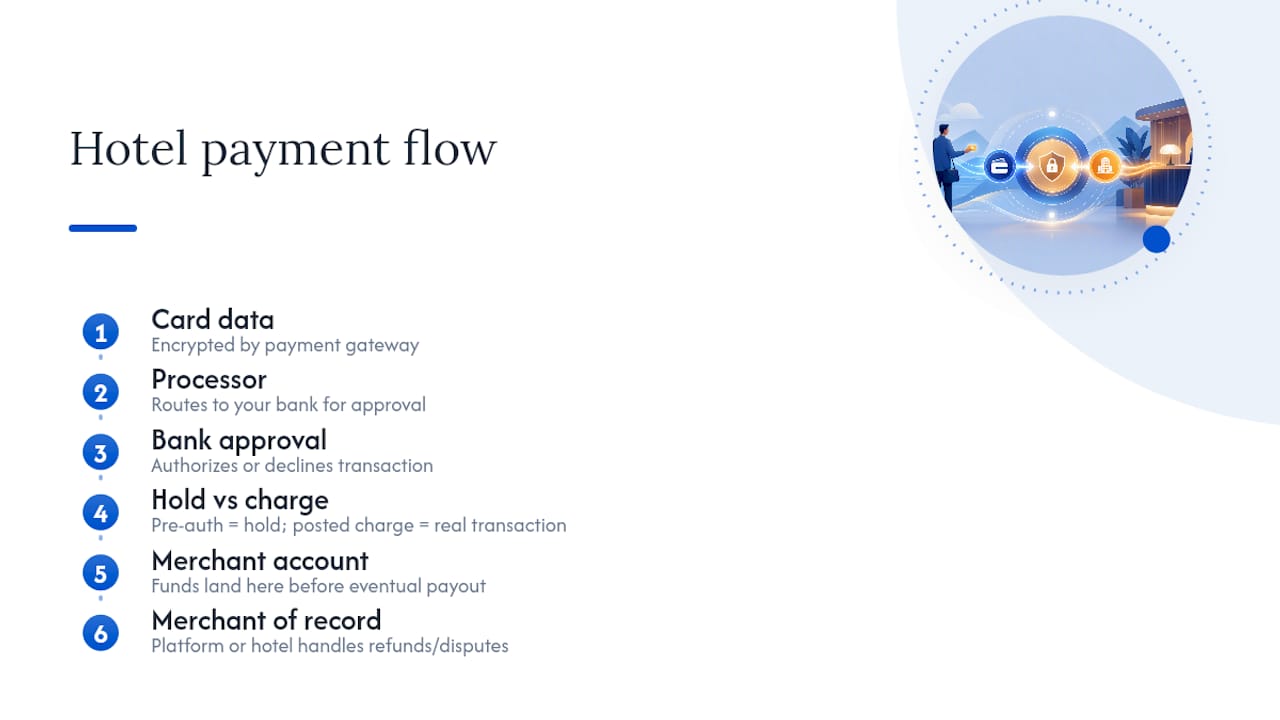
A pre-authorization is a hold, not a charge. It reduces your available balance without moving money, and it releases automatically after checkout, though the exact window depends on your bank. A posted charge is the real transaction. This distinction is why your statement can look alarming for a few days after a trip that actually cost you nothing extra.
Merchant of record matters more than most travelers realize. If an online travel agency processed your payment, they handle refunds and disputes, not the property. If the hotel itself charged you, the front desk can usually resolve issues on the spot.
Why We Recommend Comparing Rate Rules Before You Book
We built Global Holiday Planner around one idea: you shouldn’t have to guess what a rate actually includes. Comparing flights, hotels, car rentals, and insurance side by side means you can see cancellation terms and total cost together, not buried in separate confirmation emails. Before you commit to prepaid or pay-later, pull up the rate details on the platform and read the actual cancellation window, not just the sticker price.
— Global
Compare Rates and Book With Confidence
Some travel platforms put pay-now and pay-later hotel rates side by side, with the cancellation rules and total cost shown up front instead of buried in multiple clicks. This approach helps you easily see which rate actually saves you money once you factor in flexibility.

If you’re weighing a prepaid discount against the risk of locked plans, the fastest way to decide is to see both options next to each other for the exact same room and dates. Head to the hotel reservations page to compare live rates, check cancellation windows, and book whichever option actually fits your trip.
Sources
For deeper detail on how hotel payments and cancellation rules actually work, these sources back the guidance in this article:
- Hotel payment processing — Stripe
- Prepaid vs pay at property hotel rates — Best.so (2026)
- Pay Now vs Pay at Hotel: The Hidden Cost Nobody Counts — HotelsBookie
FAQ
Is Prepaid Hotel Booking Worth It?
Prepaid is worth it when your travel dates are firm and the discount is meaningful, typically in the 10 to 20 percent range. If there’s real uncertainty about your plans, the savings rarely offset the risk of losing a nonrefundable payment.
What Does “Pay at Property” Actually Mean?
Pay at property means your card isn’t charged the full room rate until check-in or checkout, but the hotel may still verify your card or place a pre-authorization hold beforehand. It’s a payment timing label, not a guarantee against any card activity before arrival.
Does Prepaying Protect Against Currency Conversion Risk?
Not entirely. Prepaying locks in the exchange rate at the moment of booking, which can help or hurt you depending on how rates move. Paying at checkout avoids that early bet but exposes you to dynamic currency conversion markups if you accept conversion at the front desk instead of declining it.
How Long Do Prepaid Hotel Refunds Take?
Eligible prepaid refunds commonly take 5 to 10 business days to post. If an online travel agency was the merchant of record, expect it to take longer, sometimes a full billing cycle.
Can a Hotel Charge Me if I Pay at Check-In?
Yes. Missing the cancellation deadline on a pay-later booking can trigger a charge, sometimes for the full first night, even though you never prepaid. Always confirm the exact cutoff time and time zone stated in the rate rules before you book.