
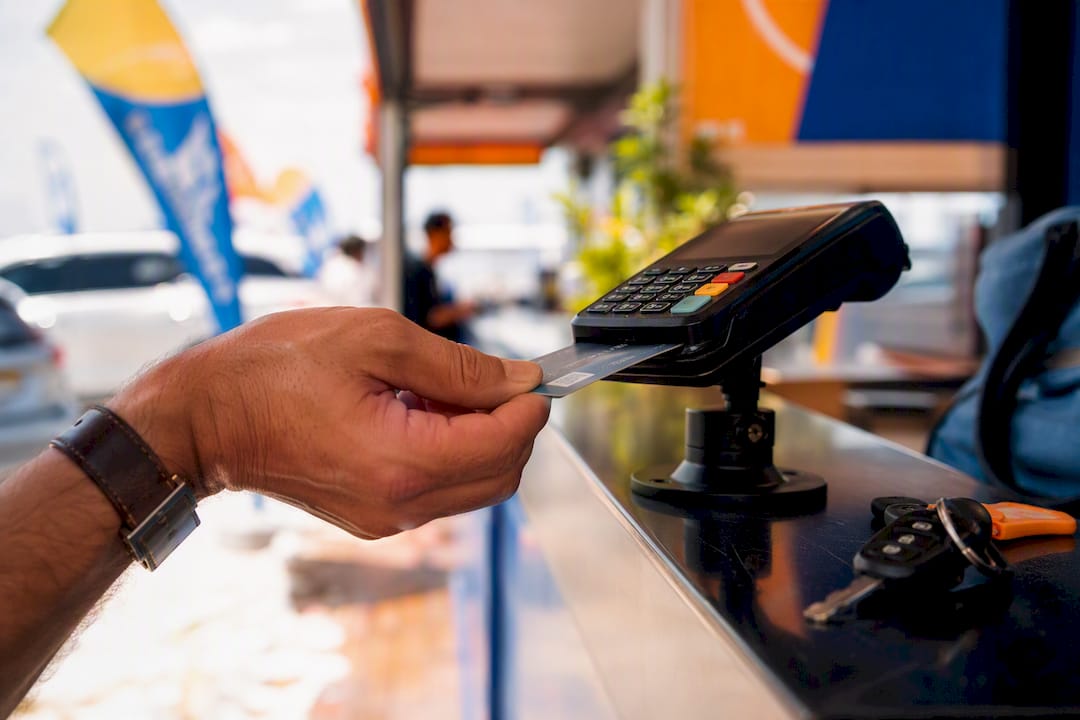
Yes, most major U.S. rental companies will hand you the keys with a debit card, as long as it carries a Visa, Mastercard, or Discover logo and belongs to the driver on the reservation. The catch is the deposit: expect an authorization hold that can lock up several hundred dollars of your checking account, extra ID at airport counters, and some vehicle classes taken off the table. Confirm your exact pickup location’s policy before you fly, and keep a cash buffer so the hold doesn’t bounce anything else.
TL;DR:
- Most U.S. rental companies accept Visa, Mastercard, or Discover debit cards in the renter’s name, especially at non-airport locations, with varying deposit holds.
- The authorization hold can lock several hundred dollars for several business days, potentially affecting your bank balance and causing overdraft fees.
- Higher-value vehicles like luxury cars, SUVs, or convertibles often require a credit card and may be unavailable for debit card renters.
- Prepaying online or purchasing zero-excess insurance can help avoid or reduce large deposits, but may involve additional fees or restrictions.
- Always verify branch-specific policies and prepare the necessary documentation, including a second ID, proof of return flight, and matching billing address.
Table of Contents
- What Rental Counters Typically Require for a Debit Card
- How Authorization Holds Work and What They Cost You
- Where Debit Cards Get Accepted (and Where They Don’t)
- Booking Routes That Skip the Big Deposit
- Your Pickup Checklist at the Rental Counter
- Why We Built Our Comparison Tools Around This Exact Problem
- Booking Smart When You’re Working Around a Debit Card
- Where to Verify the Rules Before You Travel
- Sources
- FAQ
What Rental Counters Typically Require for a Debit Card
The card itself has to be a real bank debit card tied to a checking account, not a prepaid card, a reloadable gift card, or a virtual number. Hertz’s payment policy spells this out clearly: the card must carry a major network logo and be issued in the renter’s name, since a company can’t run a credit check or verify identity against a card that isn’t linked to a real account holder.
Age matters just as much as the card type. Most companies set the standard minimum at 21, with a young-driver surcharge common for renters under 25. A handful of locations will rent to 18 to 20 year olds for an added daily fee, though that’s the exception rather than the rule, and it’s worth calling ahead if you fall in that bracket.
Here’s what to have ready at the counter:
- A debit card in the lead driver’s name, matching the name on the reservation exactly
- A valid driver’s license, plus a second form of photo ID at most airport locations
- Proof of a return flight if you’re picking up at or near an airport
- A billing address that matches your bank statement, in case the agent asks
Neighborhood and downtown locations tend to be more relaxed than airport counters, partly because airport branches deal with higher fraud risk and faster turnover. Before you book, call the specific branch or check its listing on the rental company’s site. Policies can differ from one city to the next even within the same brand, and the person who answers the phone can usually tell you in thirty seconds what a website FAQ can’t.
How Authorization Holds Work and What They Cost You
A credit card hold is a soft freeze on unused credit, but a debit card hold is a hard freeze on cash you actually have. That distinction trips up more travelers than any other part of this process. Budget’s debit card policy confirms that the hold amount covers your estimated rental charges plus a buffer, and that money simply isn’t available to you until the hold clears.

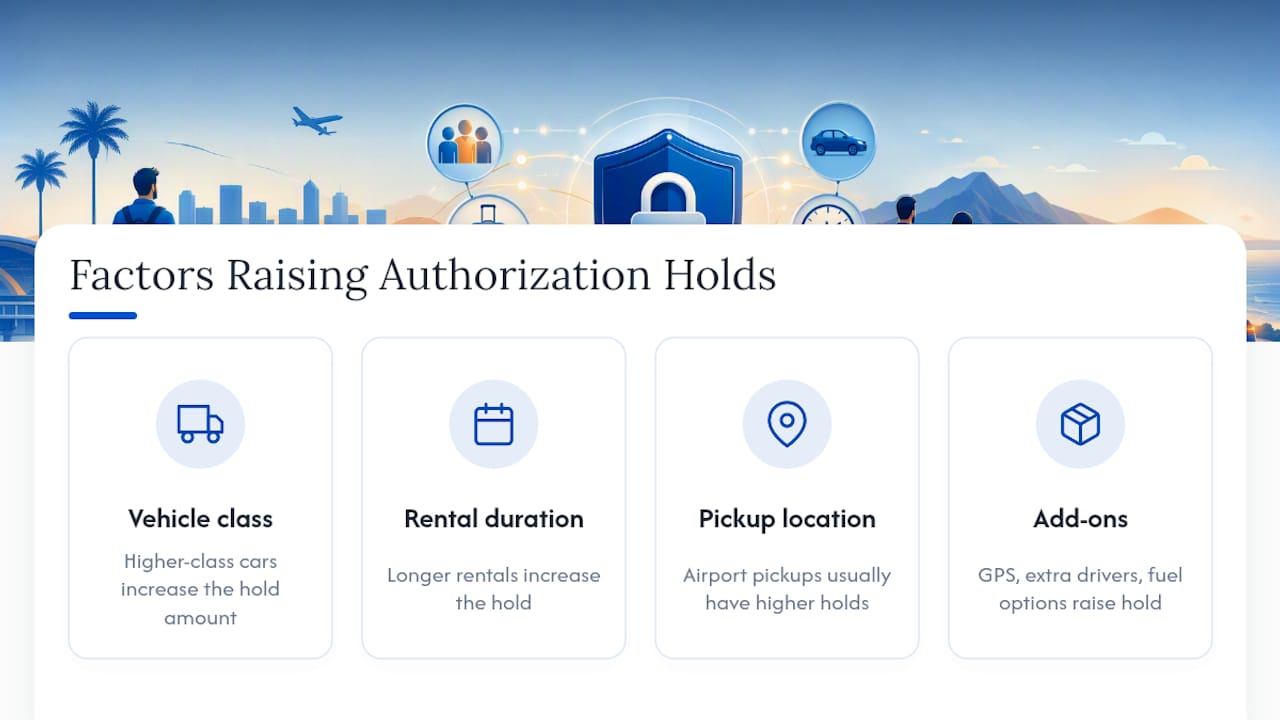
The size of the hold depends on your vehicle class, the length of the rental, and whether you’re picking up at an airport, where holds tend to run higher than at neighborhood branches. Add-ons like GPS units, extra drivers, or a full tank refuel option can push the number up further. Holds commonly stay in place for several business days after you return the car, sometimes longer if your bank is slow to release it on its end.
Pro Tip: Open a separate checking account just for travel holds. Load it with the estimated rental cost plus a cushion, and use that account’s debit card at the counter. That way, a slow-releasing hold never touches the money you need for groceries or your mortgage payment back home.
This is exactly why Hertz’s support page on payment methods warns renters to keep a buffer beyond the rental total. A hold that eats into your daily balance can trigger overdraft fees or decline your card at a restaurant three states away, which is a miserable way to find out your trip budget was too tight.
Where Debit Cards Get Accepted (and Where They Don’t)
Airport counters are consistently the strictest link in the chain. Several counters in busy metro markets ask for return-flight documentation, two forms of ID, and a higher hold than you’d see at a location a few miles down the road. Budget’s own policy notes that specific airports enforce extra identity and payment checks that a neighborhood branch simply doesn’t bother with.
Vehicle class is the other lever. Debit-card renters usually get steered toward economy, compact, or mid-size cars, while:
- Luxury vehicles and sports cars are frequently blocked entirely for debit-card payment
- Large SUVs and passenger vans sometimes carry the same restriction
- Specialty or convertible categories may require a credit card no matter what
These restrictions exist because higher-value vehicles carry bigger financial exposure if something goes wrong, and a credit card gives the company recourse that a debit hold doesn’t. Every major brand publishes its debit-card terms on its website, usually under a “payment methods” or “renter requirements” page. Read that page for your exact pickup city, not just the company’s general national policy, since local franchise locations sometimes apply stricter rules than corporate-owned counters.
Booking Routes That Skip the Big Deposit
You have real options if the idea of a several-hundred-dollar hold makes you nervous, and most of them come down to prepaying before you ever reach the counter.
- Prepay online with your debit card. This locks in your rate and sometimes reduces the hold, though many counters still run a smaller authorization and always check ID at pickup.
- Buy zero-excess or all-inclusive insurance. Cardamar’s guide to renting without a credit card explains that this kind of coverage can remove the insurer’s need for a large security deposit altogether, since the risk the deposit was meant to cover is already insured.
- Book through a third-party agent that issues a voucher. Auto Europe’s explainer on renting without a credit card notes that the agent prepays the supplier directly, but you’ll still need ID that matches the name on the voucher.
Each route trades a small upfront fee for less risk at the counter. Prepay locks in a price but rarely erases the hold completely. Zero-excess cover is often the strongest workaround, though you should verify how local damage claims actually get processed. Some suppliers still expect immediate cash for repairs and reimburse you afterward, which means you’ll want liquid funds even with insurance in hand.
Your Pickup Checklist at the Rental Counter
Walk in prepared and the whole process takes ten minutes. Bring your debit card, driver’s license, a second photo ID if you’re at an airport, your confirmation number, and proof of a return flight if one’s required.
- Confirm the exact hold amount and when the agent expects it to release
- Ask about the fuel policy in writing, not just verbally
- Photograph the vehicle’s exterior and interior before you drive off
- Note the agent’s name and get a printed copy of your rental agreement
Pro Tip: If a location refuses your debit card despite matching its published policy, calmly ask for the manager and the specific policy line being cited. Front-desk staff sometimes misapply rules that don’t actually match what’s posted online.
If you’re an international visitor, check what ID and travel documents you’ll need before you land, since some counters ask for more than a driver’s license from foreign renters.

Why We Built Our Comparison Tools Around This Exact Problem
Most travelers don’t find out a location requires a credit card until they’re standing at the counter with a canceled reservation and a flight to catch. That’s the gap Global Holiday Planner works to close: our car rental comparison surfaces location-specific payment rules and prepay options at the search stage, before you commit to a supplier that won’t take your debit card.
We flag bundled zero-excess offers alongside standard rentals so you can compare a prepaid, deposit-free booking against the traditional pay-at-counter model in the same search. A traveler comparing three suppliers for the same Denver pickup date can see which ones list debit-card acceptance and which don’t, rather than digging through separate policy pages one by one.
— Global
Booking Smart When You’re Working Around a Debit Card
There are other ways to solve this: call the rental company directly, dig through individual supplier terms pages one at a time, or just show up and hope for the best. None of those are efficient when you’re trying to lock down a trip on a deadline.
Global Holiday Planner compares car rental suppliers side by side, with location-specific debit-card rules and prepay or zero-excess options visible before you book, so you’re not guessing what a counter will accept when you land. If a return flight is part of your ID requirements at pickup, you can also confirm or book your flight in the same session. Search your dates and pickup city on our car rental page and compare which suppliers fit a debit-card booking before you commit to one.
Where to Verify the Rules Before You Travel
- Check the specific rental company’s official payment policy page for your pickup city, not just its general terms.
- Read explainers on zero-excess coverage and no-deposit bookings and prepaid voucher terms before choosing a booking route.
- If you’re comparing prepaid travel credit options, this guide to travel credit breaks down how prepaid products work for budget trips.
- Review a booking platform’s privacy policy before entering card details anywhere online.
Sources
- Car Rental Without a Credit Card (No Deposit) – Cardamar
- Can You Rent a Car Without a Credit Card? If So, Where? — Auto Europe
- Google privacy policy
FAQ
Which Rental Companies Don’t Require a Credit Card?
Most major U.S. brands, including Hertz and Budget, accept debit cards at many locations, though acceptance and deposit rules vary by branch and vehicle class. Always confirm your specific pickup location’s policy rather than assuming a national rule applies everywhere.
Which Car Rental Companies Let You Pay With a Debit Card?
Hertz and Budget both publish official debit-card acceptance policies, requiring the card to carry a Visa, Mastercard, or Discover logo and be in the renter’s name. Neighborhood locations are typically more flexible with debit cards than airport counters.
Can My Mom Rent Me a Car Using Her Credit Card?
Generally no. Most rental companies require the debit or credit card at pickup to belong to the person listed as the primary renter on the reservation, since the card also serves as identity verification.
What Can I Use Instead of a Credit Card to Rent a Car?
A debit card from a major bank works at most locations, and prepaying online or buying zero-excess insurance can reduce or eliminate the deposit hold entirely. Third-party vouchers that prepay the supplier are another workaround, though you’ll still need matching ID at pickup.