

The best way to book business travel is to decide the rules before you search: book early within a policy, protect the meeting with a day-before arrival, keep flexibility where a plan might change, and check entry documents before you pay for anything. Everything below follows that order. It works for one person booking a client visit or a finance lead booking for a team.
TL;DR
- Book domestic flights about four weeks ahead and international ones two to four months ahead, but skip fares so restrictive that one change costs more than you saved.
- For a meeting that matters, fly in the day before. A delay then costs you sleep, not a deal.
- Consolidate flights, hotels and ground transport with a short list of preferred suppliers and one place to compare them.
- Check passport validity, visa rules and State Department advisories before you buy, not after.
- Compare the real total cost of the trip, not the headline fare.
Table of Contents
- Start with the trip, not the search box
- Flights: timing, fare type and day of purchase
- Hotels: location, rates and the small details
- Ground transport: plan the last 20 miles
- Build a preferred-supplier habit
- Policy: make the rules easy to follow
- Documents and risk: the part people book too late
- Booking for a group
- Our perspective: compare the whole trip, not the cheapest line
- Book it in one place
- A pre-booking checklist
- Mistakes that cost the most
- FAQ
- Sources
Start with the trip, not the search box
Most booking mistakes happen before anyone opens a website. A traveler picks a fare, then discovers the meeting moved, the hotel is across town, or the passport expires in four months. Spend five minutes on these questions first:
- What is fixed? Meeting time, location and who must attend. Everything else bends around this.
- What can move? Departure day, airport, hotel neighborhood, even the mode of transport. Flexibility is where savings live.
- What is the cost of failure? A routine internal sync can survive a missed flight. A client pitch or a trade show booth cannot.
- What does your policy say? Cabin class, nightly hotel caps, advance purchase windows and approval steps.
The answers set how much you pay for certainty. A high-stakes trip justifies a flexible fare and an earlier arrival. A low-stakes one justifies the cheapest sensible option.
If you are unsure whether to lock in the flight or the room first, we wrote a simple rule for booking flights or hotel first. In short, book whichever is harder to replace at a similar price.
Flights: timing, fare type and day of purchase
How far ahead to book
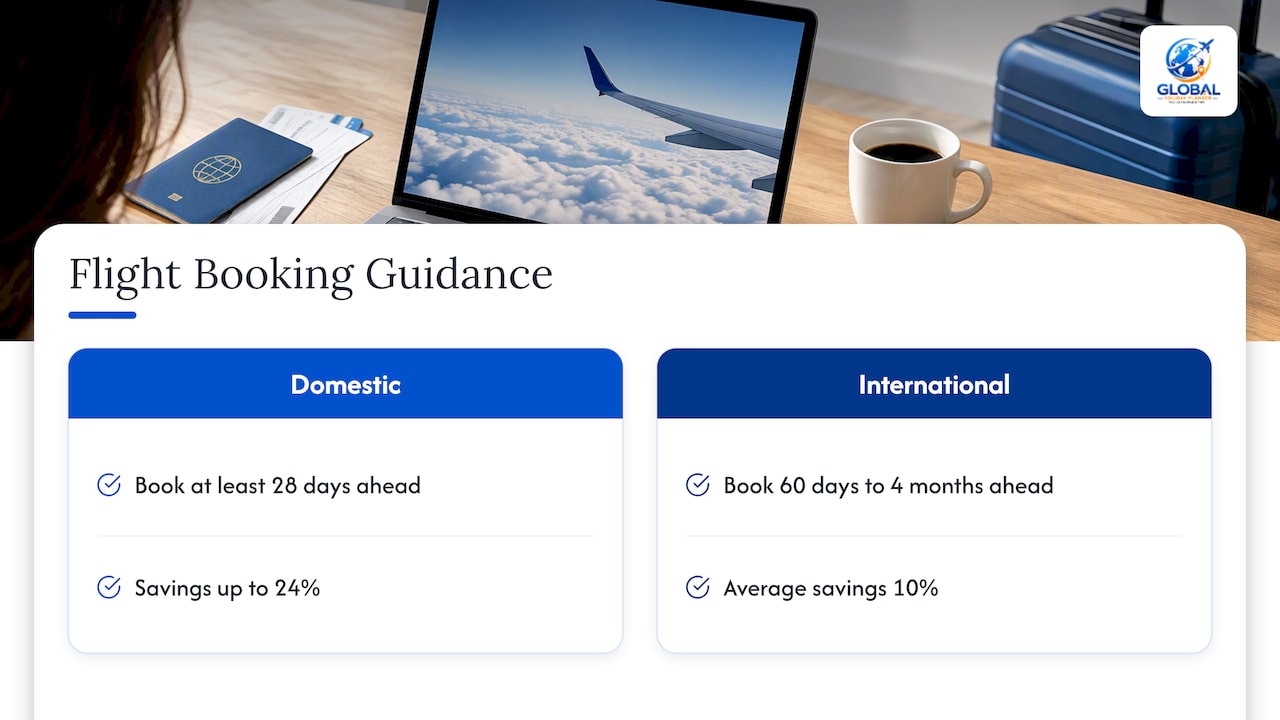
Early booking is the most repeated tip in corporate travel, and the numbers back it up. Uber for Business guidance says booking domestic flights at least 28 days ahead can save up to 24%, while international flights are best bought 60 days to four months before departure, for average savings of 10%. Treat these as averages, not promises. Routes, seasons and events change them.
The pressure to book early is also real on the policy side. In a GBTA survey of travel programs, 91% of programs addressed advance purchase and 71% explicitly recommended it to control costs. That research dates from 2018, so read it as evidence of long-standing practice rather than current percentages.
Watch the price outlook
For 2026, the same Uber guidance cites GBTA data forecasting global airfares up 0.4% and hotel rates up 1.8%. That is a modest rise, which means timing and fare rules matter more than hoping for a general price drop.
Be careful with basic economy
The cheapest fare is often the most expensive once a trip changes. The GBTA research found that corporate programs were wary of basic economy fares because of their restrictions. Before you buy one, check four things:
- Can you change or cancel, and at what fee?
- Can you select a seat, or will you be placed at the back?
- Is a carry-on bag included on this airline?
- Does it earn miles toward status?
If the answer to the first question is no and your schedule is uncertain, a standard economy fare usually wins on total cost.
Pick the day and the dates carefully
The day you buy can matter too. Our analysis of the best day to book flights found small but real differences. Your travel dates matter more. If you can shift a departure by a day, a date grid shows the savings in minutes. Here is how to book flexible date flights using date grids. For general fare-hunting methods, our list of 15 ways to find cheap flights applies to work trips as well.
Arrive the day before
For meetings that matter, Travel + Leisure’s business travel rules describe arriving the day before as standard practice. It removes the risk from delays, missed connections and lost bags, and you show up rested. The extra hotel night is cheap insurance next to a missed pitch.

Choose the first flight of the day
Early flights are less likely to be hit by cascading delays, because the aircraft and crew are already in place. This is common travel wisdom rather than a guarantee, but for a same-day meeting it is a sensible tiebreaker between two similar fares.
Hotels: location, rates and the small details
A cheap room in the wrong place costs you in car fares and lost time. For business trips, rank hotels by:
- Distance to the meeting, measured in travel time at the hour you will actually travel.
- Cancellation terms, since plans shift.
- Work basics: reliable Wi-Fi, a usable desk, quiet rooms and a breakfast that does not eat 45 minutes.
- Loyalty value, if you already hold status with a chain.
Convenience is often what separates a good business stay from an average one. This look at why convenience tops business travelers’ priorities makes the case for hotels that make the working day easier, with food and comfort close at hand.
If your company books often in the same cities, negotiated rates can beat public prices. We cover how in 7 ways to get better hotel corporate rates. If a booking was nonrefundable and plans changed, there is a five-step refund script worth trying before you write off the cost. When you are ready to compare rooms, start on our hotel reservations page.
Early arrival is another quiet cost. If your flight lands at 7 a.m. and you have a noon meeting, see our guide to getting early hotel check-in.
Ground transport: plan the last 20 miles
The airport is not the destination. Decide how you will get to the meeting before you land, especially on a tight schedule.
- Airport transfer: best when you land late, travel with colleagues or need a receipt that matches a fixed price. Our guide on matching your trip to the right airport transfer explains the options, and you can book on our airport transfers page.
- Car rental: best when you have multiple stops across a metro area. Check mileage, deposits and age rules. Our car rental page is the place to compare.
- Rideshare: often cheaper for one or two short hops. For short trips, car rental versus rideshare all-in costs shows where the break-even sits.
Compare on the total: parking, fuel, tolls and the time you spend finding a car matter as much as the daily rate.
Build a preferred-supplier habit
Chasing the lowest price on every trip creates a hidden cost: scattered receipts, inconsistent rates and no leverage. Corporate travel specialists describe a pre-approved list of preferred suppliers for flights and hotels as the most effective way to consolidate spend, secure negotiated rates and simplify invoicing for finance teams.
For a small team, that does not need to be complicated:
- Pick one or two airlines that cover your most common routes.
- Pick one or two hotel brands in your most visited cities.
- Choose one booking channel, so every trip is visible in one place.
- Review every quarter and swap what no longer works.
For individuals, loyalty works the same way. Frequent travelers quoted by Travel + Leisure say that picking a primary airline alliance early pays off in upgrades and priority handling that make frequent trips easier. Convenience beats chasing the last five dollars when you fly every month.
Sometimes a seat in a better cabin is worth it. Before you pay full price, see when upgrade bidding beats a buy-up.
Policy: make the rules easy to follow
A travel policy people ignore is just a document. The ones that work are short and specific. A good one states:
- Advance purchase target (for example, 14 or 21 days for domestic trips).
- Cabin class by flight length.
- Hotel nightly caps by city tier.
- Which trips need approval, and who approves in how many hours.
- What to do when the cheapest option is not the practical one.
The last point matters. Policies that allow reasoned exceptions get fewer workarounds. In the GBTA research, 89% of business travel policies allowed business class in specific scenarios such as long-haul or international flights, which shows that mature programs spend where it counts.
A 2026 budget exercise helps too. Reed & Mackay’s budget planning guide covers early booking strategies, data-driven decisions and predicted airfare and hotel price trends. Looking at last year’s trips by route and booking lead time shows where you overpaid.
Documents and risk: the part people book too late
Passports and visas
Business entry rules often differ from tourist rules, so check them for each trip. Allow six to eight weeks if the destination has strict visa or work permit processes. The State Department’s travelers page tells you to check Travel Advisories first when planning any trip abroad.
Passport validity trips up many people. The U.S. International Trade Administration notes that many countries require at least six months of validity beyond your travel dates, and expedited renewals still need lead time. Check the expiry date before you book the flight. For a primer, see our guide to essential visa requirements.

Insurance and flexibility
If your company has no blanket coverage, think about what you would lose if a trip were canceled. Two guides help you decide: trip cancellation versus interruption, and the timing rules for cancel for any reason coverage. Read the policy wording for covered reasons, because many work-related cancellations are not automatically included.
Booking for a group
Sending a sales team to a conference or a crew to a site changes the math. Seats at the same fare disappear quickly and names, payment and change rules get complicated. If you are an organizer of 10 or more travelers, our group flight booking playbook walks through holding seats and handling changes.
Our perspective: compare the whole trip, not the cheapest line
We built Global Holiday Planner around one belief: a trip is one cost, not five separate ones. A fare that looks $60 cheaper can lose that advantage once you add a checked bag, a seat fee, a transfer from a far-away airport and a hotel that sits 40 minutes from the meeting. That is why we put flights, hotels, car rentals, airport transfers, rail tickets and travel insurance side by side, so you can see what the trip costs and which option fits the itinerary.
For business travel, our advice is to spend money on certainty and save it on everything else. Pay for flexibility on the trips that might change. Pay for the night before on the meeting that matters. Save by booking early, choosing a small set of suppliers and checking dates before you commit. Everything else is detail.
We are an affiliate platform, which means we earn a referral commission when a booking is made through us. We do not publish prices on this page, because they change by the hour. Check live results for your dates.
— Global
Book it in one place
If you are ready to price a trip, start with flight bookings and then match a hotel and ground transport on the same screen. You can also explore everything we offer from the Global Holiday Planner home page, including rail tickets and travel insurance.
A pre-booking checklist
| Step | What to confirm | When |
|---|---|---|
| Purpose | Fixed meeting times and attendees | Before searching |
| Documents | Passport validity, visa, advisories | Before paying |
| Flights | Fare rules, bags, change fees, arrival the day before | 4 weeks (domestic), 2 to 4 months (international) |
| Hotel | Distance, cancellation terms, Wi-Fi, desk | Same day as flights |
| Ground transport | Transfer, rental or rideshare plan | Before departure |
| Cover | Insurance or company coverage | Within days of booking |
| Records | Receipts and approvals in one place | During the trip |
Mistakes that cost the most
- Booking the cheapest fare without reading change rules. One reschedule can erase the saving.
- Booking the same-day arrival for a meeting you cannot miss.
- Forgetting passport validity until the week of travel.
- Booking each piece on a different site, so no one sees the total.
- Skipping approvals and then having an expense denied.
- Ignoring loyalty numbers on trips you take regularly.
FAQ
What are the most useful business travel booking tips?
Book early within your policy, arrive the day before important meetings and read fare rules before buying. Use a short list of preferred airlines and hotels, and check passport and visa requirements before you pay. Together these cover most of the money and stress in a typical trip.
Is it cheaper to book through a travel agent or do it yourself?
It depends on the trip. Simple point-to-point trips are usually easy to book yourself with a comparison tool. Complex itineraries, groups and last-minute changes can justify an agent’s time. Compare the total price, including any service fees, rather than the headline fare.
Should business travelers book basic economy?
Only when the plan is firm and you do not need a bag, a seat choice or a change option. Many corporate programs avoid basic economy because of its restrictions. For uncertain schedules, a standard fare is usually safer.
How far ahead should I book a business trip?
About four weeks ahead for domestic flights and 60 days to four months ahead for international ones, according to Uber for Business guidance. Urgent trips cost more, so use date flexibility to limit the damage.
What should I check before booking international business travel?
Passport validity, visa or work permit rules for business travel, and the State Department’s Travel Advisory for the destination. Allow six to eight weeks if the country has strict requirements, and confirm details with the destination’s official sources.
Sources
- Uber for Business: 10 Ways to Reduce Corporate Travel Costs
- GBTA: Are Business Travel Programs Barring Basic Economy?
- Travel + Leisure: 10 Golden Rules for Booking Business Travel
- Corporate Traveler: Corporate travel booking guide for businesses
- Reed & Mackay: Business travel in 2026, planning your budget
- U.S. Department of State: Travelers
- Trade.gov: Foreign Business Travel Requirements
[…] your employer’s account may already include additional drivers or colleagues at no charge. Our business travel booking tips cover how to check what your company agreement includes before you pay out of […]
[…] you travel for work often, our business travel booking tips cover how to save money and avoid delays on the whole itinerary, not just the […]
[…] for work? Our business travel booking tips cover how to avoid delays and keep costs in […]
[…] Business Travel Booking Tips: Save Money and Avoid Delays […]