
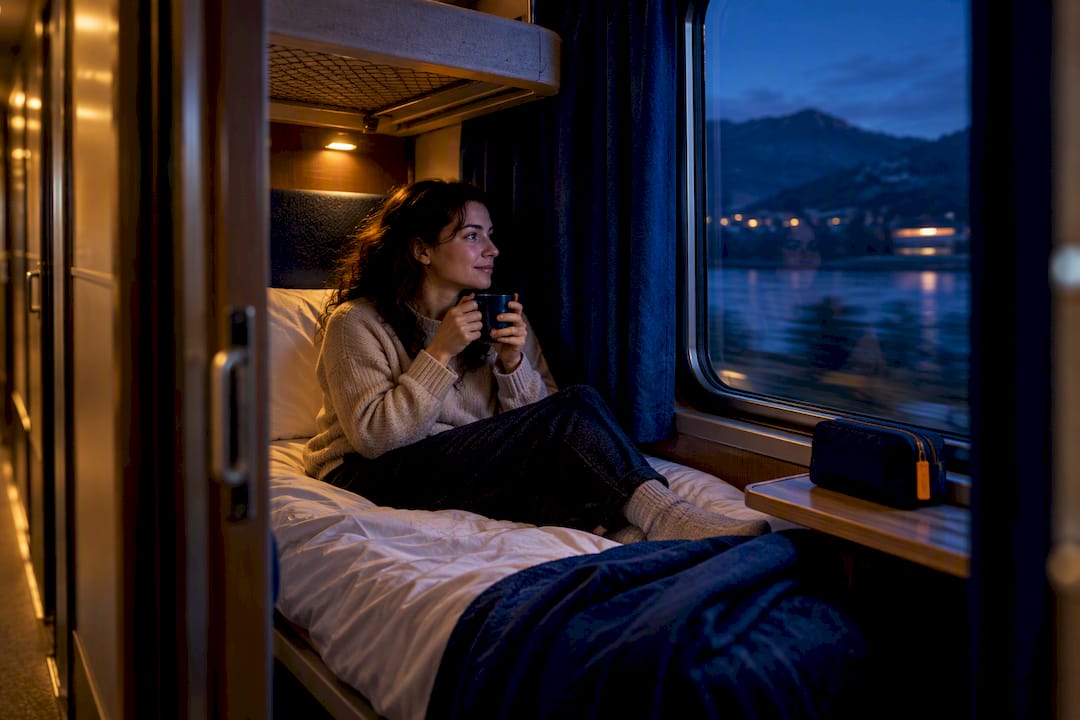
Yes, overnight trains are a genuinely practical way to travel across Europe, not just a novelty for train enthusiasts. On the right corridors, they save you an entire travel day and drop you in the city center at breakfast time. The standout routes include Vienna to Rome on Nightjet, Brussels to Berlin on European Sleeper, Paris to Nice on Intercités de Nuit, and Stockholm to Narvik through Sweden’s Arctic north. Just check reservation rules and ticket structure before you book, since protections vary by operator.
TL;DR:
- Reservations are mandatory for most overnight trains, and booking well in advance—typically two to six months—is essential, especially during peak seasons.
- Cabin options range from budget seats and shared couchettes to private sleepers, with amenities and inclusions like breakfast varying between operators and routes.
- Full trip costs should be compared by including train fares, reservation fees, airport or station transfers, baggage fees, and potential hotel savings to determine real savings over flying.
- Night trains are most advantageous for long corridors where they save travel days or hotel stays, but less suitable for short routes or when low-cost flights offer better value.
- Use official operator sites and the Back-on-Track Night Train Map to verify route availability, seasonal changes, and ensure the most accurate, current scheduling information.
Table of Contents
- Best Overnight Train Routes in Europe and What Each One Offers
- How to Book Night Trains and What the Reservation Rules Actually Mean
- Seat, Couchette, Sleeper, or Private Compartment: Which One Fits You
- Is a Night Train Actually Cheaper Than Flying? Here’s How to Check
- Practical Tips for Sleeping, Luggage, Pets, and Tight Connections
- Where to Find Reliable Route Maps and Timetables
- How Global Holiday Planner Simplifies Night-Train Trip Planning
- When Overnight Trains Make Sense, and When They Don’t
- Book Your Overnight Train Trip with Global Holiday Planner
- Sources
- FAQ
Best Overnight Train Routes in Europe and What Each One Offers
Not every night train route delivers the same value. Some save you a flight’s worth of hassle. Others are more about the scenery than the schedule.
- Vienna to Rome (Nightjet): roughly 12 to 13 hours, and one of the clearest cases where a sleeper beats flying. You leave after dinner and wake up walking distance from the Colosseum.
- Brussels to Berlin (European Sleeper): a newer route, around 9 to 10 hours, useful for stitching together a Benelux and Germany itinerary without a layover in an airport.
- Paris to Nice or Paris to Toulouse (Intercités de Nuit): French domestic sleepers that cut a 6 hour daytime slog into an overnight jump, arriving in the south of France before the day trippers even land.
- Stockholm to Narvik: one of the great scenic night routes in Northern Europe, crossing into Arctic Norway. Service can be seasonal, so check schedules if you’re traveling outside peak summer months.
- Zurich to Amsterdam or Zurich to Hamburg (Nightjet): Central European connectors that let you skip a full day of transfers between Switzerland and the north.
- Barcelona to Paris (Trenhotel-style overnight service): a Southern Europe link that turns a long haul into a single night’s sleep, though seat and cabin availability shifts by season.
Frequency matters as much as the route itself. Some of these run nightly year round; others taper off outside summer or add extra departures during holiday periods. Always confirm the calendar for your travel dates rather than assuming daily service.
How to Book Night Trains and What the Reservation Rules Actually Mean
Booking an overnight train isn’t quite like grabbing a daytime regional ticket. A few rules catch first timers off guard.
- Reservations are usually compulsory, not optional, especially for couchettes and sleeper cabins. Unlike many daytime trains, you can’t just show up with a rail pass and hope for a seat.
- Rail passes typically still require a paid reservation. The pass covers your fare eligibility, but the berth itself carries a separate fee, and that inventory is limited compared with daytime seating.
- Book through-tickets when possible. A single through-ticket across a multi-operator journey gives you far better protection if you miss a connection than two separately purchased legs. Proposed EU passenger-rights reforms in 2026 aim to close that gap, but they are not yet universally in force, so don’t assume automatic protection.
- Watch advance-sale windows. Nightjet and other operators can open bookings months ahead for popular routes, and reservation inventory on sleepers can sell out well before departure, particularly in summer. Booking two to six months out is a reasonable rule of thumb for peak season.
Seat, Couchette, Sleeper, or Private Compartment: Which One Fits You
The accommodation tier you pick changes the entire experience, and the price gap between them can be significant.
- Seat: the cheapest option, essentially a daytime train seat you try to sleep in. Fine for a short hop, rough for anything past six or seven hours.
- Couchette: a shared compartment with four to six bunks, minimal privacy, and usually no bedding included unless you pay extra. Popular with budget travelers and groups.
- Sleeper cabin: proper beds, usually two to three per compartment, often with a sink and sometimes breakfast included. This is the middle ground most solo travelers and couples land on.
- Private compartment: you book the whole space, whether that’s a couple’s cabin or a family compartment. Best for families, couples wanting privacy, or anyone traveling with a pet.
Here’s the part that trips people up: bedding and breakfast inclusions are not standardized across Europe. One operator bundles breakfast into the sleeper fare, another charges separately, and a third doesn’t offer it at all on certain routes. Always check what’s included for your specific train rather than assuming it matches your last trip.
Pro Tip: If you’re torn between couchette and sleeper on a budget, price out the couchette plus a cheap hostel bed for the following night. Often the sleeper cabin costs about the same once you factor in what you’re not paying for accommodation.
Is a Night Train Actually Cheaper Than Flying? Here’s How to Check
The honest answer is: sometimes, and it depends entirely on what you’re comparing. A one way flight search might show a lower base fare, but that number rarely reflects your real cost of getting from bed to bed.
Run the comparison using these line items before you decide:
- Train fare plus mandatory reservation fee
- Airport transfers on both ends versus a city-center rail station
- Checked baggage fees, which sleeper trains generally skip
- The hotel night you avoid by sleeping on the train
- Meals, since some sleeper fares include breakfast and flights rarely do
Comparing the full door-to-door cost rather than just the ticket price is the only way to know which mode actually wins.
The real value most travelers underestimate: the arrival day itself. Land at an airport at 7 a.m. and you’ve lost your morning to immigration lines and transfers. Step off a sleeper train at Roma Termini or Wien Hauptbahnhof and you’re already downtown with a full day ahead of you.
That’s a night train’s biggest selling point, and it rarely shows up in a fare comparison. Trains also produce a fraction of the emissions of short haul flights, which is worth weighing if sustainability factors into your travel choices.
Practical Tips for Sleeping, Luggage, Pets, and Tight Connections
A little preparation turns a night train from a rough night into an actual rest stop.
- Pack light sleep gear. Earplugs, an eye mask, and a small padlock for your bag go a long way toward an actual night’s sleep, especially in a shared couchette.
- Keep valuables on your body, not in overhead racks. Luggage theft on sleepers is rare but not unheard of, and a lock on your zipper deters casual opportunists.
- Traveling with a pet usually means booking a private compartment. Shared couchettes and open seating rarely allow animals, so check the operator’s pet policy before you book, not after.
- Bikes are hit or miss. Some routes offer dedicated bike carriage, others don’t accommodate them at all, so confirm with the specific operator ahead of time.
- Build in a real buffer for connections. If your itinerary involves switching trains, give yourself at least 45 minutes to an hour, more if you’re crossing borders or switching stations in an unfamiliar city.
Pro Tip: Book a through-ticket whenever your route spans two operators. If your connecting train runs late, a through-ticket obligates the railway to get you to your final destination; two separate tickets leave you on your own.
Where to Find Reliable Route Maps and Timetables
Skip the outdated blog posts and go straight to sources that get updated as service changes.
- The Night Train Map from Back-on-Track is the most complete interactive resource, showing which operators run which routes and flagging seasonal service.
- Operator sites directly, like Nightjet’s own booking portal, list the most accurate advance-sale dates and any temporary route restrictions worth knowing before you commit to dates.
- Cross-check frequency and equipment. A route might run nightly in summer and drop to three times a week in winter, and the same corridor can switch between couchette-only and full sleeper service depending on the season.
- Pair route research with a fare and hotel search so you can weigh the night train against flying plus a hotel night before locking in dates.
How Global Holiday Planner Simplifies Night-Train Trip Planning
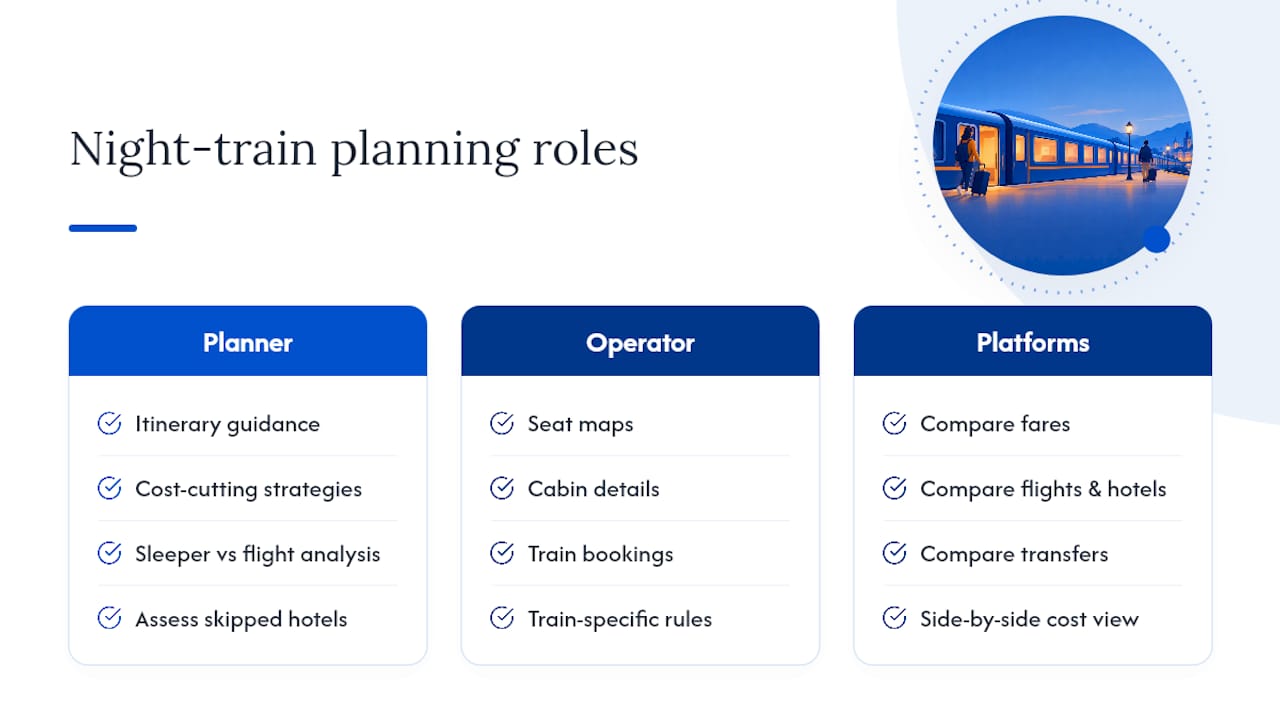
Piecing together a multi-city European itinerary around a night train means juggling rail fares, hotel nights you might skip, and transfers on both ends. Global Holiday Planner’s travel blog breaks down cost-cutting strategies for European trips so you can weigh a sleeper cabin against a flight plus hotel before committing.
For the actual booking, operator sites remain the source for train-specific seat maps and cabin details, while there are platforms where you can compare that cost against flights, hotels, and transfers side by side.
When Overnight Trains Make Sense, and When They Don’t
Pick the night train for long corridors where you’d otherwise burn a travel day or a hotel night, and where waking up downtown actually matters to your plans. Skip it for short hops, tight schedules, or routes where a budget flight undercuts everything. Try one on a low-stakes trip first before building a whole itinerary around it.
— Global
Book Your Overnight Train Trip with Global Holiday Planner
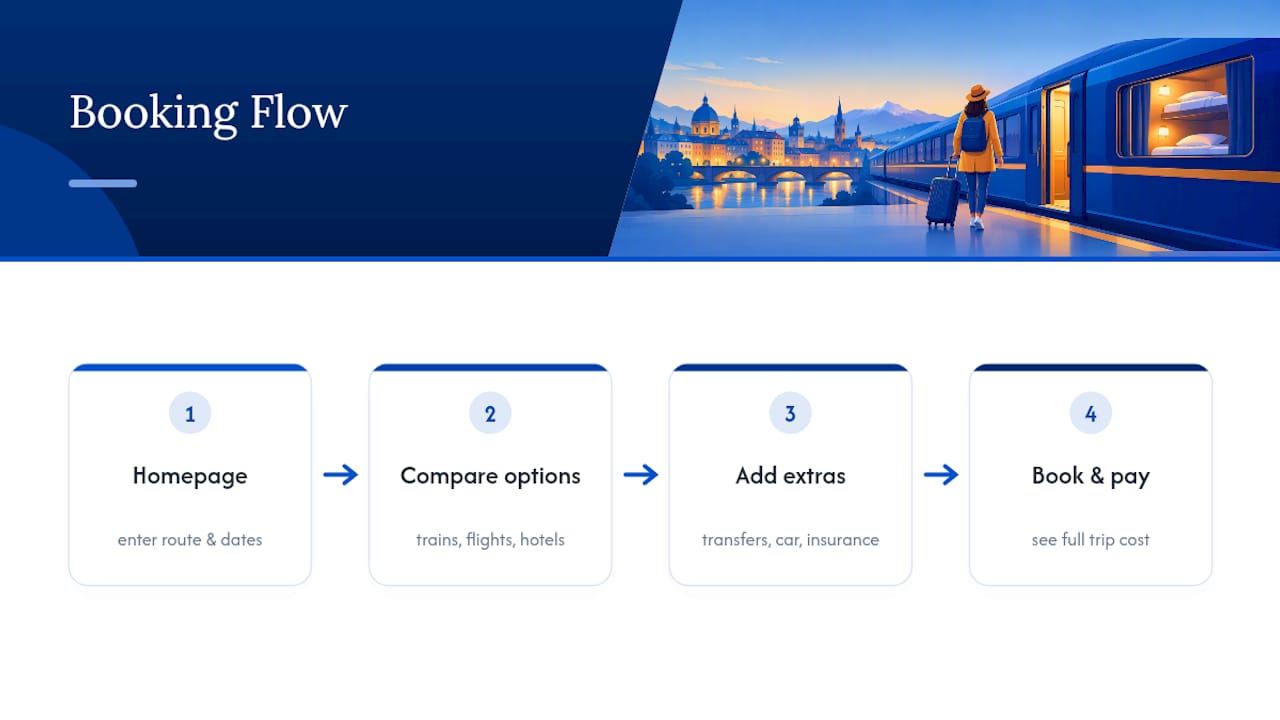
Comparing a Vienna to Rome sleeper against a budget flight plus a hotel night shouldn’t take five browser tabs. Some travel platforms put rail tickets, hotels, car rentals, airport transfers, and travel insurance side by side, so you can see the real total cost of a night train itinerary against flying before you commit.
If your route calls for a flight instead, whether it’s a short hop that doesn’t justify an overnight leg, you can compare flight options in the same place. Need a hotel for the nights you’re not on a train, or an airport transfer to make your connection with room to spare?
Both are part of the same booking flow, alongside airport transfer options for the legs a train can’t cover. Start comparing your route on the Global Holiday Planner homepage and see what the full trip actually costs, not just the train fare.
Sources
The Back-on-Track Night Train Map tracks current routes and seasonal changes. Seat61’s sleeper guide breaks down cabin types and real costs. The European Parliament’s 2026 passenger-rights briefing covers through-ticket protections. For connectivity on the road, Esimglobe’s eSIM guide covers staying connected across borders.
- The Man in Seat 61 — Sleepers and couchettes: the lowdown
- European Parliament briefing: passenger rights and rail (2026)
- Back-on-track
FAQ
How much do sleeper trains in Europe cost?
Prices vary widely by route, cabin type, and how far ahead you book, with couchettes generally cheapest and private sleeper compartments costing the most. The only way to know your real cost is to compare the fare against the full door-to-door alternative, including any hotel night or transfer you’d otherwise pay for. Current fares and availability are best checked directly through Global Holiday Planner’s rail and travel booking page.
Will there be sleeper trains in Europe in 2026?
Yes, sleeper services continue to run and expand on several corridors, including Nightjet’s Vienna to Rome route and European Sleeper’s Brussels to Berlin line. Some seasonal routes, like the Stockholm to Narvik service, still depend on time of year, so check the operator’s current schedule before booking.
How do I book a European night train?
Book directly through the operator’s website for your route, since reservations are compulsory on most night trains and inventory sells out ahead of peak season. If your trip spans multiple operators, look for a through-ticket rather than separate legs, since it offers stronger protection if a connection is missed.
Is there a sleeper train that goes from Paris?
Yes, Paris has several overnight options, including Intercités de Nuit domestic sleepers to destinations like Nice and Toulouse. International sleeper connections from Paris toward destinations like Barcelona also operate on a seasonal or route-specific basis, so confirm current service before locking in dates.