
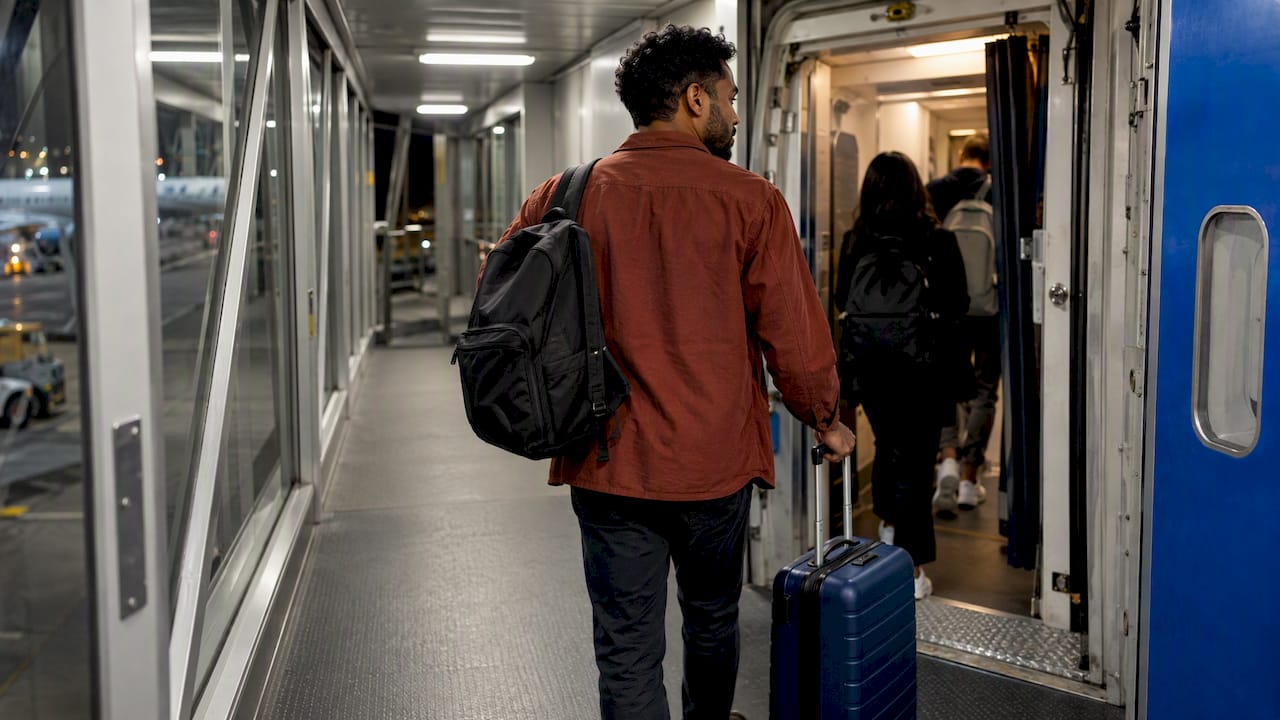
A red eye flight leaves late at night and lands the next morning, usually on a route short enough that you can’t get a full night’s sleep on board. The trade is simple: you give up a night in a real bed and get a full day at your destination. Whether that is a good deal depends on how you sleep, where you are going and what you have to do when you land. This guide covers the meaning, the pros and cons, how to choose the right flight and how to get through the night.
TL;DR
- A red eye departs at night and arrives in the morning. The name comes from the bloodshot eyes of tired passengers.
- The main upside is time: you use the whole day at your destination and skip a hotel night in the middle of the trip.
- The main downside is lost sleep, which brings fatigue, disorientation and a higher chance of simple mistakes.
- Bank sleep before you fly, never try a sleeping pill for the first time on board and get daylight soon after landing.
- Compare departure and arrival times, not just fares, and plan what happens between landing and hotel check-in.
Table of Contents
- What is a red eye flight, and why is it called that?
- Why people book red eyes: the real advantages
- The downsides nobody should skip over
- Is a red eye right for you? A quick decision guide
- How to find and choose a red eye that fits
- How to prepare before the flight
- On board: how to actually get some sleep
- After you land
- Perspective: where a red eye earns its place
- Plan the whole red eye trip in one place
- Special cases worth knowing
- FAQ
- Sources
What is a red eye flight, and why is it called that?
In commercial aviation, a red eye is a flight that departs at night and arrives the next morning, especially when the flight is too short to allow a full night of sleep, as the term is usually described. The name refers to red, tired eyes, a symptom of fatigue. That is the whole meaning: there is no special aircraft or fare class. It is an ordinary flight with an awkward timetable.
In the US the classic red eye is a transcontinental trip. You leave the West Coast in the late evening, spend five or so hours in the air and land on the East Coast at dawn, with the three-hour time difference eating most of your night. Flights from the East Coast to the West are far less common at night because you gain time rather than lose it. Long international crossings overnight are usually just called overnight flights, since they are long enough to sleep through.
Airlines schedule these flights because they keep aircraft busy that would otherwise sit idle, and airports can use them to move traffic away from the busy daytime hours. For you, that means the schedule exists for operational reasons first, and the passenger benefits (or doesn’t) as a side effect.
Why people book red eyes: the real advantages
You use the whole day at your destination
The biggest advantage is time. By traveling overnight, passengers can use the whole day at their destination. Fly out on a Friday after work and you can be at a Saturday morning meeting, a wedding brunch or a cruise terminal without burning a day in transit.
You skip a hotel night
If you would otherwise travel by day and spend the evening arriving, the red eye turns the flight into your “bed.” That is a real saving on a short trip. The same logic is why some European travelers choose sleeper trains: our guide to overnight trains in Europe shows how a night in transit can replace a hotel booking.
Quieter airports and a simpler day
Late-evening departures often mean shorter security lines than a Monday morning rush, and you travel when most people are at home. Many travelers also like the clean break: work all day, fly at night, start fresh.
A possible fare advantage
Red eyes can be cheaper on some routes and dates, but this is not a rule. Fares depend on route, season, how far ahead you book and how full the plane is. The honest approach is to compare the same route at several departure times and see what the difference is for your dates. Our 15 tips for finding cheap flights walk through that comparison, and the date-grid method in flexible date flights lets you see an entire week of prices at once.
The downsides nobody should skip over
The disadvantages are mainly physical. They include sleep deprivation, fatigue and disorientation, and night flying can interfere with natural sleep rhythms and change metabolism. The same source notes links between regular night flying and weakened immune systems and increased health risks, which is mostly a concern for people who do it often, such as crew, rather than a one-off traveler. If you have a heart condition, a sleep disorder or a condition affecting your immune system, ask your own doctor before you plan frequent overnight trips.
There are practical costs too:
- Poor sleep in a seat. Most people sleep badly sitting upright in economy, with cabin noise, light and a neighbor.
- Mistakes the next day. Fatigue and disorientation make simple mistakes more likely: a missed turn, a wrong confirmation number, a bad decision on a rental car contract.
- The dead zone after landing. You arrive at 6 a.m. and hotel check-in is at 3 p.m. Without a plan, you spend the morning in a lobby.
- Less margin if something goes wrong. A cancellation or long delay on a night flight can strand you in an airport with few services open.
- A lost day at the other end of the trip. Many people feel flat the day after they return, so a red eye home before a workday is rougher than a red eye out.
Newer aircraft can soften part of this. Aviation experts quoted by the Associated Press say planes like the Airbus A350 or Boeing 787 Dreamliner can make overnight flights more comfortable by maintaining a more comfortable cabin atmosphere that reduces physical exhaustion. If you can pick the aircraft type on a route, it is a fair tiebreaker.
Is a red eye right for you? A quick decision guide
| Your situation | Red eye is a good fit | Think twice |
|---|---|---|
| Trip length | Short trip where every daylight hour counts | Long trip where one lost day barely matters |
| Sleep habits | You nap easily upright with an eye mask | You need a dark, flat bed to sleep at all |
| First day plans | A light day, or a free morning to rest | Meeting, driving or presenting right after landing |
| Direction | Flying so you land in the morning, ready to stay active | Returning straight to a full workday |
| Group | Solo or a couple | Small children or older relatives who need routine |
| Budget | You have compared daytime fares and the gap is meaningful | The saving is small compared with an extra night in a hotel you would use anyway |
If most of your answers land in the left column, a red eye is a sensible tool. If they land on the right, a daytime flight and a rested arrival will probably serve the trip better. Families with young children should be especially cautious: kids don’t know your schedule, and a bad night becomes a bad day for everyone.
How to find and choose a red eye that fits
Look at the clock, not just the fare
Circadian rhythm researcher Malcolm von Schantz of Northumbria University notes that premium cabins help ward off sleep deprivation, but travelers can also choose flight times that line up with the destination’s evening, allowing a more natural night’s sleep. In practice, ask three questions about each option:
- When does it depart? A 10 p.m. departure gives you time for dinner and a calm airport. A midnight departure after a full workday leaves you fighting your body clock.
- When does it land? Landing at 5 a.m. is harder than landing at 8 a.m. Check how long it takes to reach your hotel or rental pickup at that hour.
- How long is the flight? A five-hour flight leaves you with perhaps three or four hours of actual sleep, once you subtract boarding, taxi, and descent.
Protect your connections
A nonstop red eye is the safest version. A connection on a night itinerary means a layover at an hour when airport shops and lounges are closed and rebooking options are thinner. If you must connect, leave a generous buffer.
Compare the full cost, not only the ticket
A cheap red eye can lose its edge if you pay for an early ride, an extra bag or a day-use room. Basic fares often exclude seat selection and carry-on, and the difference matters more when you want a particular seat for sleeping; our comparison of basic economy vs economy shows when a small saving stops being one. You can search routes and compare options side by side on our flight booking page.
Sort out your arrival before you leave
The morning after is where red eyes succeed or fail. Three things to settle before you board:
- A place to rest or freshen up. Ask your hotel about holding your bag or about early arrival. Our guide to getting early hotel check-in lists the approaches that actually work, and if you want to guarantee a room from the night before, you can book it on our hotel page.
- Safe transport at dawn. If you are tired, avoid driving yourself right away. A pre-booked ride removes the decision; see how to match your trip to an airport transfer or book on our airport transfer page.
- A light first day. Put the important meeting or the long drive in the afternoon or the next day if you can.
How to prepare before the flight
Bank sleep, don’t borrow it
To reduce the effects of red eye travel, experts recommend banking extra sleep in the nights before departure rather than flying on a sleep debt. In practice that means a normal bedtime, or a slightly early one, for two or three nights before you go, rather than a late night of packing.
Shift your clock a little
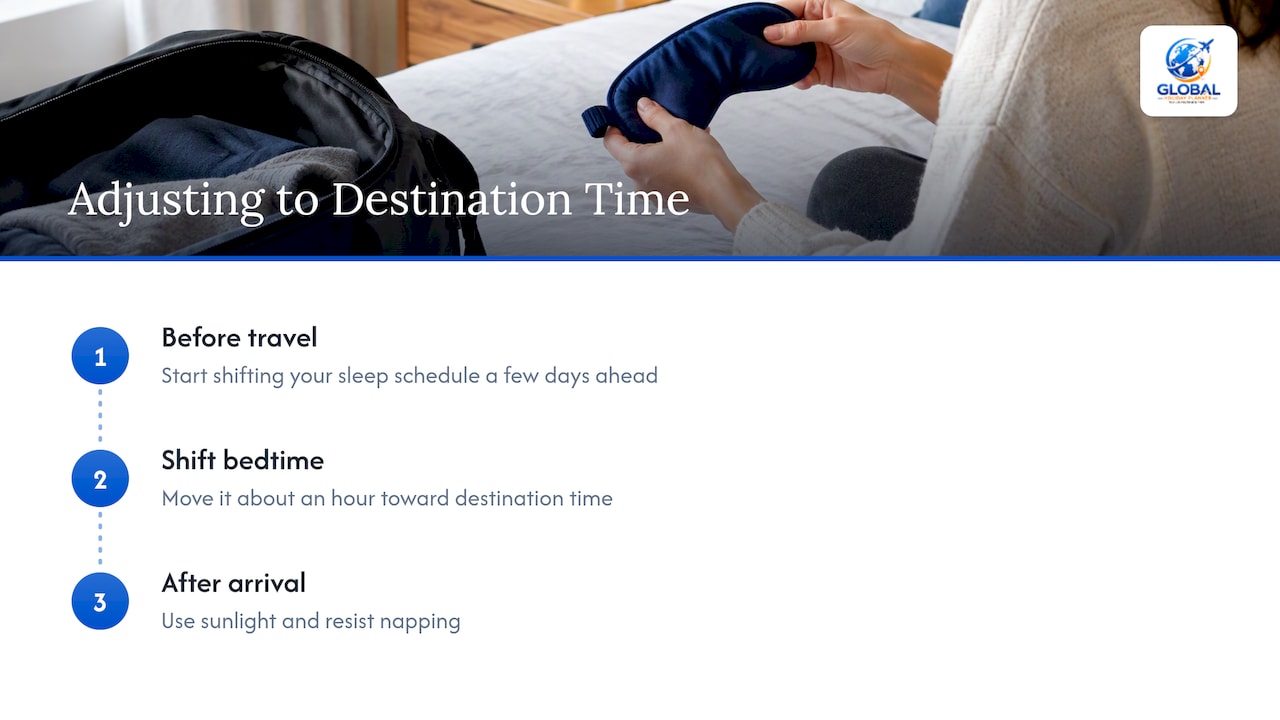
To adjust to a new time zone, you can start shifting your sleep schedule a few days before the trip and then resist napping when you arrive, using sunlight to reset your body clock. Even moving bedtime by an hour or so toward your destination’s schedule helps.
Eat and drink with the night in mind
A heavy dinner and alcohol both tend to work against sleep, and cabin air is dry. A light meal, plenty of water and not much caffeine after the afternoon is a safer pattern. If you are looking for ideas for lighter meals on the road, these tips for eating healthy on holiday cover meal choices that are easy to carry and easy on your stomach.
Pack for sleep
Southwest Airlines recommends bringing medication you take regularly, a blanket or pillow, an eye mask, and earplugs or noise-canceling headphones for an overnight flight. A few additions that help most travelers:
- A neck pillow or a rolled sweater to support your head.
- Warm, loose layers, since cabins can run cold.
- A refillable water bottle to fill after security.
- Toothbrush and a change of shirt in your personal item, so you can freshen up before landing.
- A printed or saved copy of your hotel and transfer details, because you will not want to think at 6 a.m.
Our trip planning checklist covers the rest of the documents and confirmations worth checking before any trip.
On board: how to actually get some sleep
Set your clock on takeoff. Jeff Kahn, co-founder and CEO of Rise Science, suggests setting your watch to the destination’s time and aligning eating and sleeping with it, which starts shifting your rhythm in the air. On a red eye the logic is straightforward: it is night where you are going too, so settle in early.
Choose your seat for sleep. A window seat gives you something to lean against and keeps neighbors from waking you. An aisle gives you freedom to move. If the flight is not full, look for a row where you can raise the armrests.
Skip the late meal. Eat before boarding if you can, then decline the cart and sleep. Southwest, for example, offers snack and drink options on its red-eye flights, so yes, drinks are generally served, but check your own airline’s policy for the route, since service varies by carrier and fare.

Be careful with sleeping pills. Experts advise against trying sleeping pills for the first time in-flight, because they can cause grogginess, restlessness or sleepwalking. Condé Nast Traveler’s reporting adds that some Ambien users experience retroactive amnesia and that sleepwalking is a risk when you don’t leave enough time to sleep. If you take any sleep aid, talk to your doctor or pharmacist first and test it at home, not at 35,000 feet.
After you land
The goal is to push your body clock toward local time without crashing. These steps work for most people:
- Get outside in daylight soon after landing. Sunlight is one of the most effective signals for resetting your internal clock, as the advice on reducing jet lag notes.
- Resist a long nap. If you must sleep, keep it short and early in the day.
- Eat breakfast at local time and drink water.
- Keep the first day light and go to bed at a normal local hour.
- Do not drive if you feel drowsy. Take a transfer or a taxi, and rent a car later in the day if you need one; you can compare options on our car rental page.
Perspective: where a red eye earns its place
We compare flights, hotels, car rentals and transfers in one place, so we see how trips fit together, and a red eye is rarely just a flight decision. It changes the hotel night, the arrival transfer, the first day’s plans and sometimes the car pickup. A fare that looks lower on its own can cost more once you add a day-use room or a morning you can’t use.
Our view: treat the red eye as a tool for specific trips. It works best for short trips, solo travelers and weekends where a day matters more than comfort. It works poorly when you land into a high-stakes morning, travel with small children or have a flat-bed requirement you can’t meet in economy. Before you book, line up the whole itinerary. Look at the flight, the hotel’s check-in time and your ride from the airport together, and decide whether the full plan holds up. That is the point of comparing everything side by side: the real cost and the best fit, not just the lowest ticket.
— Global
Plan the whole red eye trip in one place
We built our platform so you can check the flight, the hotel and the ride from the airport together. Start with our flight search to compare overnight and daytime departures for your dates, then add a room for the night before or an early arrival, and a pre-booked transfer for the morning you land. If a trip is likely to change, set up travel deal alerts so you can track the same dates and recheck hotel rates later.
Special cases worth knowing
Business travelers
A red eye can save a workday, but arriving to a 9 a.m. meeting on four hours of sleep carries a cost. Many business travelers use it to return home rather than to go out, and keep the first morning free. More ideas are in our business travel booking tips.
Groups and families
Seating matters more when several people travel together, and one tired child affects everyone. If you are organizing ten or more travelers, our group flight booking guide explains how to keep seats together.
Trips with tight connections
If the red eye is the first leg of a longer journey, such as a cruise, a rental pickup or an onward train, build in a buffer. Delays on a night flight eat into the morning, and a rebooked flight may not leave until later in the day. A rested arrival one day earlier costs less than a missed departure.
FAQ
Why is it called a red eye?
The name comes from the red, tired eyes that passengers tend to have after a night with little sleep. It describes the traveler’s condition on arrival, not the plane or the fare.
Do red eye flights serve drinks?
Often they do, but it depends on the airline and the fare. Southwest, for example, lists snack and drink options on its red-eyes. Check your airline’s page for your route, and consider skipping alcohol so you can sleep.
What should I bring on a red eye flight?
Bring an eye mask, earplugs or noise-canceling headphones, a blanket or pillow, any regular medication, water and a change of shirt for the morning. Airlines such as Southwest recommend most of these for overnight trips.
Are red eye flights worth it?
They are worth it when time is tight and you can sleep sitting up, because you get a full day at your destination and may skip a hotel night. They are less worth it when you must perform well right after landing. Compare the full cost, including the morning after, before you decide.
How do I recover after a red eye?
Get daylight soon after landing, keep any nap short and go to bed at a normal local time. Guidance on jet lag says to resist napping on arrival and use sunlight to reset your body clock. If you feel drowsy, don’t drive.
Sources
- Red-eye flight, Wikipedia
- What Is A Red Eye Flight? The Pros & Cons, Simple Flying
- How to avoid the worst of jet lag, AP News
- Red-Eye Flight Information, Southwest Airlines
- A Sleep Expert Shares How To Actually Sleep On A Plane, Henry Ford Health
- 8 Strategies for Reducing Jet Lag, University Hospitals
- How to Sleep on a Plane, Condé Nast Traveler
- Should you take sleeping pills on a flight, Condé Nast Traveler