

Book flights first. That’s the rule for most trips, most of the time, because airline seats are the scarcer, more volatile piece of the puzzle. Once you buy the ticket, reserve a refundable hotel rate within 48 hours to lock a bed without giving up flexibility.
There are exceptions. If you’re heading to a small island, a festival weekend, or a city mid-conference, hotel rooms can vanish before airfares even move. In that case, flip the order.
- Flights: limited seats per plane, prices that climb as departure nears
- Hotels: usually deeper inventory, with last-minute discounts that are a gamble and not a guarantee
The short version: book the scarce thing first, and use refundable holds to buy yourself certainty everywhere else.
Key Takeaways
The single most reliable rule in trip planning is to book whichever piece is scarcer first, usually flights, and secure everything else with refundable holds.
| Point | Details |
|---|---|
| Flights first, by default | Book flights before hotels for most trips since seat inventory is limited and prices climb as departure nears. |
| Watch for scarcity flips | Peak season, major events, and small islands can make hotels the scarcer resource, reversing the usual order. |
| Use refundable hotel holds | Reserve a cancel-friendly rate within 48 hours of buying flights to lock a bed without losing flexibility. |
| Match timing to trip type | Domestic trips run roughly 34 to 86 days out, long-haul peak trips need 4 to 6 months of lead time. |
| Compare both in one view | Globalholidayplanner lets you check flight timing and refundable hotel rates together before you commit. |
Table of Contents
- Why Flights Usually Come First: Scarcity and Price Volatility
- When Hotels Should Come First: Concrete Exceptions
- Timing Windows: When to Book Flights and Hotels
- Step-by-Step Checklist to Decide and Book
- How Global Holiday Planner Helps You Execute This Plan
- Sources
- FAQ
Why Flights Usually Come First: Scarcity and Price Volatility
A plane has a fixed number of seats. Once the cheap fare class sells out, the airline doesn’t restock it, it just moves you up to the next, pricier bucket. Hotels rarely work that way. A 200-room property has 200 chances to fill a night, and most cities have several competing properties on top of that. That structural difference is why flights typically need to be booked before you lock anything else.
Airfare pricing across most trip types is also more volatile than hotel pricing, which is a big reason flights usually function as the scarcest, fare-sensitive part of the trip. Waiting a few weeks on a flight can cost you a full fare class. Waiting a few weeks on a hotel booking usually just means fewer room-type choices, not a doubled price.
Award and points travelers feel this even more acutely. Airline award seats often open somewhere between 331 and 360 days before departure and disappear fast once they do, so booking the moment award inventory opens matters far more than chasing a hotel award night on the same timeline.
- Locking the flight first preserves your options for everything downstream
- Delaying the flight risks losing your preferred routing, times, or fare class entirely
When Hotels Should Come First: Concrete Exceptions
Sometimes the room is scarcer than the seat. Peak season in a resort town, a citywide convention, a major sporting event, or a small island with a handful of properties can all flip the usual order. In these cases, accommodation becomes the true bottleneck, and airlines can usually add capacity or you can shift your flight time far more easily than you can conjure a hotel room that doesn’t exist.
How do you know you’re in exception territory? Run a quick search for your dates and count viable properties.
- Fewer than roughly 15 viable hotels for your dates is a real scarcity signal
- Rapid, day-over-day price jumps on the same room type
- An event calendar showing a festival, marathon, or conference overlapping your trip
Pro Tip: Even when you flip the order and book a hotel first, avoid a non-refundable rate unless your travel dates are already locked. A refundable hold costs you nothing but a few extra dollars in flexibility.
Timing Windows: When to Book Flights and Hotels
Booking windows shift by trip type, and treating every trip the same is where travelers lose money on one end or flexibility on the other.
- Domestic leisure flights: aim for an appropriate lead time well in advance to balance price and availability.
- Short-haul international flights: 3 to 5 weeks out tends to hit the sweet spot before prices climb.
- Long-haul or peak-season flights: 4 to 6 months out, especially around holidays or school breaks when seats disappear early.
- Hotels generally: many chain properties open competitive rates 1 to 3 months out, though advisors recommend booking earlier for peak periods.
Fixed dates, award travel, and school holidays all compress these windows, since you lose the ability to shift a few days to chase a better fare. Set fare alerts and filter hotel searches for refundable rates so you can react the moment prices move instead of guessing.
Step-by-Step Checklist to Decide and Book
Run through this in order, and you’ll avoid the two most common mistakes: buying a hotel you can’t cancel, and dragging your feet on a flight until the fare jumps.
- Confirm entry requirements and lock your travel window. Check passport validity and visa rules, then pin down a date range, even a flexible one.
- Run a quick hotel availability scan. Count viable properties and check event calendars for your destination.
- Buy the flight once the fare sits within your acceptable range. Don’t wait for perfect. Waiting often costs more than it saves.
- Immediately reserve one or two refundable hotel rates. Different neighborhoods or price tiers give you a backup if plans shift.
- Buy travel insurance, then finalize ground transport and activities.
Pro Tip: Following a fixed sequence instead of booking whatever feels most urgent that day removes most of the second-guessing from trip planning.
How Global Holiday Planner Helps You Execute This Plan
Running this checklist manually across five browser tabs is exactly the kind of friction that makes people book badly. Globalholidayplanner puts the pieces in one view instead.
- Side-by-side flight search across booking windows, so you can see if waiting two weeks actually saves money or just adds risk
- Refundable-rate filters built into hotel search, so you can lock a backup room without a nonrefundable trap
- A bundled itinerary view that shows flights, hotels, car rentals, and transfers together as you build the trip
If you want the fuller mechanics behind fare timing, the first-international-trip checklist walks through the same sequence in more depth.
A Publisher’s Take on Booking Order
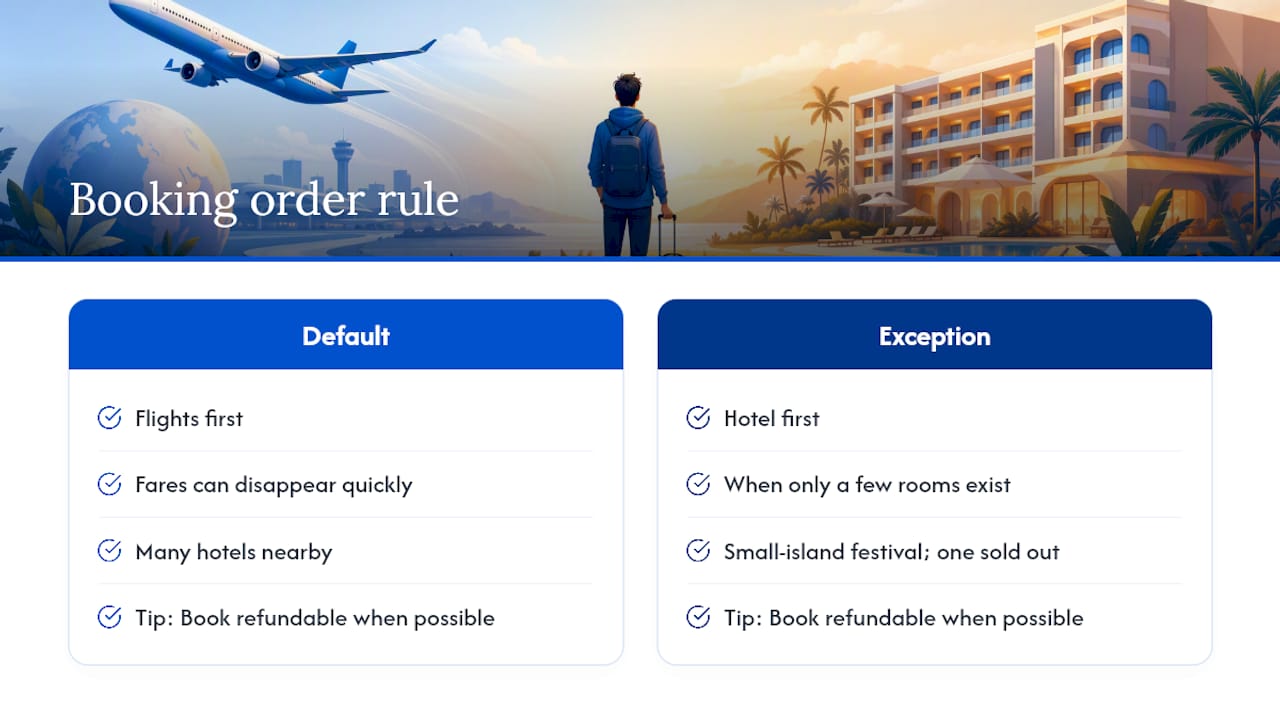
We default to flights first, almost every time, because a fare that’s available today can be gone by Friday while the hotel down the street rarely is. The exception that changes our mind: a small-island trip during a local festival, where three hotels exist and one is already sold out. That’s when we book the room before the seat.
Either way, book refundable when you can. It costs a little in rate, but it buys you room to change your mind.
— Global
Compare Flights and Refundable Hotels in One Place
There are other ways to piece this together, bouncing between an airline site, a hotel aggregator, and a separate insurance quote. It works, but it eats an evening and makes it easy to miss a cheaper fare window or accidentally lock a nonrefundable room.
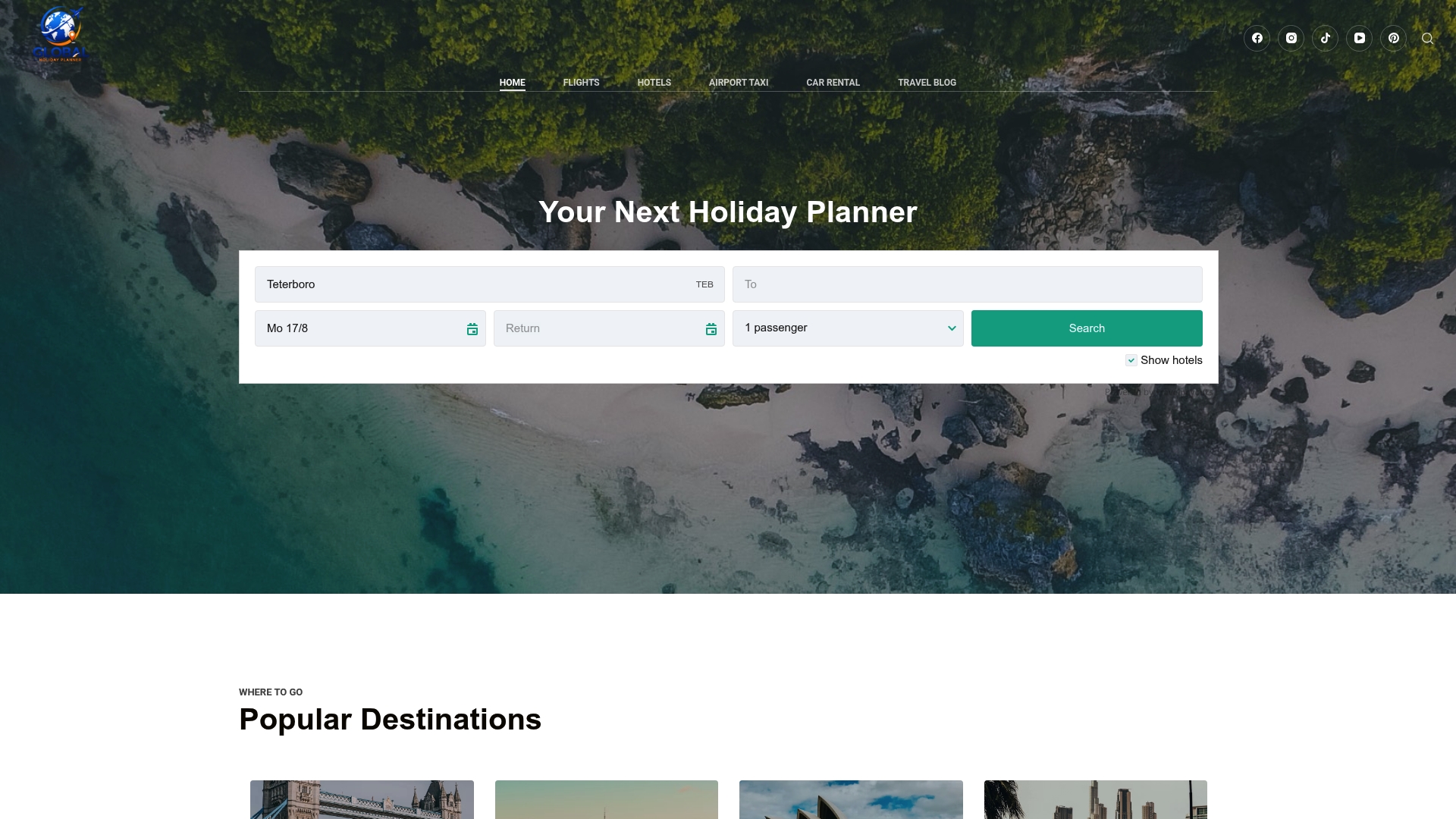
Globalholidayplanner puts flight timing and refundable hotel options in the same view, so you can see whether a fare is trending up before you buy and grab a cancel-friendly room right after. That saves the back-and-forth of juggling refund deadlines across three different confirmation emails. If you’re ready to start, compare flight options for your dates and see where the price stands today.
Sources
- Why You Should Never Book Your Flight And Hotel At The Same Time — Forbes
- What to Book First When Planning a Trip (Exact Order) — MonthlyTravelGuide
- Trip planning: all-at-once vs piece-by-piece — AwardLocker
FAQ
Do Flight Prices Go Down Two Days Before Departure?
Rarely, and it’s not a strategy worth betting on. Fares typically rise as the departure date approaches, which is exactly why booking the flight early is usually the safer move.
Is It Cheaper to Book Flights With Hotels?
Not necessarily. Bundling doesn’t always beat separate booking, since airfares and hotel rates often move on different pricing cycles, and unbundling lets you catch a hotel discount later without being tied to a package deal.
When Booking a Trip, What Should You Book First?
Book flights first in most cases, then reserve a refundable hotel rate right after. The exception is peak season or event-driven trips, where hotel rooms can sell out before flight prices even shift.
Do Hotel Prices Go Down Closer to the Date?
Sometimes, for unsold rooms outside of peak periods, but it’s an unreliable discount rather than a dependable pattern. Betting on a last-minute hotel deal during a high-demand event is a gamble most travelers should avoid.
Should I Book Hotels Now or Wait for a Better Rate?
If your dates fall in a low-scarcity window, a refundable rate booked now protects your options while still letting you rebook if a better price appears. If you’re heading into a scarce market, book now regardless of rate flexibility.