
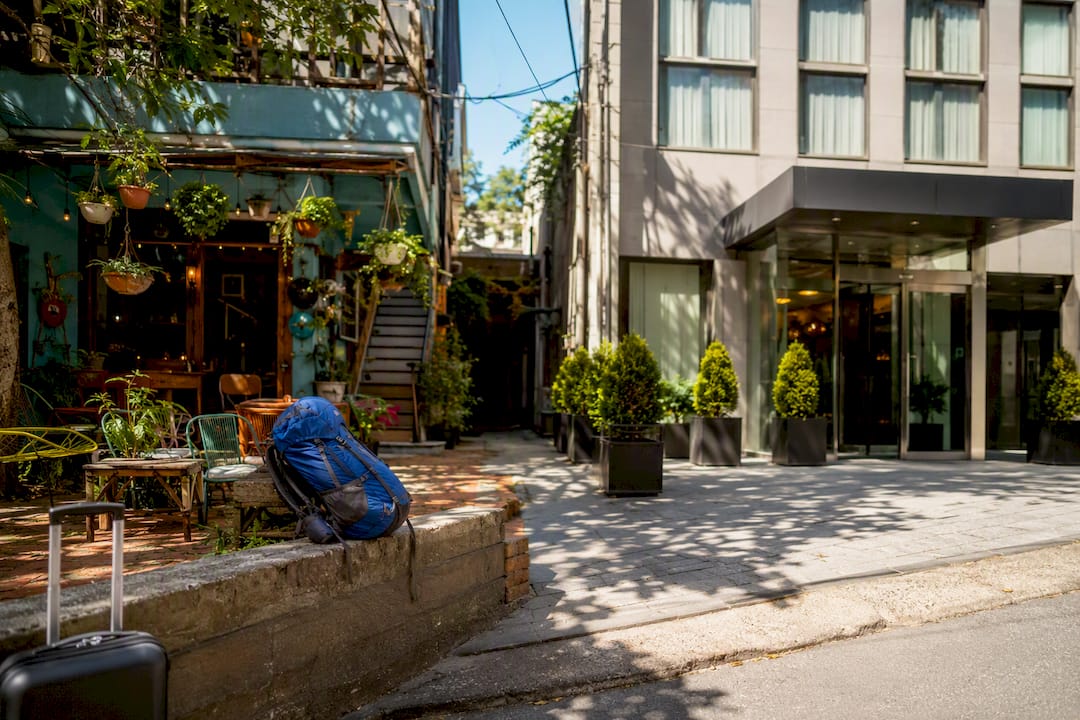
Choose a hostel when you care most about cost and meeting other travelers. Choose a hotel when privacy, predictability, and a good night’s sleep matter more than either of those. Two exceptions break the rule fast: a hostel private room gets you privacy at a hostel price, and two or three people splitting a hotel room can beat two dorm beds on cost per person.
- Hostel: cheaper, social, communal, flexible for solo travel
- Hotel: private, predictable, better for sleep and work
- Exception 1: hostel private rooms split the difference
- Exception 2: pairs and groups often do better splitting a hotel room
Real price examples and a six-point decision checklist follow below.
Key Takeaways
The right choice between a hostel and a hotel comes down to whether your budget or your privacy carries more weight on this specific trip.
| Point | Details |
|---|---|
| Solo travelers save the most | A hostel dorm bed can run $35 to $55 in Paris versus $120 to $250 for a hotel room. |
| Pairs should do the math | Two dorm beds versus one split hotel room can land within a few dollars per person. |
| Private hostel rooms bridge the gap | You get a locked door plus kitchen and lounge access, often below hotel prices. |
| Peak dates shrink the discount | Weekend and event pricing pushes hostel beds closer to budget hotel rates. |
| Compare before booking | Globalholidayplanner lets you filter room type and cancellation terms across both categories in one search. |
Table of Contents
- Hostel vs Hotel: The Real Differences in Amenities and Privacy
- Room Types Explained: Dorms, Private Rooms, and Pods
- Which Traveler Type Fits Which Option?
- Staying Safe: Hostel and Hotel Security Basics
- What a Hostel Bed Actually Costs vs a Hotel Room
- Hostels and Hotels: Pros, Cons, and the Middle Ground
- Book the Right Room Without the Guesswork
- Sources
- FAQ
Hostel vs Hotel: The Real Differences in Amenities and Privacy
A hotel in any city chain looks and feels roughly the same whether you’re in Lisbon or Cleveland. Hostels don’t work that way. One might be a converted 1920s townhouse with a rooftop bar; the next could be a converted school with bunk beds in the old classrooms. That inconsistency is part of the appeal for some travelers and a dealbreaker for others.
The amenity gap is where the two categories really split. Hotels lean on private bathrooms, daily housekeeping, and a staffed front desk that runs around the clock. Features families and business travelers tend to rely on without thinking twice. Hostels build around shared infrastructure instead: communal kitchens, common lounges, and organized activities like pub crawls or walking tours that double as a built-in social calendar, a structure that explains most of the social advantage hostels hold over hotels.
That trade shows up fastest in three everyday situations:
- Sleep quality. A hotel room with a closed door beats a dorm with six strangers and their alarms, every time, if uninterrupted sleep is the priority.
- Meals. Hostel kitchens let you cook pasta for $3 instead of paying restaurant prices three times a day, a savings beyond just the nightly rate that adds up over a week.
- Work and calls. Hotels give you a desk, a door, and quiet. Hostel common areas are built for conversation, not conference calls.
Privacy versus connection is really the whole decision in miniature. A solo traveler hoping to meet people gets that from a hostel almost by design. A couple on a work trip gets almost none of it, and doesn’t want to.
Room Types Explained: Dorms, Private Rooms, and Pods
A dorm bed is exactly what it sounds like: one bunk in a shared room, usually sleeping 4 to 12 people, split by gender or mixed. Female-only dorms exist at most hostels and tend to book out first, so reserve early if that’s your preference. Private hostel rooms are the middle tier: your own locked room, sometimes with a shared bathroom down the hall, still inside a building with a communal kitchen and lounge.
Before booking any hostel room, check four things:
- Whether the bathroom is en-suite or shared down the hall
- Whether lockers are included or cost extra
- Whether linens and towels are provided or rented
- Whether there’s a curfew or locked entry after a certain hour
Do the math before assuming a dorm wins on cost. Two dorm beds at $20 each run $40 a night for a pair. A private hostel room or a basic hotel double might run $70 to $90. Split two ways, that’s $35 to $45 per person, close enough that the dorm often isn’t worth losing the privacy.
Pro Tip: If you’re traveling as a pair or a trio, price the hostel private room before defaulting to dorm beds. It often lands close to the dorm rate once you add up two or three separate beds, and you keep the door.
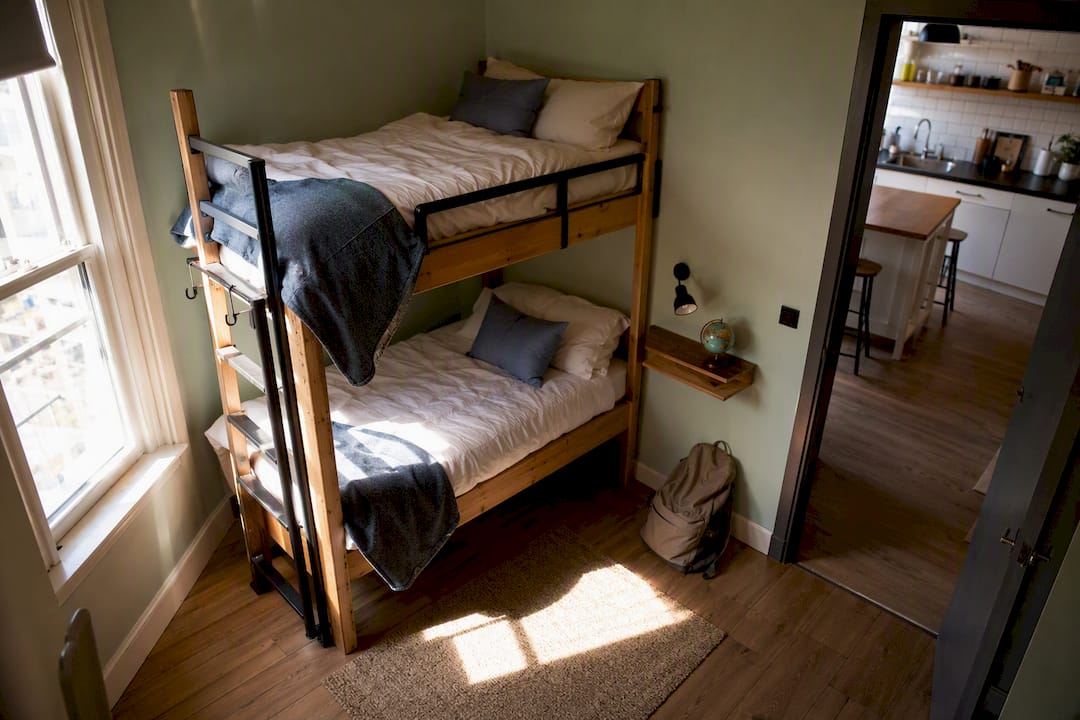
A hostel private room is the pick when you want your own space but can’t justify a full hotel budget. You keep access to the kitchen and common areas without sharing the actual room.
Which Traveler Type Fits Which Option?
Match your trip style to the accommodation, not the other way around.
- Solo backpacker: Hostel, almost always. Built-in social scene, cheapest beds, and staff who know the local budget tips. Caveat: light sleepers should pack earplugs.
- Budget couple: Run the math first. A hostel private room or a splittable hotel double both work; whichever is cheaper per person wins.
- Family with kids: Hotel, generally. Family rooms, consistent quiet hours, and private bathrooms outweigh the savings most hostels offer.
- Business traveler: Hotel. Predictable Wi-Fi, a desk, and a front desk that can print a document at 11 p.m. matter more than price here.
- Long-term stayer: Hostel with a private room or extended-stay rate. Kitchen access alone can cut a monthly food budget substantially.
- Digital nomad: Hostel only if it has a real coworking space; otherwise a budget hotel or aparthotel serves better for daily video calls.
Run these six questions before you book: What’s your per-person budget? How much privacy do you actually need? Do you want to meet other travelers or avoid them? How many nights are you staying? Will you cook any meals? Do you need a quiet workspace?
Staying Safe: Hostel and Hotel Security Basics
Hostels typically rely on individual lockers, key-card room access, and a reception desk that may close overnight in smaller properties. Hotels default to 24-hour staffed desks and a locked private room as the baseline, which is why they read as the safer default for late-night arrivals.
Watch for red flags before booking either one: listings with zero reviews, vague descriptions of entry hours, or hostel photos that never show a locker room.
- Bring a small padlock for hostel lockers, since not every property supplies one
- Confirm 24/7 reception before booking a hostel if you’re arriving after midnight
- Book a private room if you’re traveling alone and landing late at night
- Choose a refundable rate when your arrival time is uncertain
Pro Tip: Read the last 10 reviews, not just the star rating. Recent guest comments about lockers, noise, and front-desk hours tell you more than any overall score. For a deeper look at staying safe alone on the road, see our solo travel safety guide.
What a Hostel Bed Actually Costs vs a Hotel Room
The price gap is the whole reason this comparison exists, and it’s larger than most first-time travelers expect. A dorm bed in Paris typically runs $35 to $55 a night, versus $120 to $250 for a hotel room; in Bangkok, a dorm bed can drop to $7 to $15 against $40 to $100 for a budget hotel.
| Destination | Hostel dorm bed | Budget hotel room |
|---|---|---|
| Paris | $35–$55 | $120–$250 |
| Bangkok | $7–$15 | $40–$100 |
That gap narrows during peak weekends and major events, when demand pushes hostel bed prices closer to budget hotel rates. A solo traveler on an affordable hostel bed saves clearly against a pricier hotel room. A pair splitting that same $150 room pays $75 each, still more than two dorm beds but often worth it for the privacy.
Hostels and Hotels: Pros, Cons, and the Middle Ground
Hostels: cheaper nightly rates, built-in social scene, kitchen access that cuts food costs, flexible for solo travel. Downsides: less privacy, variable noise, inconsistent quality between properties.
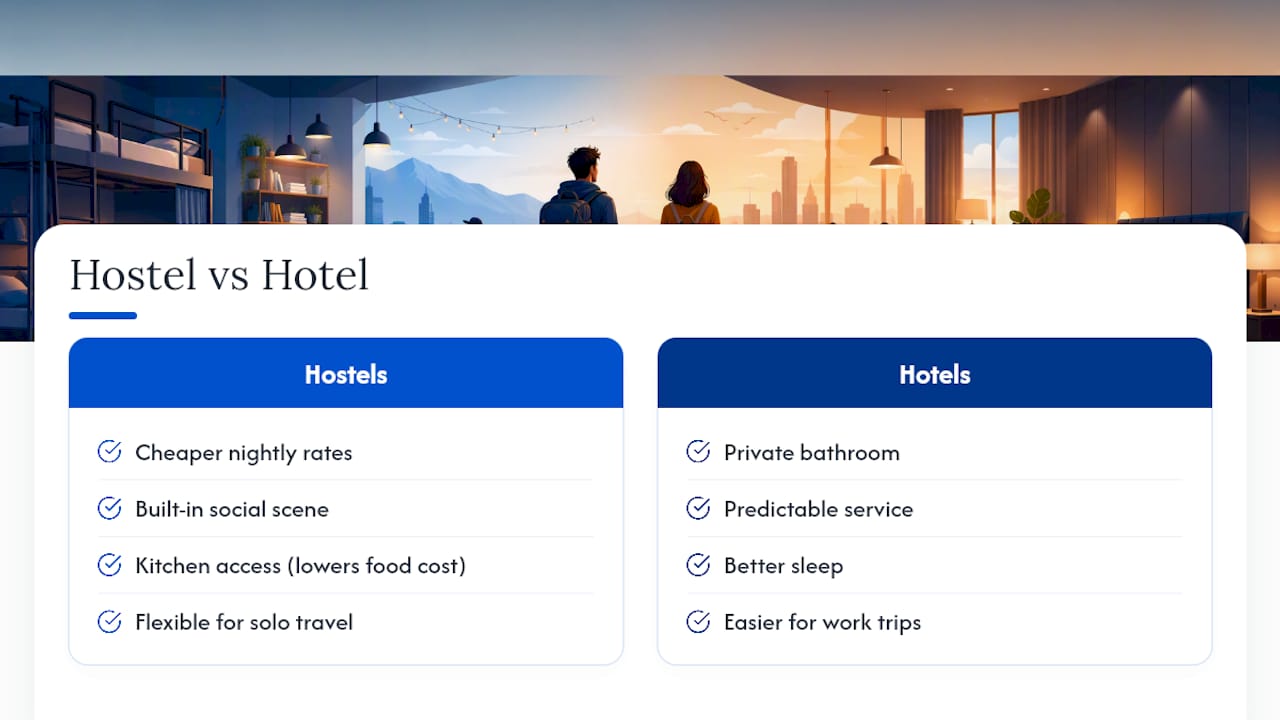
Hotels: private bathroom, predictable service, better sleep, easier for work trips. Downsides: higher cost, less spontaneous social contact, minimal flexibility on room-sharing to cut costs.
Boutique hostels and budget hotel chains blur these lines constantly, so read the room type and amenities list before assuming either label tells you everything.
How Global Holiday Planner Helps You Decide
Most travelers waste time checking five sites before landing on a room type that fits their trip. Globalholidayplanner lets you compare hostel and hotel pricing side by side, filter by private versus dorm, and book flexible cancellation rates when your plans aren’t locked in yet.
Book the Right Room Without the Guesswork
Comparing five booking sites to find one decent dorm bed or a fair hotel rate eats up an evening you don’t get back. Globalholidayplanner pulls hostel and hotel pricing into one search, so you can filter by private room versus dorm, check cancellation flexibility, and see the real cost difference before you commit.

If your trip leans toward the family or business side of this comparison, start with the hotel booking page to filter by room type and refundable rates. Traveling somewhere hostels dominate the budget scene? Our guide to affordable travel destinations pairs well with this search. Either way, run your dates through Globalholidayplanner before you book anywhere else and see the actual price gap for your trip.
Sources
- Hotels vs Hostels vs Airbnb – Global Experience Office
- Hostel vs Hotel: Which One Actually Wins in Europe? (Fresh Island)
FAQ
Are Hostels and Hotels the Same Thing?
No. Hostels center on shared rooms and communal spaces like kitchens and lounges, while hotels offer private rooms with daily housekeeping and a staffed front desk as the standard.
What Are the Disadvantages of Hostels?
Less privacy, variable noise levels, and inconsistent quality between properties top the list, along with shared bathrooms in most dorm setups and occasional curfews at smaller properties.
Why Are Hostels So Much Cheaper Than Hotels?
Hostels split the cost of a room across multiple guests and cut expensive services like daily housekeeping and private bathrooms, which is why a Paris dorm bed can run $35 to $55 against $120 to $250 for a hotel room.
Is a Hostel or Hotel Better for Couples?
Run the numbers on both: a hostel private room and a split hotel double often land close in price per person, so whichever comes out cheaper for your dates usually wins.
How Do I Book the Cheapest Option for My Trip?
Compare hostel and hotel pricing for your exact dates on a platform like Globalholidayplanner, since seasonal demand can shrink or widen the price gap by destination.