

All-inclusive bundles meals, drinks, and many on-site services into one upfront price. Full board covers your room plus three main meals but usually leaves drinks, snacks, and activities off the bill. That single distinction decides which one saves you money.
- Families and heavy drinkers at resort destinations usually come out ahead with all-inclusive.
- Solo explorers and city-breakers who eat out and skip the pool bar tend to do better with full board or even half board.
- Check the fine print anyway. All-inclusive is a spectrum, not a fixed standard, and one resort’s version can look nothing like another’s.
Key Takeaways
All-inclusive covers meals, drinks, and many on-site services in one price, while full board covers only meals, making the right choice depend on how much you plan to drink, snack, and stay on property.
| Point | Details |
|---|---|
| Core difference | All-inclusive adds drinks, snacks, and activities; full board covers only three meals a day. |
| Check the tier | All-inclusive ranges from budget to luxury, so confirm exact inclusions for your room category. |
| Do the math | Compare the daily upgrade cost (often £12 to £28 per person) against your likely drink and snack spending. |
| Watch for red flags | Phrases like “select bars only” or a separate “resort fee” often signal fewer real inclusions. |
| Confirm before booking | Compare board types and inclusions directly on Globalholidayplanner before you commit to a rate. |
Table of Contents
- All Inclusive vs Full Board at a Glance
- What Is Full Board? Meal Plan Explained
- What Is All-Inclusive? Definition and Tiers
- Full Board vs All Inclusive: What’s Actually Included
- How Much Does Upgrading to All-Inclusive Cost?
- Full Board vs All-Inclusive: Who Wins for You?
- Questions to Ask Before You Book Either Plan
- Final Booking Checklist Before You Confirm
- How Global Holiday Planner Helps You Compare Board Options
- Compare and Book With Confidence
- Frequently Asked Questions
- Sources
All Inclusive vs Full Board at a Glance
The fastest way to see the difference is to line up what each plan actually pays for. All-inclusive tends to fold in drinks, snacks, and daytime activities on top of meals; full board stops at breakfast, lunch, and dinner.
| Category | Full Board | All-Inclusive |
|---|---|---|
| Meals | Breakfast, lunch, dinner (often buffet) | Breakfast, lunch, dinner, plus snacks |
| Alcohol | Usually not included | House drinks typically included; premium often extra |
| Activities | Rarely included | Non-motorized water sports, fitness classes, kids’ clubs often included |
| Typical extras | Drinks, room service, spa, excursions | Motorized water sports, spa, off-site excursions, specialty dining |
| Best for | Foodies, city-adjacent trips, light drinkers | Families, resort-only stays, frequent drinkers |
The practical consequence: a full board quote that looks cheaper can end up costing more per day once you add drinks and snacks, especially for a group of four spending a week at the pool.
A few caveats worth flagging before you compare two hotels side by side:
- Inclusions shift by resort tier, so a budget all-inclusive can offer less than a mid-range full board package.
- Room category matters. Some resorts reserve certain restaurants or drink brands for suite guests only.
- “All-inclusive” on a booking site is a marketing label, not a regulated standard, so always check the property’s own policy page.
What Is Full Board? Meal Plan Explained
Full board means your room rate covers three meals a day: breakfast, lunch, and dinner. That’s it. Drinks, snacks between meals, and most on-site extras get billed separately, and Cvent’s rundown of full board confirms this is the standard definition across the hospitality industry, though beverage policies vary property to property.
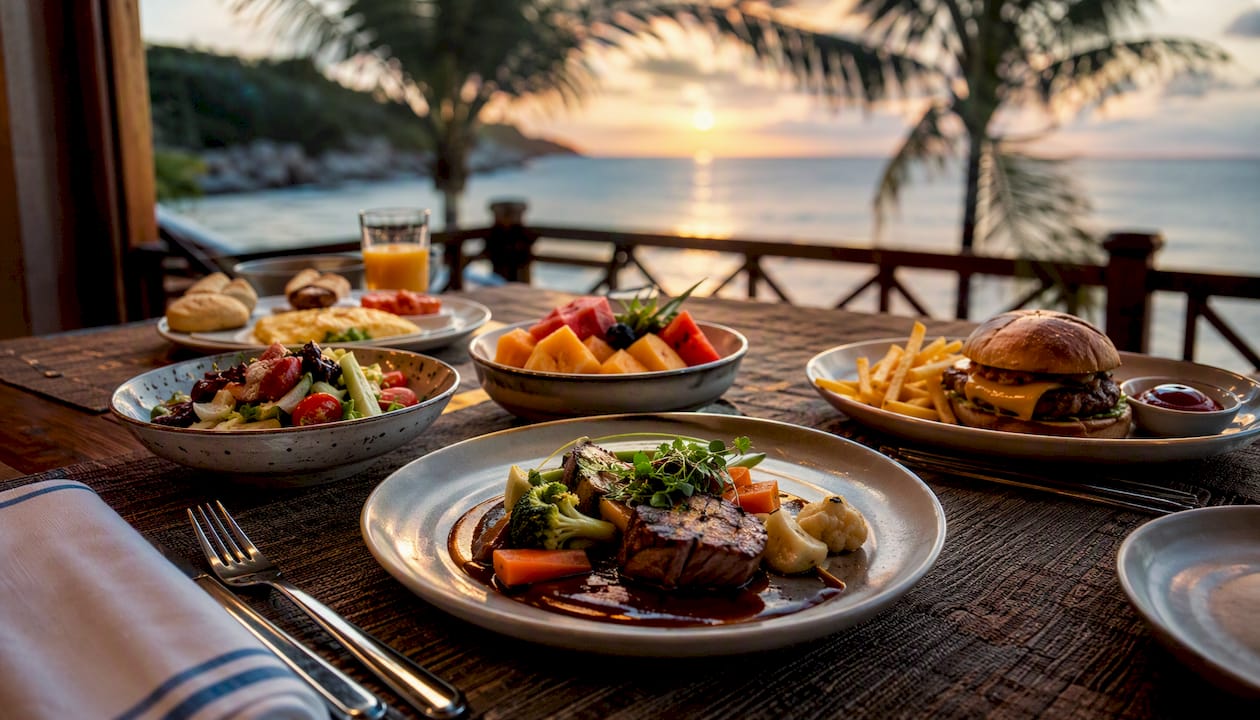
Lunch on a full board plan is often served buffet-style with set hours, while dinner might rotate between a buffet and a fixed-menu restaurant depending on the hotel. Some properties get more flexible and let you swap a meal for room service or a picnic lunch if you ask ahead. Others are strict: miss the dinner window and you’re paying à la carte prices out of pocket.
Full board makes the most sense in a few specific situations:
- Isolated resorts where leaving the property for food isn’t realistic, but you still want predictable costs without paying for drinks you won’t use.
- Families with young kids who eat on a fixed schedule anyway and don’t need flexibility around dining times.
- Destinations with limited or pricey local food options, where cooking meals into the price protects you from inflated tourist-area menus.
If your trip involves wandering into town for dinner most nights, full board stops making sense fast. You’re paying for a dinner you’re not eating, which is the most common reason travelers end up regretting this plan.
What Is All-Inclusive? Definition and Tiers
All-inclusive means one price covers your room, meals, snacks, standard drinks, and typically a slate of on-site activities and entertainment. According to The Points Guy’s glossary, that usually includes three meals, snacks, non-premium alcohol, and basic entertainment, while premium spirits, motorized water sports, spa treatments, and most off-site excursions cost extra.
The label covers a wide spectrum, though, and treating every “all-inclusive” resort as equal is where a lot of travelers get burned.
- Budget tier: meals and house drinks only, limited restaurant choice, entertainment capped to a nightly show or two.
- Mid-range tier: multiple restaurants, branded but standard-shelf alcohol, non-motorized water sports, and kids’ clubs.
- Luxury and ultra-luxury tier: premium spirits, à la carte dining with no reservation limits, and sometimes airport transfers folded into the price.
Hilton’s own all-inclusive policy page lists non-motorized water sports, fitness programs, and kids’ and teens’ clubs as standard inclusions, while explicitly excluding motorized water sports, off-site excursions, and spa treatments. That’s a useful benchmark because it comes straight from a hotel brand rather than a marketing blurb on a booking aggregator.
Pro Tip: Before you book, pull up the resort’s own inclusions list (not just the travel site’s summary) and check what applies to your specific room category. Suite guests sometimes get premium drinks and specialty dining that standard rooms don’t.
Full Board vs All Inclusive: What’s Actually Included
Comparing two offers side by side only works if you know exactly what’s being measured. Here’s how the two plans typically break down once you get past the headline label.
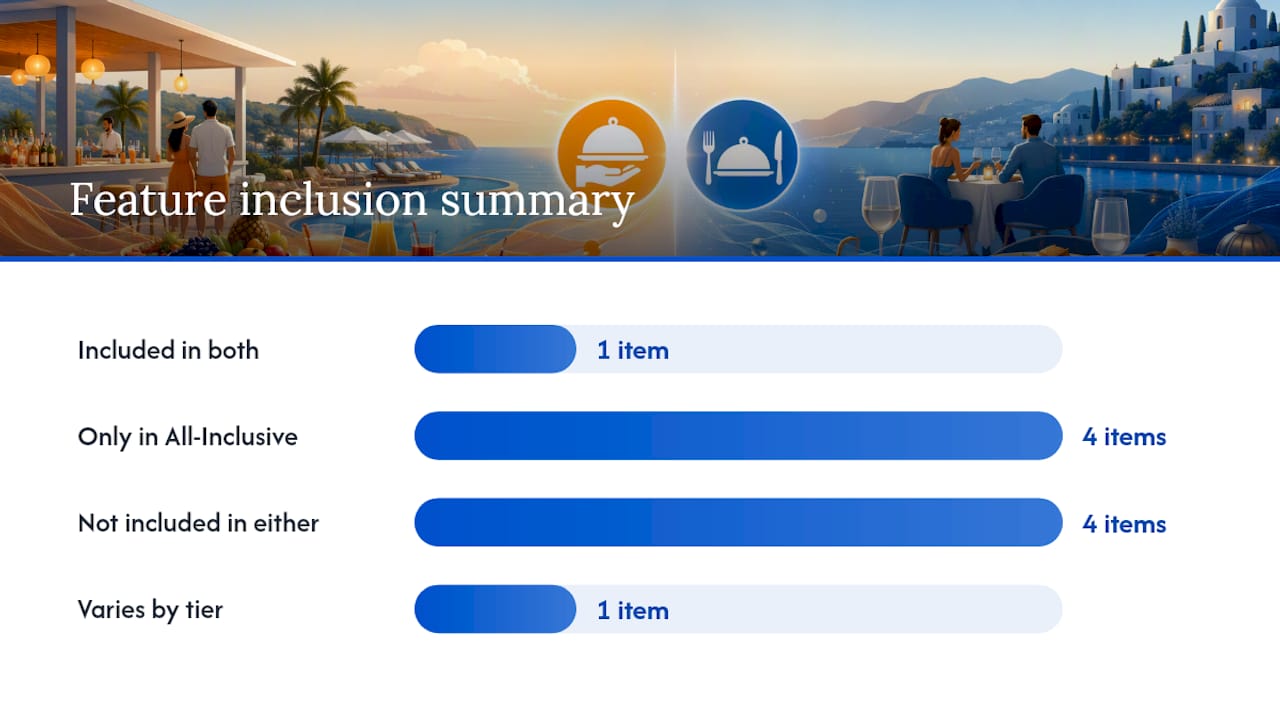
| Item | Full Board | All-Inclusive |
|---|---|---|
| Meals | Included | Included |
| House drinks | Usually not included | Included |
| Premium drinks | Not included | Usually extra |
| Snacks | Rarely included | Included |
| Room service | Often extra | Sometimes included |
| Non-motorized activities | Not included | Often included |
| Motorized water sports | Not included | Usually extra |
| Spa treatments | Not included | Usually extra |
| Off-site excursions | Not included | Usually extra |
| Airport transfers | Not included | Varies by tier |
The gap that surprises people most is drinks. A week of afternoon cocktails and dinner wine adds up fast, and that’s the single line item that tips the math toward all-inclusive for most vacationers. Research on all-inclusive versus half board pricing notes that inclusions vary so much by tier that the label alone doesn’t guarantee premium dining, transfers, or top-shelf spirits, so the smart move is always confirming the actual list for your room type.
Watch for a few red flags in resort descriptions before you book anything:
- Wording like “select bars only” or “local brands only” signals a house-drinks tier, not premium.
- Mandatory “resort fees” tacked on at checkout can quietly erase the savings an all-inclusive price seemed to offer.
- Specialty restaurants advertised as “included” sometimes carry a per-visit surcharge or a strict reservation cap of one or two nights per stay.
One booking platform’s fine print described an “all-inclusive” package that excluded every specialty restaurant beyond the main buffet and charged $15 per cocktail after 6 pm. That’s the gap between the label and the reality, and it’s exactly why reading the actual inclusions list matters more than trusting the word on the search results page.
How Much Does Upgrading to All-Inclusive Cost?
The real question isn’t which plan sounds better. It’s which plan costs less once you add up what you’d actually spend.
Hidden costs show up differently on each plan:
- Full board hidden costs: drinks, snacks, spa visits, room service, and any dinner you skip at the resort in favor of eating out.
- All-inclusive hidden costs: premium liquor upgrades, specialty restaurant surcharges, motorized water sports, spa treatments, and Wi-Fi in some budget properties.
Vuelo’s pricing analysis found that upgrading from a half board package to all-inclusive typically runs about £12 to £28 per person per day. Run a quick gut check before deciding:
- Estimate what you’d spend daily on drinks and snacks if they weren’t included (a couple having two drinks each plus a snack easily hits $30 to $50 a day at resort prices).
- Compare that number against the per-day upgrade cost the hotel or travel site quotes.
- If your estimated spending beats the upgrade price, all-inclusive wins on pure math.
For families and regular drinkers at a resort-heavy destination, that upgrade can pay for itself within a few days for many travelers. For a city break or a trip built around exploring local restaurants, the math flips: you’re paying for meals and drinks you’ll never use.
Full Board vs All-Inclusive: Who Wins for You?
Neither plan is universally better. It comes down to how you actually plan to spend your days.
Full board pros and cons:
- Pro: tighter cost control if you rarely drink or snack outside meals.
- Pro: works well when local dining is expensive or scarce.
- Con: drinks and lunch extras aren’t covered, so daily spending is less predictable.
All-inclusive pros and cons:
- Pro: one price covers the whole vacation, which makes budgeting simple for families.
- Pro: convenient if you plan to stay on property most days.
- Con: premium extras (top-shelf liquor, spa, excursions) can still cost more, and it can nudge you toward staying put instead of exploring.
Matching plan to traveler type usually looks like this: families with young kids and couples who plan to relax poolside tend to get the most value from all-inclusive, especially at family vacation destinations built around resort life. Solo travelers and explorers who’d rather wander into town for dinner usually do better with full board or half board. Destination matters too. Resort-heavy spots like Turkey, Egypt, the Canary Islands, and the Caribbean tend to favor all-inclusive, while foodie-driven cities usually favor a lighter meal plan.
Questions to Ask Before You Book Either Plan
A few direct questions to the hotel or a careful read of the booking page will save you from most bad surprises.
- Which drinks are included, house or premium, and are there brand exclusions?
- Are specialty restaurants included, and is there a limit on visits per stay?
- Are transfers, tips, and service charges included in the quoted price?
- What’s the policy if you want to eat off-site for a night, does the resort deduct anything from your rate?
- Are activities like motorized water sports or spa access included, or priced as add-ons?
Watch the wording on the property page too. Phrases like “select bars,” “local brands only,” or a separate line for “resort fee” are the biggest signals that the all-inclusive label is doing less work than it sounds.
Pro Tip: Email the hotel directly to confirm inclusions for your exact room category, then screenshot both the email reply and the booking page. If something’s missing at check-in, you’ll have proof of what you were promised.
Final Booking Checklist Before You Confirm
Run through this list right before you hit “confirm,” not after.
- Verify the exact list of included meals, drinks, and activities for your specific room type.
- Confirm operating hours for bars and restaurants, some close earlier than you’d expect.
- Check whether any restaurants or drink brands are reserved for higher room categories.
- Compare the all-inclusive upgrade price against what a full board plus daily extras would cost, using two quotes from the same hotel booking platform if you can.
- Ask about tipping norms and service charges, since some all-inclusive resorts fold gratuities in while others expect cash tips daily.
A drinks package is only worth it if you’ll actually use it most days. If you’re not a big drinker, a full board rate plus the occasional paid cocktail is almost always cheaper.
How Global Holiday Planner Helps You Compare Board Options
Globalholidayplanner surfaces the package details that matter, including meal plans, drink policies, and typical add-on costs, side by side so you’re not digging through five different hotel pages to compare offers.
The editorial process behind these comparisons includes a few consistent checks:
- Reviewing hotel brand policy pages directly, the same kind Hilton publishes, rather than relying on third-party summaries.
- Noting room-category differences that change what’s actually included in a quoted price.
- Flagging when a property’s terms would benefit from a direct email confirmation before booking.
That groundwork is also what shapes guides like the hotel booking tips resource, built to help you avoid the same fine-print traps covered above.
A Quick Take From the Global Team
The most common mistake we see is travelers booking on the word “all-inclusive” alone, without checking which drinks, restaurants, or activities actually apply to their room. Our honest recommendation: for most travelers heading to a resort destination, all-inclusive wins on convenience and cost control, but only after you’ve run the booking checklist above on your specific property.
Compare and Book With Confidence
Globalholidayplanner gives you a clearer starting point than scrolling through five hotel pages trying to guess what “all-inclusive” actually covers at each one. You get board type, drink policy, and typical add-on costs laid out together, so the comparison happens before you commit rather than after you’ve already checked in.
That matters most when you’re weighing a full board rate against an all-inclusive upgrade for the same resort, since the difference often comes down to a $15 to $25 daily gap that’s easy to miss when you’re comparing prices alone. Search hotels by board type and price to see the tradeoff for your dates, or start from the flight and hotel deals hub if you’re still narrowing down where to go. Either way, you’ll have the inclusions in front of you before you enter a card number.
Frequently Asked Questions
What’s the main difference between all-inclusive and full board?
All-inclusive bundles meals, drinks, and many on-site activities into one price. Full board covers only breakfast, lunch, and dinner, with drinks and extras billed separately.
Is all-inclusive always more expensive than full board?
Not necessarily. The upgrade often costs a moderate daily amount per person, which frequently pays for itself if you drink regularly or travel with a family that snacks throughout the day.
Does all-inclusive include alcohol?
Usually house-brand alcohol is included, while premium spirits and top-shelf brands typically cost extra. Always confirm which specific brands are covered.
What’s usually not included in full board?
Drinks, snacks between meals, room service, spa treatments, and most on-site activities are typically excluded from full board pricing.
How do I confirm what’s included before booking?
Email the hotel directly, ask about your specific room category, and save the reply along with a screenshot of the booking page as proof of what was promised.
Is all-inclusive worth it for a city trip?
Rarely. If you plan to eat out and explore local restaurants, you’ll end up paying for resort meals and drinks you never use, making full board or half board the better value.
Sources
- What is an all‑inclusive resort? | The Points Guy
- What’s included at all‑inclusive resorts and hotels – Hilton
- What Does All‑Inclusive Include? Meals, Drinks & Fine Print (2026) | All‑Inclusive Guide
- All Inclusive vs Half Board: Which Is Worth It? | Vuelo
- Half board vs full board at hotels: The ultimate guide | Cvent