

Pick standard or second class for short trips under two hours, upgrade to first or premium for long daytime journeys or work travel, and book a private sleeper for overnight routes when you want real rest. Business class is the splurge tier, worth it mainly if you want maximum comfort regardless of cost. Once you know how these tiers map across countries, booking the right train seat class becomes a quick decision rather than a guessing game.
TL;DR:
- European first class typically offers 97 to 127 centimeters of seat pitch, versus 76 to 86 in second; compare the actual fare gap before upgrading.
- On Chinese high speed trains, First Class costs 20% to 40% more than Second Class, while Business Class costs about twice the First Class fare.
- For Indian overnight travel, 1A offers a lockable cabin, 2A and 3A provide shared berths with air conditioning, and SL has no air conditioning.
- For overnight routes, confirm whether the sleeper is private or shared before booking because the label alone does not guarantee a private compartment.
- Coach suits Amtrak trips under three hours; Acela First adds seat service and lounge access, while Business provides extra legroom on select routes.
Table of Contents
- How train seat classes compare across layouts and amenities
- Europe: first class, second class, and night-train sleepers
- China: reading Second, First, and Business on booking screens
- India: decoding 1A, 2A, 3A, SL, CC, and 2S
- Amtrak classes in the United States: Coach, Business, and Acela First
- Night trains and sleepers: a different set of rules
- Your step-by-step checklist for picking the right class
- What experienced travelers weigh before upgrading
- Compare seats and fares before you book your rail ticket
- FAQ
- Sources
How train seat classes compare across layouts and amenities
Every country labels its train seat classes a little differently, but the underlying logic stays consistent. Standard or second class typically uses a 3+2 or 2+2 seating layout, first or premium class usually drops to 2+2 or 2+1, and business class often goes as narrow as 1+2 for maximum personal space. The fewer seats per row, the more legroom and width you get.
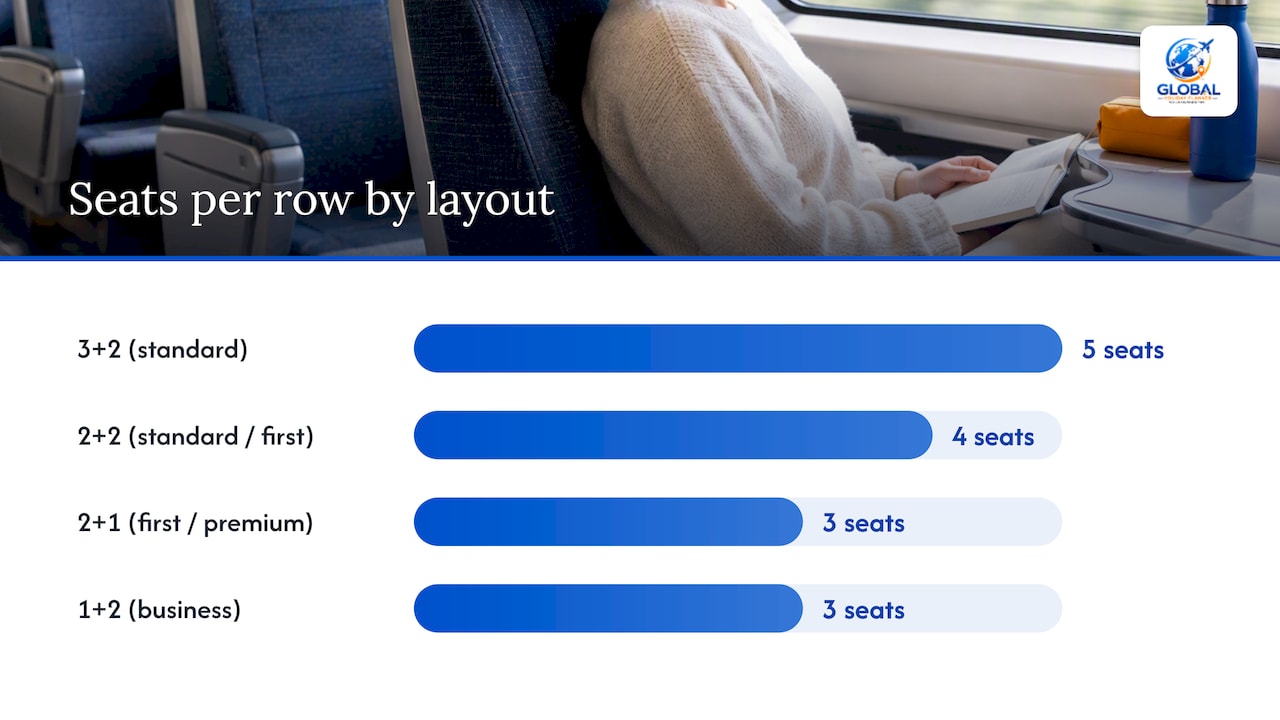
On European trains, the pitch gap between classes is well documented: first class seat pitch typically runs 97 to 127 centimeters, compared with 76 to 86 centimeters in second class. The extra legroom in first class matters greatly on longer rides but is less noticeable on short commuter trips.
When you are comparing classes on a booking screen, look past the label and check these:
- Layout: how many seats per row, and whether it is 3+2, 2+2, 2+1 or 1+2.
- Pitch and width: the actual seat dimensions, when the operator lists them.
- Price delta: the dollar or percentage gap between the class you have and the one above it.
- Amenities included: power outlets, meals, quiet car designation or lounge access.
Seat pitch is one of the clearest numbers to compare before booking: European first-class seats offer 97 to 127 centimeters of pitch versus 76 to 86 centimeters in second class, a gap that often determines whether a long ride feels comfortable or cramped. Most booking platforms display classes side by side with their fares listed next to each other, so the real decision point is usually the price gap rather than the class name itself.
Europe: first class, second class, and night-train sleepers
European first class generally uses a 2+1 layout, meaning three seats across a row instead of the four you get in second class’s 2+2 arrangement. That extra space, combined with the wider pitch noted above, makes first-class cabins noticeably quieter and less crowded even when the train is full.
First class tends to pay off under specific conditions such as longer journeys, the need for a quiet space to work, or when the fare gap is relatively small or includes meals.
Guidance from Rick Steves and Viamo’s class comparison both point to the same rule: short trips under two hours rarely justify the upgrade, but longer rides or work travel often do, especially when first class includes at-seat meals or a dedicated quiet car.
Overnight trains complicate this logic. On night trains, the meaningful split is between a private sleeper cabin and a shared couchette, not between first and second class seats. A couchette gets you a bunk in a shared compartment, while a private sleeper locks you in with just your travel companions. If you are traveling alone or want real privacy, the sleeper is worth the premium; for a short overnight hop with friends, a couchette works fine.
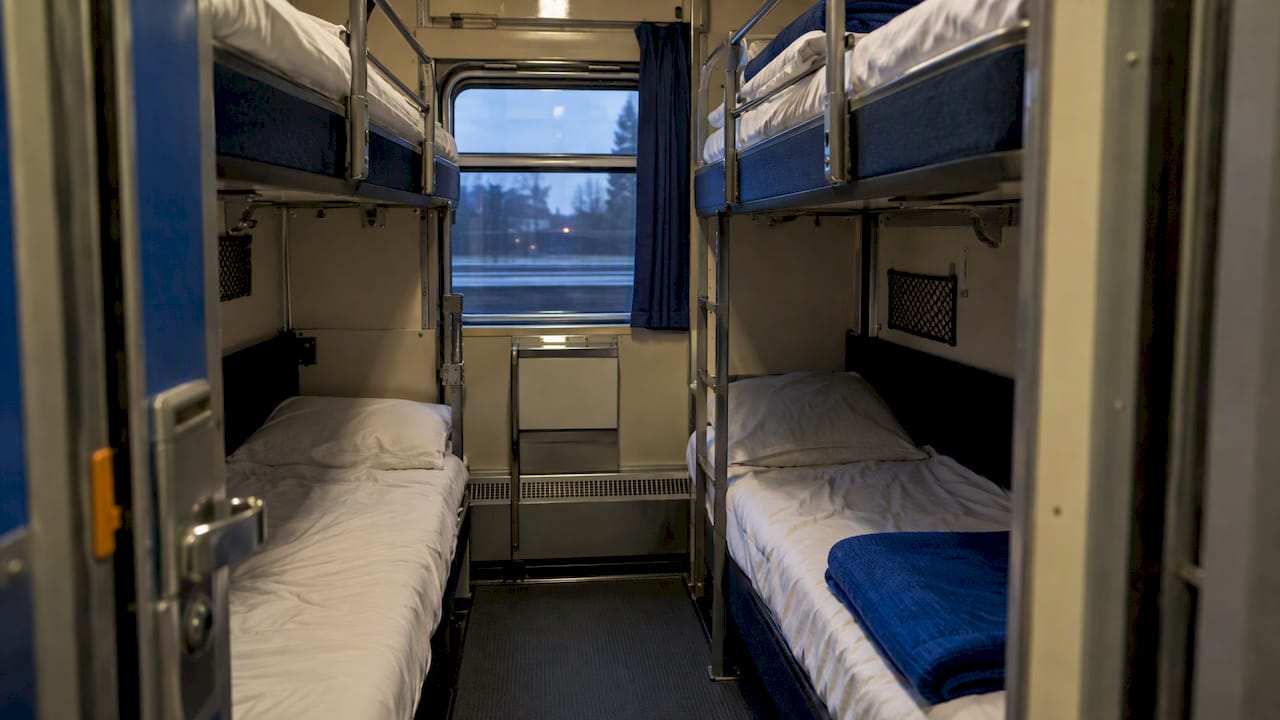
Pro Tip: Before booking a European sleeper, confirm whether the fare includes a private compartment or a shared couchette, since the word “sleeper” alone does not guarantee privacy.
If you are deciding between a multi-country pass and single tickets, how pass class affects your travel options is worth checking before you commit to a route.
China: reading Second, First, and Business on booking screens
Chinese high-speed rail uses three primary tiers, and the Chinese characters translate directly to layout differences. Second Class (二等座) uses a 3+2 layout, First Class (一等座) uses 2+2, and Business Class (商务座) uses a 1+2 arrangement with much wider individual seats.
| Class | Chinese name | Layout | Typical fare vs. Second |
|---|---|---|---|
| Second Class | 二等座 | 3+2 | Baseline |
| First Class | 一等座 | 2+2 | +20% to 40% |
| Business Class | 商务座 | 1+2 | About 2x First Class |
First Class typically costs 20 to 40 percent more than Second Class, while Business Class runs roughly double the First Class fare. That premium buys a wider seat and a quieter car, but on a two-hour trip the gap in comfort is smaller than the gap in price.
For overnight routes, some high-speed trains offer sleeper berths, and traditional overnight trains still run soft and hard sleeper compartments separate from the daytime seat classes entirely.
India: decoding 1A, 2A, 3A, SL, CC, and 2S
Indian Railways uses letter codes instead of simple tiers, and each one signals a different mix of privacy, air conditioning, and seat versus berth:
- 1A (First AC): private lockable cabins, the most expensive overnight option.
- 2A (AC 2-tier): curtained berths in a shared compartment, less private than 1A but air-conditioned.
- 3A (AC 3-tier): tighter berth spacing, still air-conditioned, a common overnight choice.
- SL (Sleeper Class): non-AC berths, the budget overnight option.
- CC (AC Chair Car): daytime AC seating, no berths.
- 2S (Second Sitting): basic daytime seating, no AC, the cheapest option.
Pick an AC berth class (1A, 2A or 3A) for overnight travel when you want air conditioning and some privacy, and CC or 2S for daytime trips where you just need a seat.
Pro Tip: Always check the reservation chart for your coach type before boarding, since equipment can vary by train even within the same class code.
Amtrak classes in the United States: Coach, Business, and Acela First
Amtrak keeps its system simpler than most international networks. Coach Class is the standard seat, Business Class adds extra legroom and priority boarding on many routes, and Acela First Class includes priority boarding, at-seat meal service, and lounge access on the Acela corridor.
- Coach: standard seating, the default choice for most domestic trips.
- Business: extra legroom, priority boarding, available on select routes.
- Acela First: at-seat service, lounge access, and loyalty point bonuses on some fares.
For most domestic trips under three hours, Coach is fine. For longer Northeast Corridor runs or when you want guaranteed quiet and at-seat service, Acela First earns its premium.
Night trains and sleepers: a different set of rules
Overnight travel flips the usual class logic. Privacy and sleep quality matter more than seat width, so the real choice is between a private sleeper and a shared couchette or berth, not between first and second class as you would define them during the day.
- Check the compartment type first: confirm whether you get a private cabin or a shared bunk room.
- Choose a lower bunk if you have mobility concerns or want easier nighttime access.
- Pay for the private sleeper when traveling solo, with family, or when you genuinely need rest before the next day’s plans.
A guide to overnight trains in Europe that save you a hotel night walks through specific routes where sleepers make the most sense.
Your step-by-step checklist for picking the right class
Before you book, run through this quick sequence:
- Check the fare gap between classes on your specific route, not a general estimate.
- Look at the seat map to confirm layout and legroom.
- Verify the train model or equipment type listed on the booking page.
- For overnight trips, confirm sleeper availability and compartment type.
- Review how to book trains online for a walkthrough of what booking screens typically show.
What experienced travelers weigh before upgrading
Cost, comfort, and purpose rarely point the same direction. Save on standard or second class for short hops; spend on business or first when the trip is long, overnight, or work-critical. Always check the actual fare gap on your route before assuming the upgrade is worth it.
— Global
Compare seats and fares before you book your rail ticket
We built our platform to show you the real fare gap between train classes before you commit, the same way we compare flights, hotels, and car rentals side by side. Checking seat selection fees against your total fare helps you see whether an upgrade is worth it for your specific route.
For travelers weighing premium ground transport beyond rail, a partner guide to business-class travel in Croatia covers what sets premium intercity service apart, and groups considering coach alternatives can review VIP corporate bus amenities for comparison.
- Compare fares across flights, hotels, car rentals, and rail tickets in one place.
- Check your route’s real price gap before choosing a seat class.
- Book with confidence once you see the full cost picture.
Check your route’s fare gap and start comparing rail tickets today.
FAQ
What are the types of seats in a train?
Trains generally offer standard or second class, first or premium class, and sometimes business class, each with wider seats and fewer seats per row as you move up tiers. Overnight trains add sleeper options like couchettes, soft sleepers, and private cabins instead of standard daytime seating.
What are the classes of seats on Amtrak?
Amtrak offers Coach Class, Business Class, and Acela First Class, with Acela First including priority boarding, at-seat service, and lounge access on Acela routes. Business Class adds extra legroom and priority boarding on many other routes without the full Acela First amenities.
Is it worth paying First Class on a train?
First class tends to pay off on journeys of three hours or longer, when you need to work, or when the fare gap is small. For short trips under two hours, second or standard class is usually adequate for most travelers.
What are the different classes of trains?
Classes vary by country but generally include a standard tier, a premium or first-class tier, and sometimes a business tier, each defined by seat layout and legroom. Overnight services add separate sleeper categories, such as private cabins versus shared couchettes, that follow different rules than daytime seating.
Sources
- 1st Class vs 2nd Class on European Trains: What’s Actually Different — EveryRail
- China train ticket types and seat classes — TravelChinaGuide
- Sleeping on trains — The Man in Seat 61