
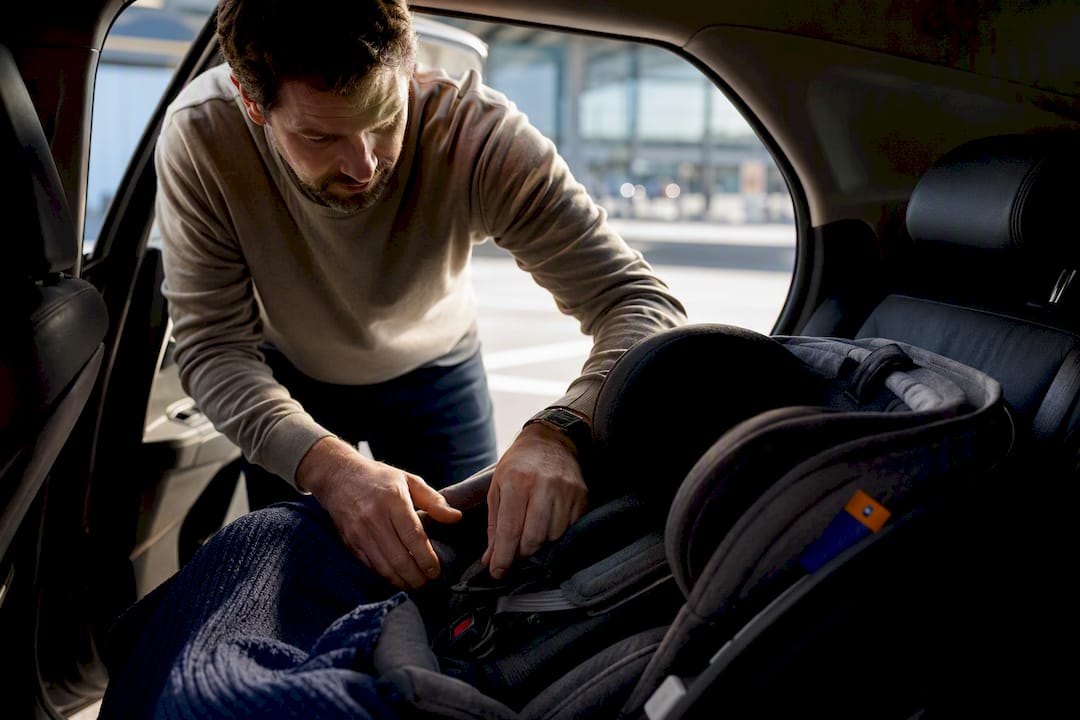
Yes, you can book an airport transfer that shows up with a properly installed car seat waiting for your child, and you should reserve it in advance rather than hope one turns up. Tell the provider your child’s age and weight when you book, since seat type depends on both. The real advantage isn’t the seat itself, it’s the trained installation behind it. Skip the taxi-line gamble; Globalholidayplanner can compare providers that offer pre-installed seats with flight tracking built in.
TL;DR:
- Booking at least 24 hours in advance ensures availability of properly installed car seats for your child’s size and weight.
- Always specify your child’s exact age, weight, seat orientation preferences, and luggage needs early to guarantee the correct seat type and vehicle.
- Confirm in writing that the provider uses trained installers and standard-compliant seats, and verify seat cleanliness and condition before riding.
- Use flight tracking to schedule pickups accurately and choose an SUV or MPV if traveling with multiple children, luggage, and strollers.
- Ask detailed questions about seat installation, certification, and special needs well before the day of travel to avoid curbside surprises.
Table of Contents
- What Do Family-Friendly Airport Transfers Actually Include?
- How Do You Book a Transfer With the Right Car Seat?
- Is It Actually Safe? What to Check Before You Ride
- How Do You Communicate Special Car Seat Needs in Advance?
- Why the Standard Advice on Airport Transfers Falls Short
- Book Your Airport Transfer With a Car Seat Ahead of Time
- Sources
- FAQ
What Do Family-Friendly Airport Transfers Actually Include?
A decent family transfer service gives you more than a seat wedged in the back seat. It gives you a match between your child’s size and the right restraint, installed by someone who’s done it hundreds of times, plus a driver who knows your flight is late before you do.
Most providers offer three seat categories:
- Infant rear-facing capsules, typically for newborns up to around 12 months or roughly 22 pounds, always rear-facing.
- Convertible toddler seats, covering roughly ages 1 to 4, which can face rear or forward depending on the child’s size and local guidance.
- High-back boosters, for older kids who’ve outgrown a harnessed seat but still need height and positioning support, usually from age 4 through 8 or so, depending on height.
“Pre-installed” means the seat is fitted and checked before the car reaches the curb; “install on arrival” means the driver fits it in front of you at pickup. Both can be safe, but pre-installed saves time with a tired toddler and a jet-lagged parent. What matters more than either label is whether the person doing the installation is actually trained. Some services advertise driver checks and certified installation standards, including ISOFIX-compatible seats meeting local approval standards, and that detail is worth asking about directly rather than assuming.
Flight tracking is standard among serious providers. They pull your flight number, watch for delays, and adjust pickup timing automatically. Many advertise a complimentary wait window, often around 60 minutes for international arrivals, though domestic flights usually get a shorter grace period. If you’re traveling with two or more children needing seats, plus a stroller and luggage, you’ll want an MPV or SUV rather than a standard sedan. Vehicle sizing varies by provider, so state your seat count and luggage volume upfront rather than assuming a sedan will stretch to fit everyone.
How Do You Book a Transfer With the Right Car Seat?
Booking this correctly is less about luck and more about giving the provider specific, complete information early. Here’s the order that works:
- Book at least 24 hours ahead. Reserving a day or more in advance is the industry norm for guaranteeing specialized equipment like infant capsules, especially during holidays or peak travel weeks when every seat in the fleet gets requested.
- List every child’s age and weight, not just a headcount. A seat that fits a 2 year old won’t fit a 6 year old, and providers need the numbers to pull the right unit.
- Give your flight number and terminal. This is what makes flight tracking and meet-and-greet actually work rather than becoming a guessing game at arrivals.
- State the number of seats and stroller needs. Two infant capsules plus a double stroller is a different vehicle than one booster and a carry-on.
- Confirm seat orientation if it matters to you. Rear-facing for infants is the default recommendation almost everywhere, but say so if you have a preference for a borderline-age toddler.
- Get written confirmation of the seat policy before you pay. Some providers bundle seats into the fare; others charge a per-seat fee, commonly around $25, on top of the base price. Get it in writing so there’s no surprise at the curb.
Pricing extras to watch for include meet-and-greet service, extended waiting beyond the free window, and extra luggage fees. It’s reasonable to ask directly whether seats meet a recognized standard and how they’re cleaned between passengers.
Pro Tip: Call or message the provider the morning of travel to reconfirm the seat request, especially at busy airports. A five-minute check prevents a curbside scramble if your flight time shifted overnight.
Is It Actually Safe? What to Check Before You Ride
Safety comes down to matching the seat to your child, not to what local law technically permits. A licensed taxi in some regions is legally exempt from child-restraint rules, but that exemption is a legal carve-out, not a safety endorsement — professional transfer providers treat proper seat installation as a requirement regardless of what the law technically allows.
Rules also vary sharply by destination. The UK generally requires a child seat until age 12 or 135 centimeters in height, whichever comes first, while other countries set different age or height cutoffs entirely. Check the rules for wherever you’re landing, not just where you departed from.
Seats get used by dozens of different children, so cleanliness and structural condition matter more than most parents assume. A seat that’s past its usable lifespan or visibly worn doesn’t protect the way a newer one does, even if it looks fine at a glance.
Before you get in, ask:
- “Is this seat cleaned between every use?”
- “Is it ISOFIX or seatbelt-installed, and who fitted it?”
- “Does this seat meet the local certified standard for my child’s weight?”
How Do You Communicate Special Car Seat Needs in Advance?
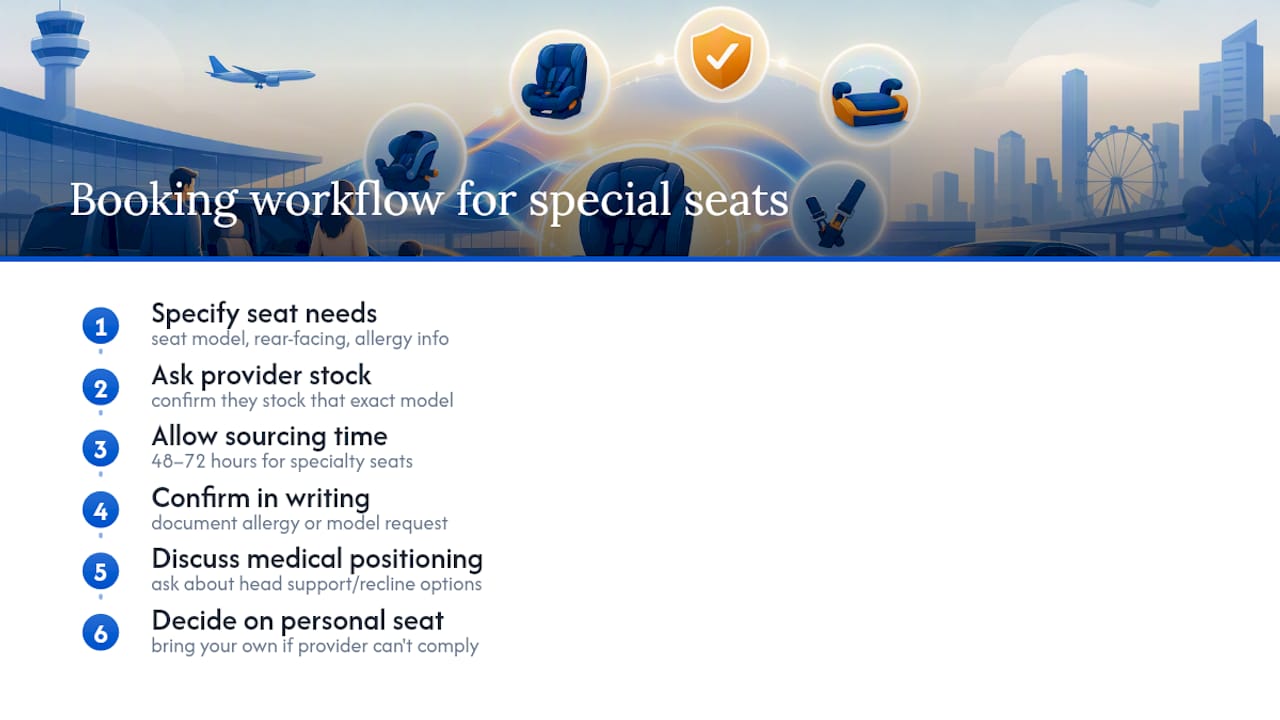
If your child needs a specific seat model, has a latex or fabric sensitivity, or requires an allergy-friendly cover, say so at the time of booking, not at pickup. Providers can’t source a specialty seat on short notice, and curbside is the worst place to discover a mismatch.
Be specific rather than general. “My son needs a rear-facing convertible seat, ideally the same model as his home seat, and he has a wool sensitivity” gives a booking agent something to act on. “He needs a good seat” doesn’t.
If your child has a medical condition affecting positioning, such as needing extra head support or a specific recline angle, mention it explicitly and ask whether the provider can accommodate it or recommend bringing your own seat instead. Some families choose to travel with their own car seat for exactly this reason, particularly for infants with reflux or torticollis where positioning really matters.
Build in a buffer for special requests. A standard booster is easy to source same day; a specific brand or model with hypoallergenic padding often needs 48 to 72 hours of notice. Ask the provider directly whether they stock the model you need or whether you should plan to bring it yourself, and confirm allergy-related requests in writing so there’s a record if the wrong seat shows up.
Why the Standard Advice on Airport Transfers Falls Short
Most airport transfer advice stops at “check if they offer car seats,” which misses the actual point of failure. The seat existing in the trunk isn’t the issue; who installed it and how recently the request was confirmed is. A seat thrown in loose ten minutes before pickup protects a child far less than one fitted properly the night before.
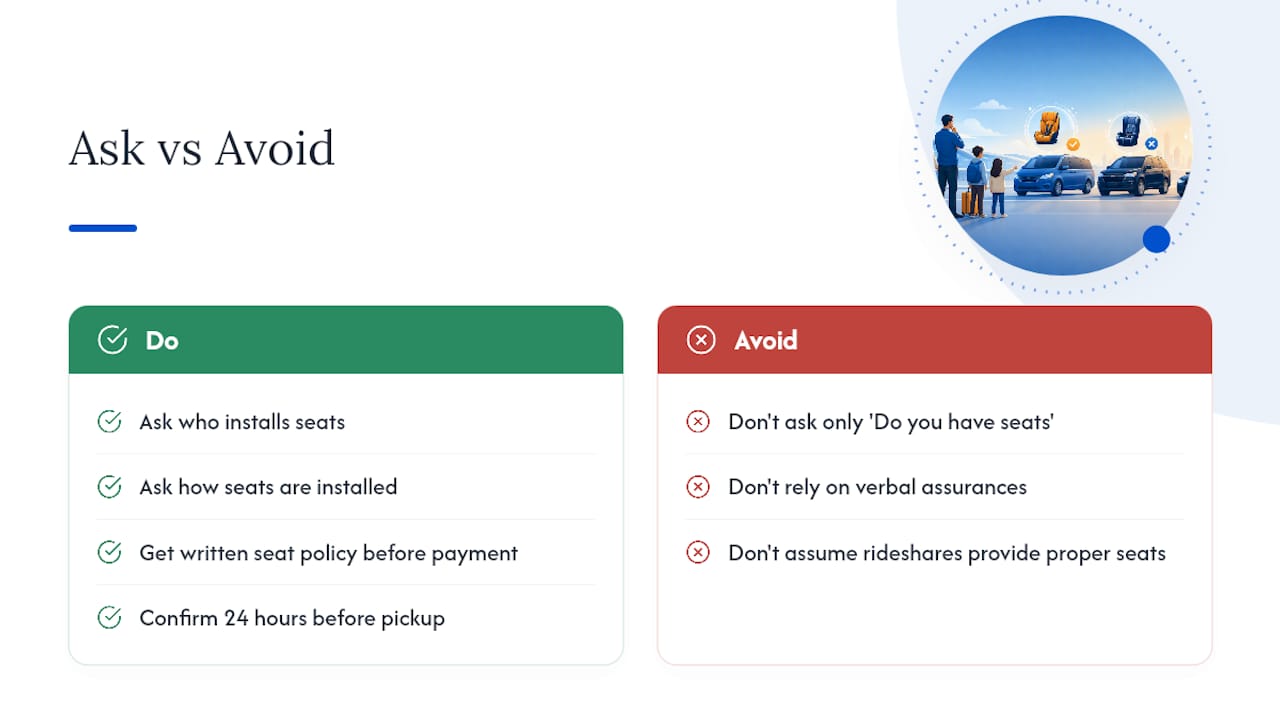
The bigger gap is that most parents treat this like booking a regular taxi with an add on, when it’s closer to booking specialized equipment with a driver attached. That reframing changes what you should ask. Skip “do you have car seats” and ask “who installs them, how, and when.” Push for written confirmation of the seat policy before payment, not a verbal assurance at booking. And don’t assume a rideshare or standard taxi will have anything appropriate; pre-booked family transfer services commit to installed, checked seats in a way on-demand rides generally don’t.
Parents who get this right aren’t the ones who found the cheapest transfer. They’re the ones who asked pointed questions 24 hours out and got specific answers back.
— Global
Book Your Airport Transfer With a Car Seat Ahead of Time
Skip the trip to the rental counter and the stress of installing a seat yourself in an unfamiliar car. Globalholidayplanner compares vetted transfer providers in one search, so you can see which ones offer pre-installed seats, flight tracking, and a clear seat policy before you commit to anything.

Search available transfers, enter your child’s age and weight along with your flight number, and check each provider’s seat policy and pricing before you complete checkout. If you’re still finalizing your itinerary, you can also line up your flight details on the flight search page so your transfer booking matches your actual arrival time. When you’re ready to lock in the ride itself, head to the airport transfer booking page and reserve your seat request at least a day ahead of landing.
Sources
FAQ
Do Airport Transfers Come With Car Seats?
Many professional airport transfer providers offer car seats on request, including infant, convertible, and booster options, but availability depends on the provider and how far ahead you book. Confirm the request at booking rather than assuming it’s automatic.
Can Kids Ride an Airport Shuttle Without a Car Seat?
Shared shuttles often don’t carry child seats and may not have a way to install one securely, so a private transfer that pre-installs a seat is generally the safer option for young children. Ask any shuttle operator directly before assuming they can accommodate your child.
How Do You Transport a Car Seat Through the Airport?
Most airlines let you check a car seat for free or gate-check it, and a car seat travel bag protects it from baggage handling; if your transfer provider supplies a seat at pickup, you may not need to bring your own at all.
Can a 3-Year-Old Ride in a Rideshare Without a Car Seat?
Rules vary by country and by the type of vehicle service, and some licensed taxis are legally exempt from child-restraint requirements in certain regions, but safety guidance still favors using a properly fitted seat for a 3 year old regardless of the exemption. Check the specific legal rules for wherever you’re traveling before you assume an exemption applies.