
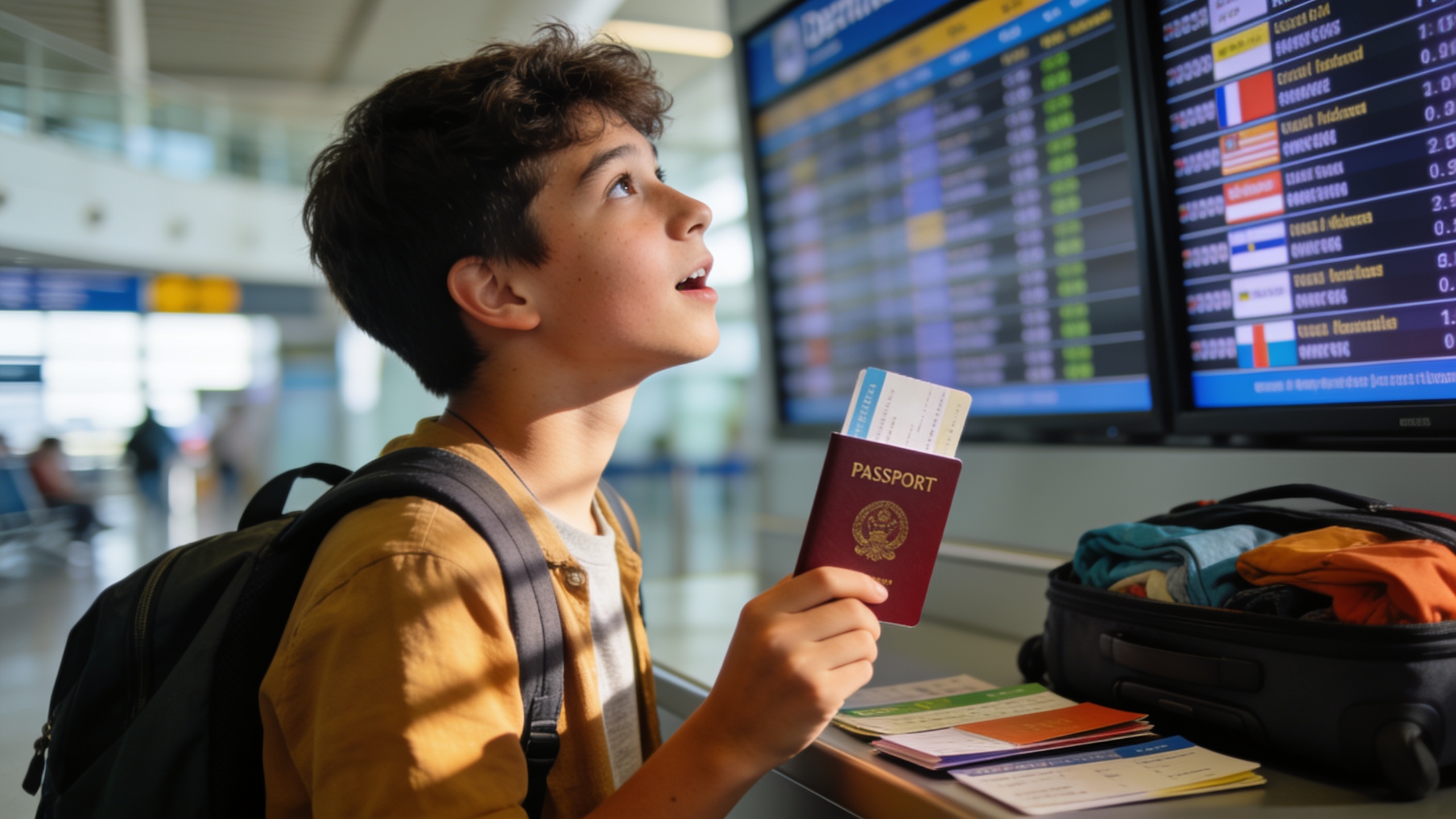
Planning your first trip abroad can make your brain feel like it’s got seventeen browser tabs open at once. Passports, visas, currency, flights, and then the packing spiral at 2 a.m. the night before. Been there. The thing nobody tells you is that it’s not actually one giant task. It’s a bunch of small ones, done in the right order, starting a couple months out and ending with whatever you cram into your carry-on.
That’s what this guide is. A sequence you can follow from “I want to go somewhere” all the way to “I’m at the gate and I forgot nothing important.”
And it doesn’t really matter who you are. Solo backpacker heading to Southeast Asia, couple booking a European honeymoon, family dragging kids to Italy or Thailand for the first time. The fundamentals barely change. Nail them once and every trip after this gets easier.
Table of Contents
- Where Do You Start When Planning Your First International Trip?
- Passports and Visas What First-Time International Travelers Need to Know
- How Much Does a First International Trip Cost?
- Booking Flights and Hotels for Your First International Trip
- Where to Stay: Hotels, Rentals, and Home Swaps
- Packing Smart for International Travel
- Travel Insurance and Health Preparations
- Frequently Asked Questions
Where Do You Start When Planning Your First International Trip?
Start by picking a destination that fits your budget, your comfort level, and how much lead time you’ve got, then work backward from your departure date to slot in documents, bookings, and packing in the right order. That’s it. That’s the whole framework.
The reason I lead with this is because the most common rookie mistake is doing things out of sequence. People book a flight before checking whether their passport is even valid. Or they fall in love with a destination before finding out it needs a visa they should’ve applied for a month ago. Don’t be that person.
Here’s the rough order I’d run: pick your destination and a loose travel window, confirm your passport is good, check visa requirements, set a budget, and then start touching flights, hotels, and packing. Give yourself two to three months minimum if it’s your first time. Passports and visas move at their own bureaucratic pace, and it’s slower than anything you’ve dealt with for a domestic trip.
Research counts as part of this stage too, even though it doesn’t feel like “planning.” Read destination guides. Check your government’s travel advisories for wherever you’re headed. See what other travelers actually say about when to go, how the locals do things, and whether anywhere is worth avoiding.
Passports and Visas What First-Time International Travelers Need to Know
A passport proves who you are and where you’re a citizen, and a visa is a separate permission slip (sometimes a sticker, a stamp, or just an email confirmation) that a country wants before it’ll let you in. Almost everywhere requires your passport to stay valid for your entire stay, and a lot of places want it valid for months past your return date. That last part trips people up constantly.
Getting or Renewing Your Passport
If you don’t have a passport yet, apply now. Like, today. Processing times swing wildly through the year, and paying for expedited service always costs extra. If you already have one, check that expiration date the second you start planning, because a passport that expires “soon” can get you turned away at the border even when your trip is only a week long. That’s the six-month validity rule, and it’s caught out more travelers than you’d believe.
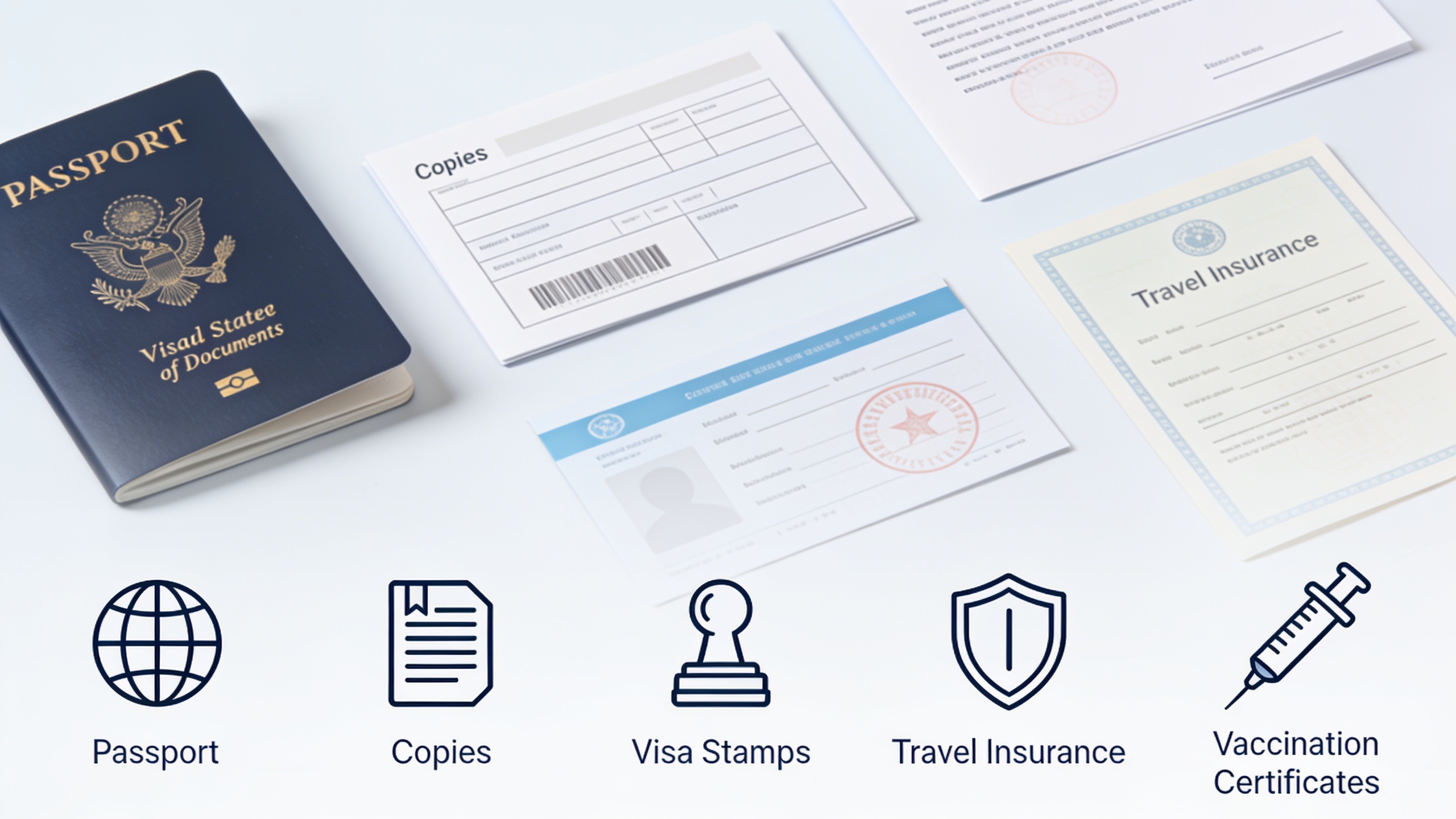
Two habits that have saved me actual headaches: make a couple of copies of your passport’s photo page, digital and physical. Leave one with someone at home and carry another separately from the original when you travel. And sign the thing the moment it arrives, then double-check your name matches exactly across your passport, your flight booking, and any visa paperwork. A middle name on one and not the other is the kind of tiny mismatch that becomes a huge problem at a check-in desk.
Understanding Visa Requirements
Visa rules are all over the map, and I mean that literally. It depends entirely on your nationality and your destination, so there’s no one-size answer. Some countries wave certain passport holders through visa-free. Some hand you a visa on arrival. Others make you apply weeks ahead through an embassy or an online portal. Check the specific requirement for your passport and your destination on that country’s official immigration or embassy site, not on some random blog (including this one, honestly). Rules change with barely any warning.
For the destinations first-timers tend to pick, Singapore, Thailand, Italy, Spain, the requirements can differ a lot even between neighbors. So if you’re hopping across multiple countries in one trip, treat each one as its own separate visa check. Don’t assume one entry rule covers the whole region.
How Much Does a First International Trip Cost?
Honestly? It depends. On where you go, how long you stay, what season it is, and how you personally like to spend. But the cost buckets are always the same five: flights, accommodation, daily spending (food, transport, activities), visa fees, and travel insurance. Build your budget around those five instead of pulling one big scary number out of thin air, and everything gets a lot clearer before you start booking.
The easiest way to do it: look up your destination’s typical daily cost for meals, getting around, and attractions, multiply that by your trip length, then add your fixed costs like flights and visa fees on top. Southeast Asia generally runs cheaper per day than Western Europe, which is exactly why so many first-timers pick somewhere like Thailand. Lower pressure, lower cost, easier landing.
Building a Simple Trip Budget
Split it into two piles. Pre-trip costs (passport and visa fees, insurance, any vaccinations you need) and on-the-ground costs (a bed, food, local transport, activities, the souvenirs you swear you won’t buy and then buy anyway). Then add a cushion. A lot of seasoned travelers set aside roughly 10 to 15% of the total for surprises, because first trips always find a way to surprise you. A checked-bag fee you didn’t see coming. An airport transfer that costs triple what you assumed. Something. There’s always something.
| Budget Category | What It Covers | When to Book/Pay |
|---|---|---|
| Passport & visa fees | Passport application/renewal, visa application or e-visa fee | 2–3 months before departure |
| Flights | Round-trip airfare, checked baggage, seat selection | 6–12 weeks before departure for better fares |
| Accommodation | Hotels, vacation rentals, or home swaps | 4–8 weeks before departure |
| Travel insurance | Trip cancellation, medical coverage, lost luggage | Immediately after booking flights |
| Daily spending | Meals, local transport, attractions, tips | Ongoing, budget per day of trip |
| Emergency buffer | Unexpected costs, fees, currency fluctuations | Set aside before departure |
Booking Flights and Hotels for Your First International Trip
Booking goes smoothest when you compare a handful of options side by side instead of grabbing the first thing you see, and when you treat your flight and your hotel as one connected decision. This is the part people rush and regret. A dirt-cheap flight that dumps you in a strange city at 1 a.m. isn’t cheap anymore once your hotel won’t do late check-in and you’re paying a fortune for a taxi you didn’t arrange. Ask me how I know.
Flights: Timing and Flexibility
For most international routes, booking six to twelve weeks out tends to hit a decent sweet spot between price and availability. Not a rule, just a tendency, and it shifts with the route, the season, and the airline. If your dates are even a little flexible, poke around a few days on either side of your ideal departure. The savings can be genuinely surprising.
Compare direct flights against ones with a layover too. Sometimes a longer trip with a stopover is way cheaper, and if the layover’s long enough, you basically get a bonus mini-destination out of it. And whatever you do, look past the base fare. Checked bags, seat selection, change and cancellation policies. That’s where a “cheap” flight quietly stops being cheap. A platform like Global Holiday Planner pulls flight comparisons, hotels, airport transfers, rental cars, and insurance into one spot, which spares you the tab-juggling nightmare of five different booking sites when you just want to lock things in.
Hotels: What to Prioritize
For a first trip, location beats luxury almost every time. A place within walking distance of public transport, food, and the main sights cuts down the number of confusing decisions you have to make right after landing, and that matters more than it sounds when you’re also wrestling with a new currency, a new language, and jet lag all at once. Read the recent reviews, not the glowing three-year-old ones. Look for what people say about safety, noise, and how easy the place actually is to find from the airport or station.
Where to Stay: Hotels, Rentals, and Home Swaps
Hotels aren’t your only move. Vacation rentals and home exchanges can get you more space, a kitchen, and a much more local vibe, often for less per night if you’re staying a while. Which one’s right for you mostly comes down to how long you’re going, how many people you’re with, and whether you’d trade daily housekeeping for flexibility and the feeling of actually living somewhere.
Home exchange, or home swapping, is exactly what it sounds like. You trade homes with another traveler for the length of your trip instead of paying for a hotel. Platforms like Swappahome are built entirely around this. You list your place, you stay in someone else’s somewhere across the world, and you experience the destination more like a resident than a tourist. Worth a serious look if you’re traveling as a family or staying long enough that hotel bills would start hurting.
Whatever you pick, check the cancellation policy before you hand over a cent. First international trips shift around more than domestic ones do. A visa runs late, a flight schedule changes, your itinerary rearranges itself. Flexible cancellation terms are worth paying a little extra for, even if it stings slightly upfront. Future-you will be grateful.
Packing Smart for international Travel
Packing well isn’t about cramming in more. It’s about the right documents, clothes that adapt, and a few destination-specific things you’ll actually need, because checked luggage gets delayed, lost, or slapped with weight limits that international carriers take way more seriously than domestic ones. There’s an old traveler’s line that holds up: pack half the clothes you think you need and bring twice the money.
Documents and Essentials
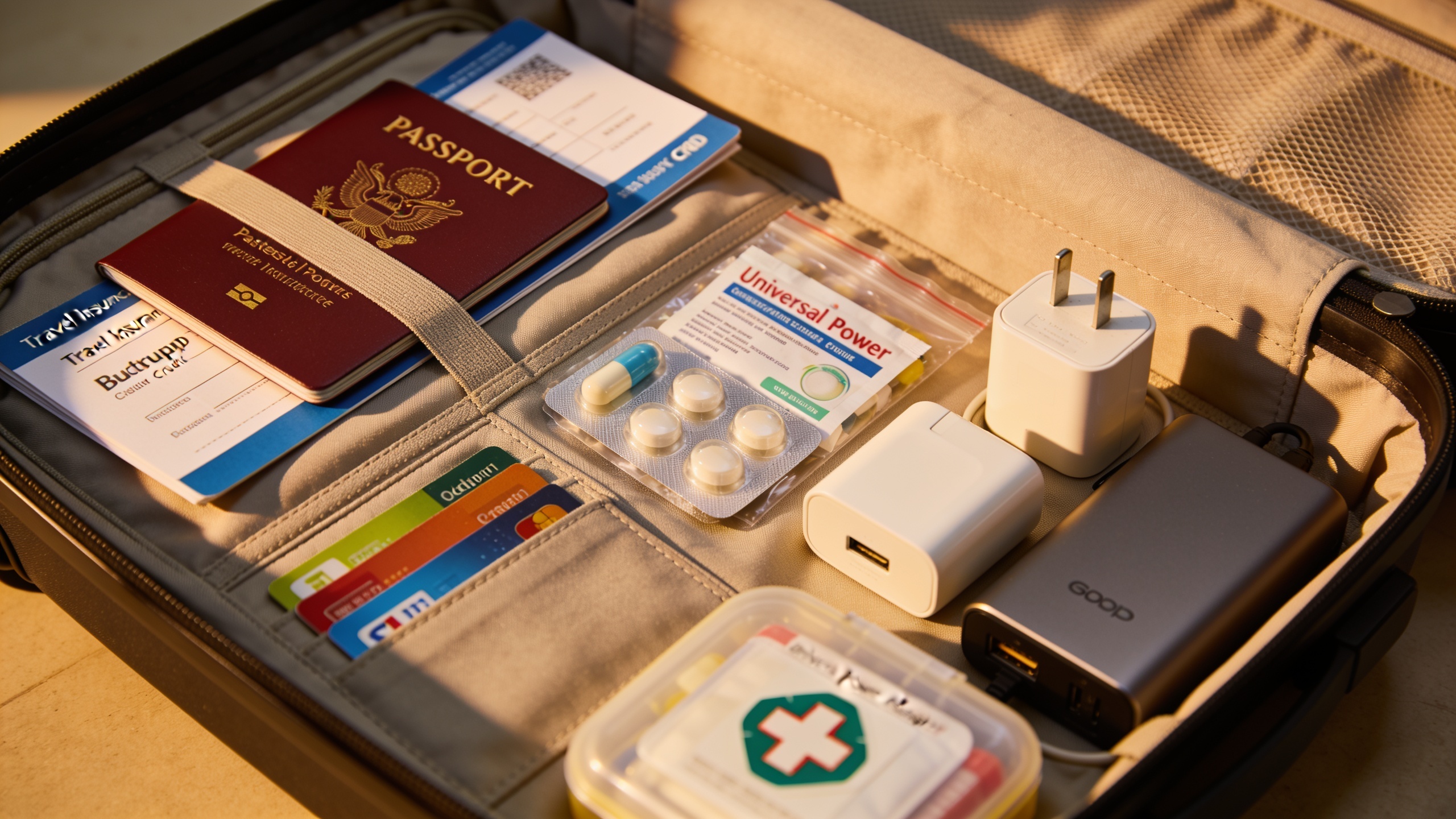
Keep this stuff together and in your carry-on, never checked:
- Passport, printed visa if you’ve got one, and boarding passes or e-tickets
- Copies of your travel insurance policy and emergency contact numbers
- A backup payment method, ideally a second card stored somewhere separate from your main wallet
- Any vaccination certificates or health documents your destination asks for
That’s the one list I won’t turn into a paragraph, because when your luggage goes missing, you want to glance at it and know instantly whether you’re fine or in trouble.
Clothing and Practical Items
Look up your destination’s climate and its cultural norms before you pack. Some countries and a lot of religious sites expect more conservative dress, and you don’t want to be turned away from a cathedral over your shorts. Pack layers instead of dressing for one guessed temperature, because weather swings and aggressive indoor air conditioning will both get you.
A universal power adapter is non-negotiable, since plug shapes and voltage change from country to country. Throw in a portable charger, a basic first-aid kit with any personal meds in their original packaging, and a printed copy of your hotel address plus a few key phrases in the local language. When your phone dies or drops signal in an unfamiliar place, that little scrap of paper is worth its weight in gold.
Travel Insurance and Health Preparations
Travel insurance covers things like trip cancellation, medical emergencies abroad, and lost or delayed bags, and it matters way more internationally than domestically because your regular health insurance probably does approximately nothing once you leave your home country. Even a short, low-drama trip can go sideways. A missed connection, a canceled flight, a medical issue in a place where you can’t read the hospital signs. Insurance is the difference between a bad afternoon and a financial disaster.
When you’re comparing policies, look hard at three things: the medical coverage limit, whether it covers trip cancellation and interruption, and whether it includes emergency medical evacuation. Some credit cards toss in a bit of travel insurance for free, which sounds great until you read the fine print and realize it covers far less than a standalone policy. So actually read it. Don’t just assume you’re covered because a card told you so.
Before you go, find out whether your destination recommends or flat-out requires certain vaccinations, and book those appointments early, because some vaccines need multiple doses spaced weeks apart. Oh, and tell your bank and card company your travel dates and destinations. It takes two minutes and it stops your card from getting frozen for “suspicious activity” the moment you try to use it. Getting your card declined at a foreign ATM at night is a special kind of stress you really don’t want to sample.
Frequently Asked Questions
How far ahead should I really start planning?
At least two to three months out, mostly to leave room for passport renewal or visa processing, which drag on longer than any flight or hotel booking. If your destination needs an embassy visa application, or your passport’s due for renewal, start even earlier. Earlier is basically never a mistake here.
Do I need a visa for every single country I’m visiting?
Not necessarily. It comes down to your nationality and each destination. Some countries let certain passport holders in visa-free or on arrival, others want an application weeks ahead. Check the exact rule for your passport on the destination’s official government or embassy site, because requirements shift and can differ even between neighboring countries.
What’s the biggest mistake first-timers make?
Booking flights or hotels before confirming their passport’s valid and their visa situation is sorted, which can force painful last-minute changes. The other classic blunder is under-budgeting for daily spending and surprises, which is exactly why padding your budget by roughly 10 to 15% is such a good habit.
Should I book flights and hotels separately or all in one place?
Both work. But using a single platform that lets you line up flights, hotels, airport transfers, rental cars, and insurance side by side does make it harder to forget something, like that airport transfer for your midnight arrival. Either way, compare a few options instead of grabbing the first result.
Is travel insurance actually necessary?
Strongly recommended, yeah. Your home health insurance usually offers little or nothing abroad, and international trips have more moving parts that can break, canceled flights, lost bags, all of it. At a bare minimum, get a policy covering emergency medical costs, trip cancellation, and evacuation.
So that’s the whole thing. A first international trip isn’t one overwhelming monster of a task. It’s a string of small decisions in order: documents, then budget, then flights and beds, then packing. Take them one at a time, verify the important stuff straight from official sources, and lean on solid planning tools like Global Holiday Planner to compare flights, hotels, and insurance in one place. Do that, and your first trip abroad turns into the first of a whole lot more.
[…] Top 10 Essential Steps to Plan Your First International Trip […]
[…] Top 10 Essential Steps to Plan Your First International Trip […]