
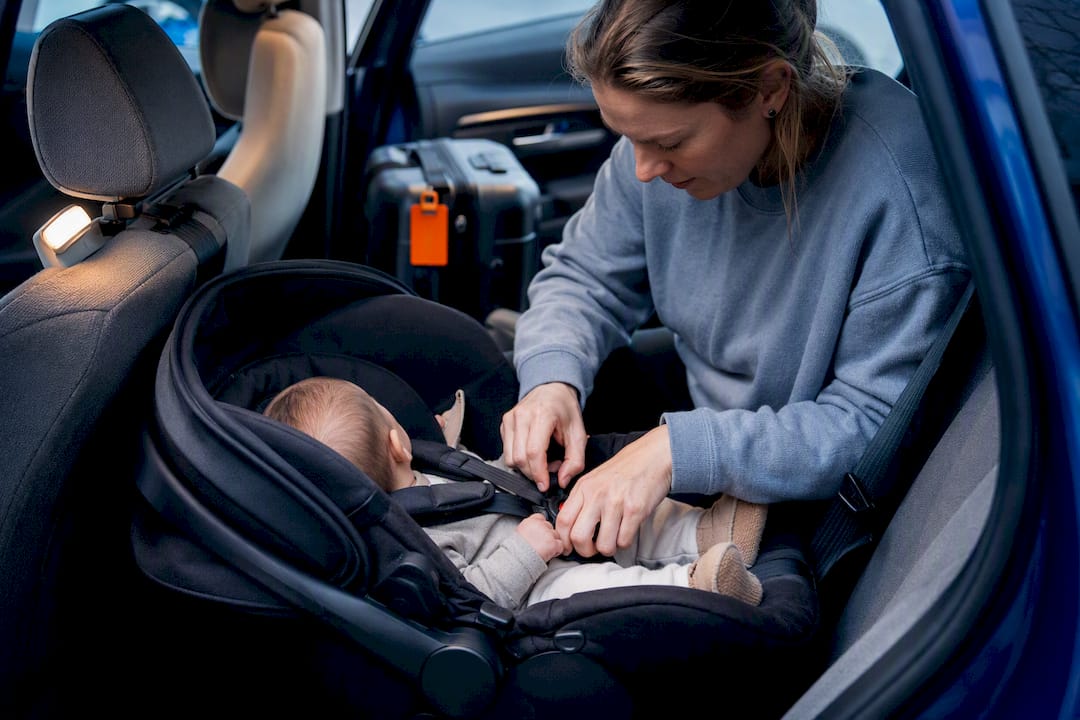
Yes, you can rent a child car seat for most travel plans, and it’s a practical option for the vast majority of trips. Expect infant, convertible, and booster models, a per-day or per-rental fee, and the expectation that you’ll install the seat yourself once it arrives.
TL;DR:
- Rental car seats are safest when properly matched to a child’s age and size, with infant seats best for babies under one year and convertible seats for toddlers.
- Booking from marketplaces offering direct delivery to hotels or accommodations can save trouble and ensure the seat arrives sanitized and inspected, but early reservation and clear communication are essential.
- Costs vary based on seat type, location, and delivery, with last-minute or peak season bookings often costing significantly more than advance planning.
- Parents should verify the seat’s expiration date, inspect for damage, and confirm it has been sanitized before use, as most providers do not install seats and require self-installation.
- Renting makes sense for short trips or avoiding baggage checks, but bringing a familiar seat is better if your child has specific positioning needs or if you prefer to avoid uncertain rental quality.
Table of Contents
- Child Car Seat Rental: Which Seat Type Fits Your Child?
- Where Can You Rent a Child Car Seat Near Your Destination?
- How Much Does a Child Car Seat Rental Cost Per Day?
- Is a Rented Seat Actually Safe? Cleaning, Inspection, and Compliance
- How Do You Install a Rented Car Seat Yourself?
- Should You Rent a Car Seat or Bring Your Own?
- Our Take on Renting Car Seats for Family Travel
- Compare Car Rentals That List Child Seat Add-Ons
- Sources
- FAQ
Child Car Seat Rental: Which Seat Type Fits Your Child?
Picking the right category matters more than picking the right brand. Rental fleets are built around three main classes, and matching your child’s age and size to the correct one is the first real safety decision you’ll make.
Infant seats are rear-facing only, usually come with a separate base that stays installed in the vehicle, and work best for newborns through roughly the first year. They’re the easiest to move between a car and a rideshare because the carrier clicks out of the base.
Convertible seats switch between rear-facing and forward-facing and cover a much wider age and weight range, which makes them the most commonly rented option for toddlers and preschoolers on a multi-leg trip. Safe Kids’ glossary breaks down these categories in plain language if you want to double-check terminology before you book.
Boosters, high-back or backless, raise a child so the vehicle’s own seat belt sits correctly across the chest and hips rather than the neck or stomach.
- Infant seats: rear-facing, portable carrier plus base, best for babies under about one year.
- Convertible seats: rear- or forward-facing, widest usable age and weight range, the default pick for toddlers.
- High-back boosters: added head and side support, useful in cars with low seat backs.
- Backless boosters: compact, good for carpools and taxis, but only appropriate once a child meets height and weight minimums.
One practical wrinkle: infant seat bases don’t always fit well in compact rental cars or standard taxis, so ask about base compatibility before you commit to that seat type for a trip involving multiple vehicles.
Where Can You Rent a Child Car Seat Near Your Destination?
You’ve got four realistic channels, and they don’t all deliver the same experience. Major car rental companies let you add a child seat at booking, which is convenient but often the priciest per-day option and limits you to whatever inventory that counter has on hand. Airport rental desks and dedicated baby-gear counters sometimes stock seats separately from the car rental transaction, useful if you’re using a taxi or rideshare instead of renting a vehicle.
Baby-gear rental marketplaces are the newer option worth knowing about. They deliver a cleaned, inspected seat directly to your hotel or Airbnb, often before you land, which solves the problem of dragging a car seat through security. Local baby-equipment rental shops in tourist-heavy cities fill the same role on a smaller scale.
Before you finalize any booking:
- Reserve early and confirm the exact seat model and your child’s age and weight fit it.
- Ask for a specific delivery window or airport pickup time, not just a delivery date.
- Confirm what happens if the seat arrives damaged or unusable, including how fast you can get a replacement.
When it actually arrives, run a quick arrival check: look for damage, check the expiration date, ask for the instruction manual, and confirm in writing that the seat was cleaned and inspected between rentals. A couple of photos of the seat’s condition and labels take thirty seconds and protect you if there’s ever a dispute about damage charges.
How Much Does a Child Car Seat Rental Cost Per Day?
Pricing usually follows one of two structures: a flat daily rate, or a daily rate with a cap that kicks in once your rental stretches past a week or two. On top of that base rate, expect possible add ons for delivery or collection outside normal hours, and a damage or missing-parts fee if the seat comes back in worse shape than it left.
A few things push the price up:
- Seat type: infant seats with a separate base often cost more than backless boosters.
- Location: airport counters and high-tourist-demand cities tend to charge more than local shops away from the airport.
- Delivery: having a seat brought to your hotel or Airbnb usually carries a convenience fee.
- Timing: last-minute bookings during peak family travel weeks (holidays, school breaks) can cost more than reservations made well in advance.
Pro Tip: Before you rent, check what your airline charges to check a car seat as baggage. For a short trip, that fee alone can rival the full rental cost, so weigh the rental against the value of traveling without the bulk.
Is a Rented Seat Actually Safe? Cleaning, Inspection, and Compliance
This is the part parents worry about most, and it deserves a real checklist, not a vague reassurance. Every car seat has a manufacture date and an expiration date printed or stamped on the shell, typically six to ten years from manufacture depending on the model. A seat past that date shouldn’t be in circulation at all.
Run through this before you accept any rental:
- Locate and read the manufacture and expiration labels.
- Check for cracks, frayed straps, missing buckle parts, or a harness that won’t tighten properly.
- Confirm the seat looks and smells clean, and ask the provider directly whether it’s been sanitized since its last use.
- Ask whether the seat has ever been in a vehicle crash. Responsible providers retire any seat with a crash history, since impact can weaken the shell in ways you can’t see.
NHTSA recommends keeping children rear-facing as long as possible within the seat manufacturer’s height and weight limits, rather than switching them forward-facing at the earliest allowed age. That guidance applies to a rental exactly the way it applies to a seat you own.
If a provider can’t answer questions about sanitizing or expiration confidently, treat that as a reason to request a different seat. NHTSA’s detailed recommendations document is worth bookmarking if you want the full age and size breakdown before you travel.
Pro Tip: If anything about the fit feels off once it’s installed, a local certified Child Passenger Safety Technician can check your work in a few minutes, often for free at community inspection events.
How Do You Install a Rented Car Seat Yourself?
Here’s something that surprises a lot of first-time renters: staff at most rental counters and delivery services won’t install the seat for you. It’s a liability issue, not laziness, so plan on doing this part yourself. The good news is that the process is the same five steps whether the seat is yours or borrowed.
- Pick the correct seat position, usually the back seat, center if your vehicle allows a tight fit there.
- Route the vehicle seat belt or LATCH connectors through the correct belt path for the child’s current orientation.
- Tighten until the seat moves less than one inch side to side or front to back at the belt path.
- Adjust harness height and chest clip so the clip sits level with your child’s armpits.
- Buckle your child in and do a short test ride, watching for slouching or straps that loosen.
Healthychildren from the American Academy of Pediatrics walks through LATCH versus seat belt installation in more detail if you’re unsure which method your vehicle supports.
Refuse the seat or request a replacement if you spot missing labels, a cracked shell, a harness that won’t tighten, or an expiration date that’s already passed.
Pro Tip: Take a photo of your vehicle’s seat belt buckle and LATCH anchors before you travel, or practice installing your own seat at home first. Either one saves real time when you’re tired and standing in a rental car lot.
Should You Rent a Car Seat or Bring Your Own?
Renting makes the most sense when you want to skip checking bulky baggage, need a seat delivered straight to your hotel, or you’re traveling light between multiple cities. It’s less appealing if you’re particular about a specific seat model, worried about fit variability between rental units, or not confident installing an unfamiliar seat under time pressure.
Ask yourself a few quick questions before deciding:
- How long is the trip, and does that change the math on rental fees versus checked-bag fees?
- Is your child a newborn with specific positioning needs that make a familiar seat safer?
- Are you comfortable installing a seat model you’ve never used before?
- What’s your backup plan if the rented seat is unavailable or arrives unusable?
Run the numbers against your airline’s checked-bag fee before you decide, and always have a fallback in mind in case the seat you booked doesn’t show up as planned.
Our Take on Renting Car Seats for Family Travel
Most of the anxiety around renting a car seat comes from a trust gap, not a logistics problem. Parents can handle installation, they can read an expiration label, and they can ask a provider a direct question about sanitizing. What’s harder to control is whether the provider actually gives a straight answer, which is why we think the verification checklist matters more than the price comparison in most booking decisions.
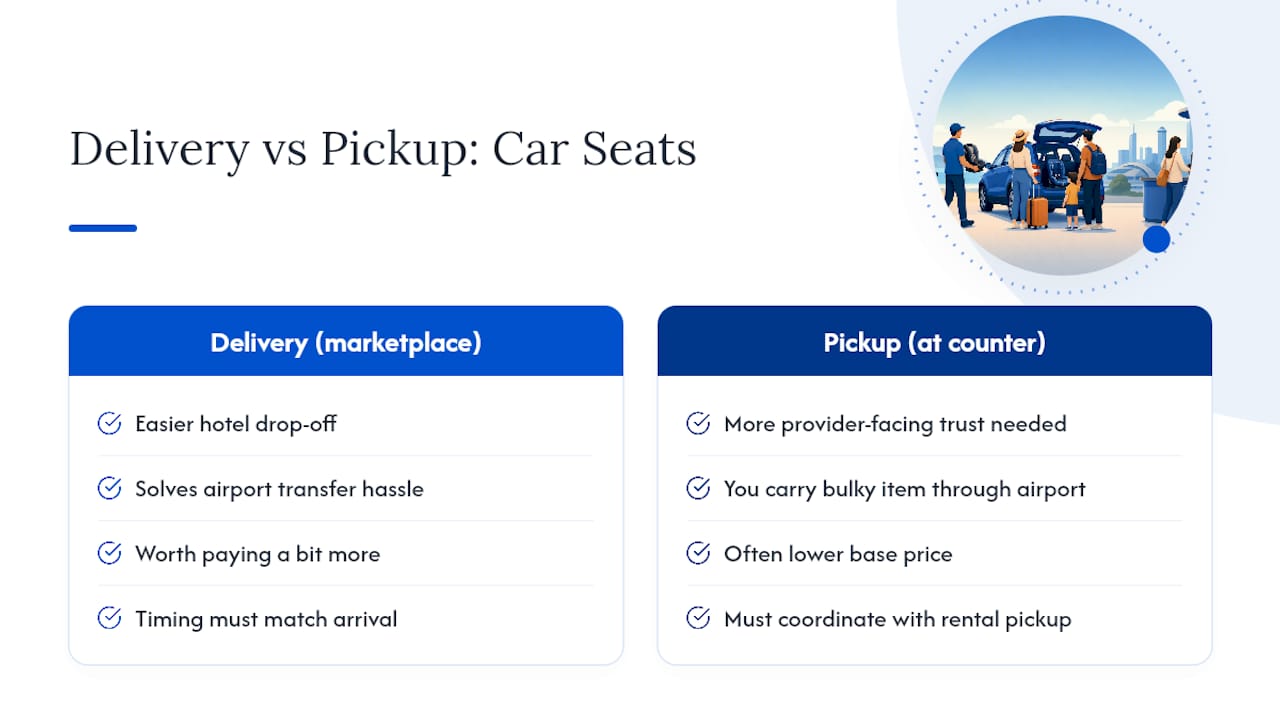
The bigger shift we’ve noticed is that marketplace delivery services are quietly outcompeting the traditional add-on-at-pickup model, mainly because they solve a real logistics headache: getting a bulky item to your hotel without you carrying it through an airport. That convenience is worth paying a little more for on trips with tight connections or multiple ground transfers.
Coordinating a car seat rental with your broader trip means thinking about your car rental pickup and any airport transfer at the same time, since delivery timing only works if it lines up with when you actually land or check in. If you’re building out a longer family itinerary, our family vacation planning guide covers the packing and logistics side in more depth, and the Wild Foodz family travel planning guide is a solid companion resource for stress-testing your trip timeline before you leave.
— Global
Compare Car Rentals That List Child Seat Add-Ons
You don’t have to call five different rental counters to find out who actually stocks child seats. Comparing car rental listings side by side is often the fastest way to spot which pickup locations offer seat add-ons, delivery windows, or better per-day rates than the counter price you’d get walking up cold.
Global Holiday Planner lets you compare car rental deals across providers in one place, so you can check seat availability alongside pickup location and price before you commit. If your trip involves a flight into an unfamiliar city, pairing that with an airport transfer booking helps you line up delivery timing so the seat is waiting when you land instead of you waiting on it. It’s a simple next step: pull up your route, compare a few car rental options with seat add-ons listed, and lock in the one that fits your travel dates before availability tightens closer to departure.
Sources
FAQ
Can you rent just a car seat from a car rental company?
Some car rental companies let you add a child seat to your reservation without renting a vehicle, but availability varies by location, so it’s worth confirming directly or checking a baby-gear delivery marketplace instead.
How much does a car seat rental cost per day?
Pricing typically follows a daily rate, sometimes capped after a week or two of use, plus possible delivery or damage fees depending on the provider and seat type.
Is it better to rent a car seat or bring your own?
Renting works well for shorter trips or when you want to avoid checked-bag fees, while bringing your own makes sense if you need a specific model or a newborn needs a familiar fit.
Where can I rent a baby car seat in the USA?
Options include major car rental company add-ons, airport rental desks, baby-gear delivery marketplaces that bring the seat to your hotel, and local baby-equipment rental shops in most major cities.
Who is responsible for installing a rented car seat?
You are. Most providers won’t install it for liability reasons, though they can walk you through the process, and a certified Child Passenger Safety Technician can double-check your installation if you want a second opinion.