

Travel medical insurance pays for care when you get sick or hurt away from home. Trip insurance protects the money you have already paid for flights, hotels and tours if a covered event forces you to cancel, cut short or delay the trip. The two overlap, because many trip plans include emergency medical benefits, but they answer different risks. The right pick depends on what you stand to lose: a hospital bill, a prepaid itinerary, or both. When you book flights, hotels and cover together on Global Holiday Planner, you can set the insurance options next to your trip cost and decide with the full picture.
TL;DR
- Travel medical insurance covers emergency care, hospital stays and medical evacuation. It does not refund a nonrefundable trip you have to abandon.
- Trip insurance reimburses prepaid, nonrefundable costs for covered reasons and usually bundles emergency medical and evacuation benefits as well.
- Per-trip policies run from under $5 a day for medical-only to about $30 a day for comprehensive cover, according to AARP.
- Check what your health plan pays abroad first. Many U.S. plans and traditional Medicare pay little or nothing overseas.
- Buy soon after your first trip deposit. Pre-existing condition waivers and cancel-for-any-reason upgrades depend on timing.
Table of Contents
- The core difference in plain words
- Side-by-side comparison
- What travel medical insurance covers
- What trip insurance covers
- What neither type pays for
- Do you already have coverage through health insurance?
- What each costs
- Which one fits which traveler
- How to choose and buy, step by step
- Compare cover alongside your booking
- FAQ
- Sources
The core difference in plain words
Think of two separate losses. The first is a medical bill: an emergency room visit in Lisbon, an ambulance in Colorado, a surgery in Bangkok. The second is a financial loss on the trip itself: a $4,000 family vacation you cannot take because someone is hospitalized the week before departure.
Travel medical insurance targets the first loss. The CDC’s Yellow Book describes travel health insurance as a short-term supplemental policy that covers healthcare costs abroad. It treats travel disruption insurance, which protects the financial investment in a trip such as cancellation and lost baggage, as a separate product. Medical evacuation is a third category the CDC lists on its own.
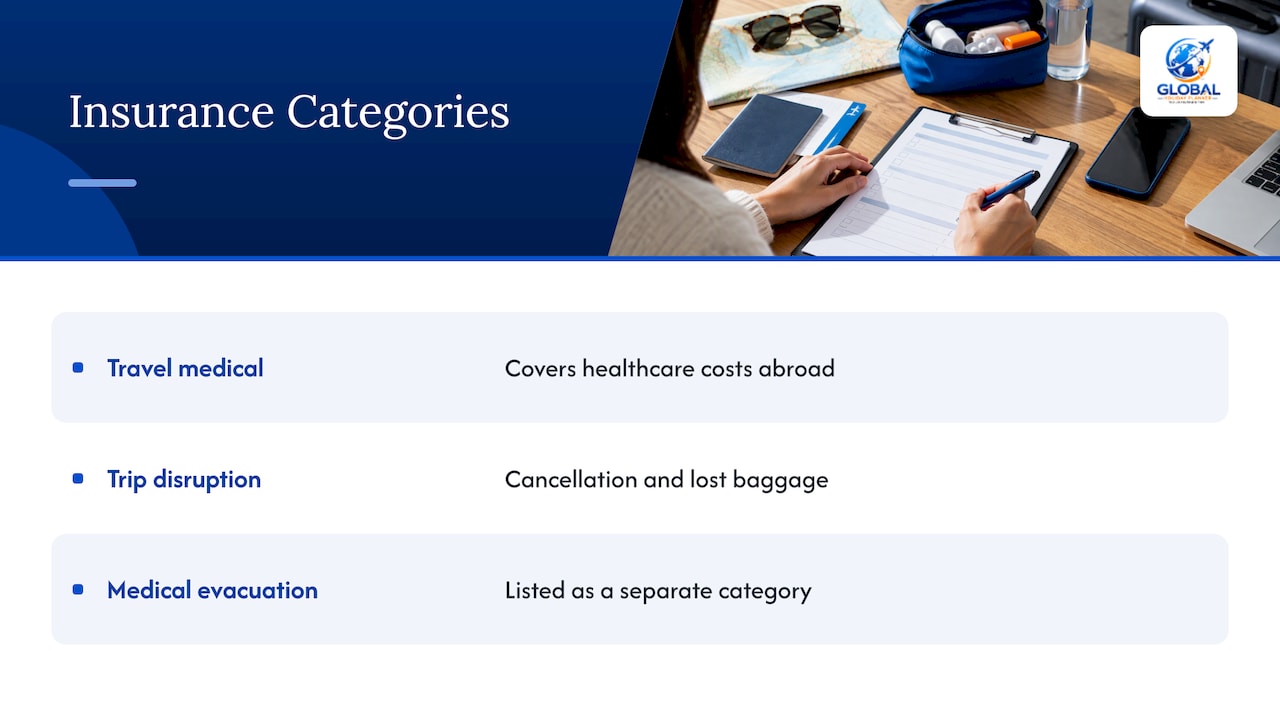
In practice, insurers package these in different ways. A medical-only plan focuses on health costs. A comprehensive trip plan combines cancellation, interruption, delay, baggage and emergency medical benefits under one policy. That is why shoppers confuse the terms: “travel insurance” can mean either one, and you have to read the benefit list, not the product name.
Side-by-side comparison
| What you want covered | Travel medical insurance | Comprehensive trip insurance |
|---|---|---|
| Emergency doctor, hospital, surgery | Yes, the core benefit | Yes, usually with limits |
| Medical evacuation and repatriation | Yes | Yes |
| 24/7 assistance line | Yes | Yes |
| Trip cancellation for a covered reason | No | Yes |
| Trip interruption and delay | Limited or none | Yes |
| Lost or delayed baggage | Limited or none | Yes |
| Rental car coverage | No | Often |
| Typical cost basis | Age, destination, trip length, deductible and medical limit | Trip cost, age, trip length and options chosen |
The pattern in this table matches NerdWallet’s plan comparison, which found that medical-focused plans exclude trip cancellation and rental car cover and offer only limited interruption, delay and luggage benefits, while both types include evacuation, 24-hour assistance and accidental death and dismemberment benefits.
What travel medical insurance covers
A medical plan is built for the unexpected illness or injury. Typical benefits include:
- Doctor visits, urgent care and emergency room treatment
- Hospital stays and surgery
- Prescriptions prescribed for the new problem
- Ambulance transport
- Emergency medical evacuation to the nearest appropriate facility and return home when medically necessary
- Repatriation of remains
- A 24/7 assistance line that helps arrange care and communicate across languages
The NAIC, the association of U.S. state insurance regulators, explains that evacuation coverage pays for emergency transport to the nearest hospital that can treat you and later transport home if needed, and repatriation coverage pays to return remains.
Why evacuation deserves a close look
Evacuation is the benefit that turns a bad week into a financial disaster when it is missing. The CDC puts total medevac costs from about $25,000 for transport within North America to over $250,000 from distant, remote locations. It also notes that the insurance company, not the traveler, decides whether an evacuation happens, and it typically requires hospitalization with multiple additional days of care expected or specialized treatment. So read the evacuation wording, not just the dollar limit.
How big are the limits?
Limits vary widely. In its review of plans, NerdWallet found emergency medical limits from $25,000 to $2,000,000 and evacuation limits from $150,000 to unlimited. A $25,000 limit may be fine for a short domestic trip but thin for a long trip to a country with expensive private hospitals. Match the limit to where you are going and how long you will be away.
What trip insurance covers
Trip insurance is about reimbursing money you cannot get back. The NAIC says cancellation, interruption and delay coverage pays back prepaid trip costs for covered reasons, including:
- Illness or injury of you or a travel companion
- Hospitalization or death of a non-traveling family member
- Severe weather and natural disasters
- Airline, train or cruise problems
- Overnight hotel stays after flight delays
- Jury duty or court testimony
The phrase to remember is “covered reason.” Changing your mind is not one, and the policy lists exactly which events count. If you book prepaid tours, the same logic applies: cancellation rules for weather-affected tours show how much money can be tied up in activities that the operator may not refund. Trip insurance is designed to cover that kind of nonrefundable spending when the reason qualifies.
To understand the difference between the claims you can make while you are still going and those when you have to turn back, our checklist on trip cancellation versus interruption walks through each.
What neither type pays for
Every policy has exclusions, and they are where claims get denied. The NAIC lists these as common across travel policies:
- Pre-existing health conditions
- Pandemics
- Civil and political unrest at the destination
- Pregnancy and childbirth
- High-risk activities such as bungee jumping and backcountry skiing or snowboarding
NerdWallet adds that travelers heading to a country under a U.S. State Department Level 4 “Do Not Travel” advisory are often excluded, and that routine care such as physicals and teeth cleanings is not covered. Forbes Advisor’s guidance on medical plans adds elective procedures and treatment that started before the trip and must continue during it.
Pre-existing conditions
This is the exclusion that surprises people most. Insurers can deny a claim if the condition showed up within a look-back period of 60, 90 or 180 days before purchase. A pre-existing condition waiver can reimburse covered bills if the condition flares up during the trip, but it comes with conditions, usually involving how soon after your first deposit you buy. We explain how to qualify in our guide to pre-existing conditions and travel insurance.
Adventure travelers should also check sports exclusions. Scuba diving and skydiving are typically excluded unless added. Golfers have their own considerations for clubs and cancelled tee times, covered in our golf travel insurance guide.
Do you already have coverage through health insurance?
This is the question to settle before you pay for anything. FAIR Health, a consumer health information organization, suggests a two-step check: ask your insurer what it covers while you travel, and only if you will not be covered abroad or the restrictions are heavy, add travel health insurance. It also says to confirm the plan covers medical care and emergency transportation, fits your activities and offers 24/7 assistance.
AARP notes that most U.S. health plans and traditional Medicare provide little to no coverage overseas, with some exceptions among Medicare Advantage and Medigap plans. For a family heading abroad with grandparents, that detail matters: each traveler’s plan may behave differently.
Even where a plan does cover you, in-network rules, deductibles, coinsurance and paying first and claiming later still apply. And your health plan will not reimburse a hotel deposit. If you rely on a credit card benefit instead, compare its caps with your trip cost using our guide to credit card travel insurance caps, or run through the five steps for choosing between insurance and card coverage.
What each costs
Prices depend on your age, trip length, destination and cost. These published figures give you ranges to sanity-check a quote:
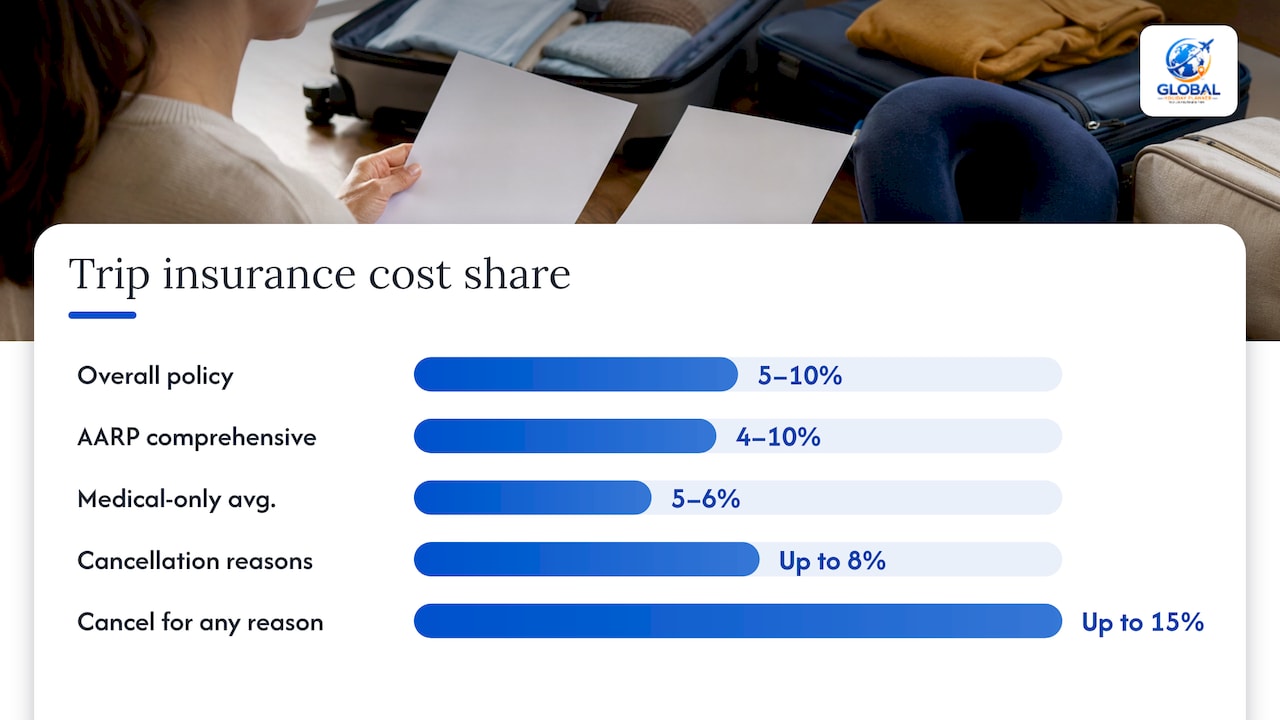
- Trip insurance overall: the NAIC’s consumer guide, updated June 16, 2026, says policies usually cost 5% to 10% of the total trip price.
- Per-day pricing: AARP reports from under $5 a day for medical-only to about $30 a day for comprehensive cover, or 4% to 10% of trip cost. A $5,000 trip often costs $200 to $500 to insure.
- Medical-only: MarketWatch found, from quotes across two dozen insurers, that average travel medical insurance cost ranges from $95 to $316, or 5% to 6% of total trip cost.
- Upgrades: the CDC says comprehensive policies can cost up to 8% of trip cost for cancellation for a list of reasons, and up to 15% for cancel-for-any-reason coverage.
A worked example: you prepay $6,000 for a two-week trip for four. At 5% to 10%, comprehensive cover lands between $300 and $600. If your health plan works abroad and your bookings are mostly refundable, medical-only may be the smaller, better-fitting purchase. If most of the $6,000 is nonrefundable, trip coverage protects the larger exposure.
For the practical side of comparing policies for a budget trip, this overview of factors to weigh when choosing a policy is a handy extra.
Which one fits which traveler
Budget travelers
If your costs are low and mostly refundable, the exposure is the medical bill. A medical-only plan gives you emergency care and evacuation at the lowest price point. If you have already paid nonrefundable fares, step up to a trip plan.
Families and multi-generational groups
More travelers means more chances that someone gets sick before departure, and a covered illness of a companion counts as a cancellation reason under the NAIC’s list. Trip coverage is usually the better fit when the group has prepaid a rental house, flights and tours. Older members may also need medical cover that works abroad, since traditional Medicare generally does not.
Couples on romantic getaways
These trips are often prepaid and date-bound: a resort package, a honeymoon, a special-occasion dinner reservation. That points to comprehensive coverage. Our guide to whether travel insurance is worth it helps you map the risk to the trip.
Golfers
Golf trips combine prepaid tee times, equipment and often physically demanding days. Look for a plan that covers both medical needs and the trip costs you would lose.
Corporate travelers
Frequent flyers should compare annual and single-trip options. Our guide to annual versus single-trip policies shows how to pick based on how many trips you take. AARP says annual travel insurance for someone 50 or older averages just over $300.
How to choose and buy, step by step
- Add up what is nonrefundable. Flights, hotels, tours and transfers. This is the amount trip insurance would protect.
- Check your health coverage abroad. Call your insurer and ask about care and emergency transport outside the U.S. Do this for every traveler.
- Pick the policy type. Mostly refundable bookings and a coverage gap on health: medical-only. Significant prepaid costs: comprehensive.
- Compare limits and exclusions side by side. Look at the medical limit, evacuation limit, deductible, pre-existing condition rules and activity exclusions. The NAIC reminds buyers that each policy sets its own limits and lists specific covered and excluded situations, and that your state insurance department can answer questions.
- Buy early. AARP advises purchasing within 14 to 21 days of your trip deposit to unlock cancel-for-any-reason and pre-existing condition benefits. The NAIC warns that a policy likely will not cover claims tied to a storm that has already been named. If you want the full economics of that upgrade, read about buying cancel-for-any-reason insurance.
- Keep records. Save receipts, the assistance line number and your policy documents. Expect to pay first and claim later in many cases.
You can also mix and match: AARP’s guidance mentions keeping a cruise line’s policy and adding a medical policy to fill evacuation gaps.
Our view: decide by what you could not afford to lose
We built Global Holiday Planner around one idea: travelers decide better when the real total cost is in front of them. Flights, hotels, car rentals, transfers and insurance are parts of one trip, and the insurance question only makes sense next to the others.
That is why we do not frame this as medical versus trip as if one wins. A medical bill and a lost prepaid itinerary are separate risks, and our side-by-side comparisons are designed to show both against your actual trip. A romantic getaway, a family vacation with grandparents, a golf tournament week and a business trip each have a different exposure, and our scenario-based recommendations are built around that.
Our advice: price your nonrefundable spending, check your health plan, then compare plans next to each other. Do it right after your first deposit, not the week before departure.
Global
Compare cover alongside your booking
We list flights, hotels, car rentals, airport transfers, rail tickets and travel insurance in one place, so you can see what the trip costs and what protecting it costs together. Start with the travel insurance options on our homepage, or review our comparison of the best travel insurance plans.

If you are still building the trip, you can book flights and hotels on the same site, then add cover once you know your total prepaid cost.
FAQ
Is travel medical insurance the same as trip insurance?
No. Travel medical insurance pays for illness and injury while you travel, including evacuation. Trip insurance reimburses prepaid, nonrefundable costs when a covered event interrupts the trip, and most comprehensive plans also include emergency medical benefits. Always check the benefit list rather than the product name.
Should I get travel insurance if I have health insurance?
First ask your insurer what it covers outside the U.S. FAIR Health recommends adding travel health insurance if you will not be covered abroad or the restrictions are heavy. Health insurance also does not reimburse nonrefundable trip costs, so trip coverage answers a different question.
What is not covered by travel insurance?
Common exclusions listed by the NAIC include pre-existing conditions, pandemics, civil and political unrest, pregnancy and childbirth, and high-risk activities like bungee jumping. A waiver or add-on can sometimes bring some of these into coverage, so check the policy wording before you buy.
How much does travel insurance usually cost?
The NAIC says policies usually cost 5% to 10% of the total trip price. Medical-only plans are often cheaper, and AARP puts them at under $5 a day, versus about $30 a day for comprehensive cover. Your age, destination and trip length move the price.
Sources
- CDC Yellow Book: Travel Insurance, Travel Health Insurance, and Medical Evacuation
- NAIC: Should I get travel insurance?
- AARP: What is travel insurance, and is it worth purchasing?
- FAIR Health: Using health insurance while traveling
- NerdWallet: How travel medical insurance works
- MarketWatch: Best travel medical insurance
- Forbes Advisor: What does travel insurance cover?