
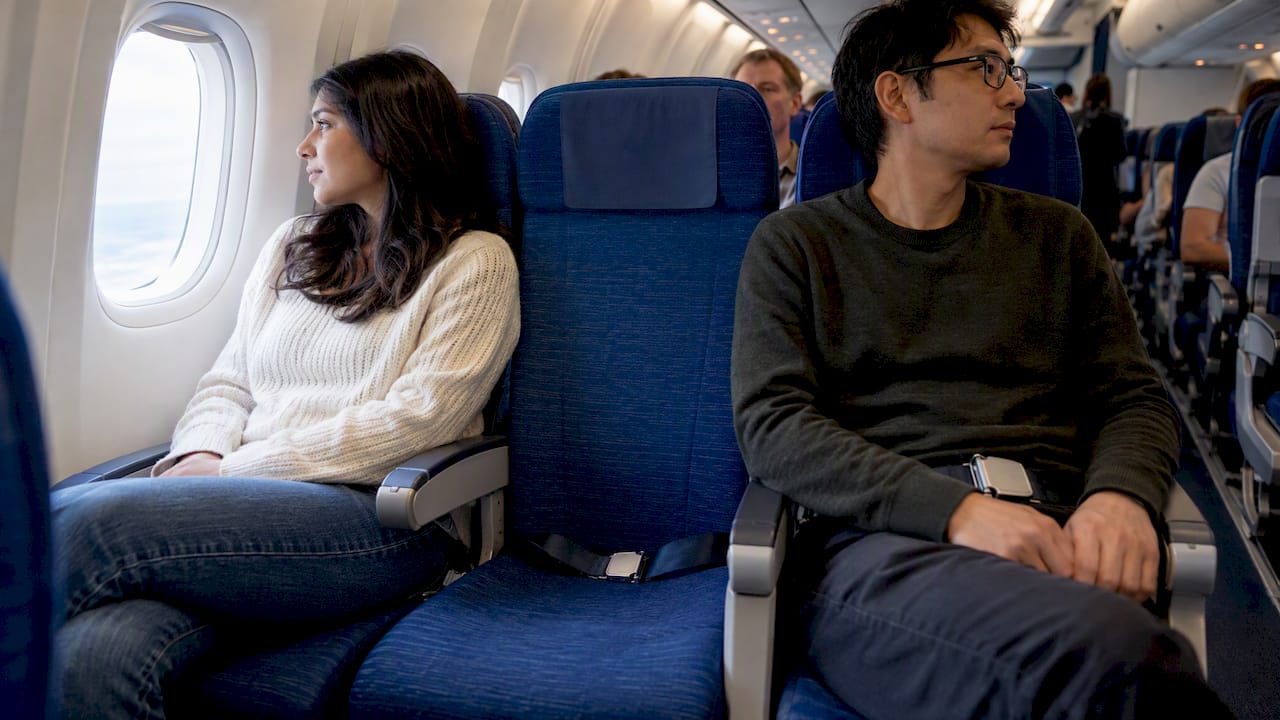
Choose the window if you want to sleep, see the view and avoid being bumped by passing carts. Choose the aisle if you want to stand, stretch and use the bathroom without asking anyone to move. Neither seat is better for everyone. The right one depends on how long you will be in the air, how often you get up, and who is sitting next to you.
Below is a plain comparison of both seats, a quick way to decide, and the cabin details (row position, aircraft layout, exit rows, boarding order) that can matter more than the side of the plane you pick.
TL;DR
- Window: best for sleeping, privacy and the view. The trade-off is that you must disturb seatmates to get out.
- Aisle: best for easy movement, quick exits and stretching a leg. The trade-off is foot traffic, bumped elbows and less to lean on.
- Long flights (over four hours): health experts advise moving around every hour or two, which favors the aisle for most people.
- Check the specific row: some windows are missing, some rows barely recline, and the last row is usually the weakest. Look at a seat map before you pay.
- Compare the total fare: a chosen seat can carry a fee, so see the cost of seat selection before you commit.
Table of Contents
- Window vs aisle seat at a glance
- The case for the window seat
- The case for the aisle seat
- What most travelers actually choose
- How to decide in 30 seconds
- Match the seat to your trip
- Where not to sit, whichever side you pick
- Exit rows: extra legroom with conditions
- Boarding order can favor the window
- Our perspective
- Compare flights and seat costs before you book
- Practical tips for a better seat
- FAQ
- Sources
Window vs aisle seat at a glance
A window seat sits beside the fuselage wall. An aisle seat sits beside the main walkway, so you have direct access to it, as NDTV’s explainer on the debate puts it. The differences that matter in practice are these:
| Factor | Window seat | Aisle seat |
|---|---|---|
| Sleeping | Wall to lean on, little disturbance | No support, but easy to shift position |
| View | Takeoff, landing, scenery | Mostly the cabin |
| Bathroom access | Need seatmates to move | Get up any time |
| Foot traffic | Rarely touched | Bumped by carts, bags and passers-by |
| Leg room | Wall limits stretching | Can extend a leg into the aisle (briefly and carefully) |
| Boarding and exit | Often boards earlier, exits later | Exits quickly once the door opens |
| Privacy | Highest | Lowest |
The general split is well documented. Window seats offer views, privacy and a wall for sleeping but require disturbing seatmates to leave, while aisle seats give easy movement and quick exits at the cost of more foot traffic, according to NDTV.
The case for the window seat
Sleep and privacy
If you plan to sleep, the window is hard to beat. You control the shade, nobody climbs over you after you doze off, and the cabin wall gives your head somewhere to rest. Add a travel pillow and noise-canceling headphones and you have the setup that Condé Nast Traveler’s long-haul guide suggests for sleeping on long flights.
That makes the window a natural pick for overnight departures. If you are weighing one, our guide to red-eye flights covers how to fly them well.
Views and nervous flyers
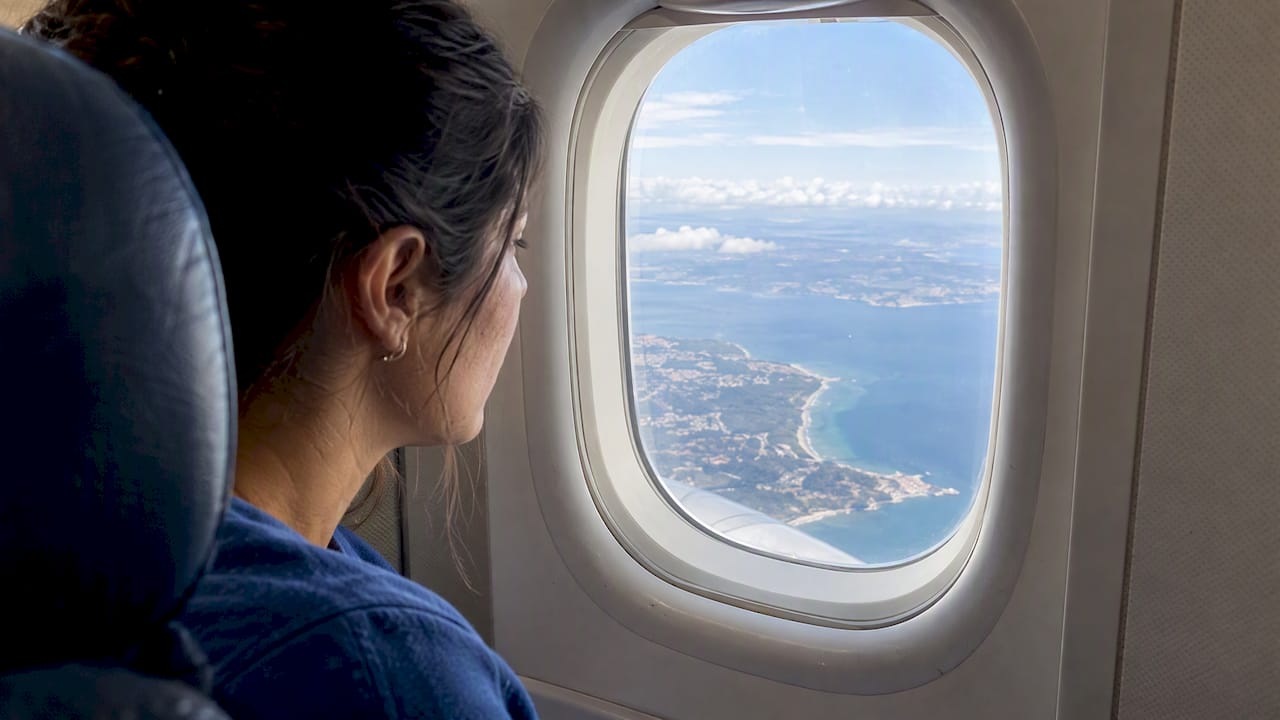
Takeoff and landing are the best moments to look out, and a window lets you see where you are. Some nervous flyers find it calming to see the horizon, and children are often happier with something to watch. It is also the seat for anyone who photographs coastlines, mountains or city grids on approach.
Fewer interruptions
At the window, nobody brushes your shoulder as they walk past, and the beverage cart cannot clip your elbow. Your things stay put too. The cost shows up later, when you need the bathroom and two people are in the way.
What to watch for
Not every window seat has a window. Some rows sit against a blank panel where the wall is thick because of ducting or structure. Seat-map tools such as AeroLOPA and SeatMap.app let you check specific rows for a missing window or limited recline, as SmarterTravel’s long-haul economy guide recommends. Spend two minutes on this before you pay for a seat.
The case for the aisle seat
Freedom to move
The aisle is the better seat for anyone who stands up often: people who drink a lot of water, parents of small children, and anyone with a bad back or stiff knees. You get out without a word, and you can step into the aisle to stretch your legs.
There is a health angle too. On flights longer than four hours, the CEO of the Center for Vein Restoration advises walking the aisle every one to two hours to keep circulation moving, as quoted in Condé Nast Traveler. That is much easier from the aisle than from behind two strangers. If you have a clotting condition, circulation problems or recent surgery, ask your doctor what to do on a long flight before you choose a seat.
Quick exits and tight connections
When the door opens, aisle passengers can stand up and grab bags first. On a short connection, that can save several minutes in a row near the front. If you are worried about a tight transfer, row position often matters more than the side, and it is worth reading how to compare the full fare before paying for seat selection.
Feeling less boxed in
Some travelers simply dislike feeling trapped. One Condé Nast Traveler writer prefers the aisle on long-haul flights for exactly that reason: it feels less confining and allows movement, per the same guide. That is one traveler’s view, but it matches what many aisle fans say.
What to watch for
You will be bumped. Carts, bags and passengers heading to the lavatory all pass within inches. You also have nothing to lean on when you sleep, and you may find yourself shifting to let seatmates out.
On wide-body jets with a 2-3-2 layout, the aisle seat in the middle block is often a smarter pick than the aisle beside the window pair. Your seatmates have more options to leave, so you are disturbed less, according to the same Condé Nast Traveler guide.
What most travelers actually choose
The split is close. A survey reported in June 2026 found that 52 percent of travelers prefer the window seat, a narrow lead rather than a landslide. Preference is real, but it is not a verdict. Plenty of people who like the window on a three-hour daytime flight want the aisle on a ten-hour night flight.
That is the useful lesson: pick by the flight, not by your identity as a window or aisle person.
How to decide in 30 seconds
Ask yourself these questions in order:
- Will you sleep? If yes, and the flight is long, take the window.
- Will you need to get up more than once or twice? If yes, take the aisle.
- Are you tight on a connection? Take the aisle, as far forward as you can.
- Are you traveling with a child? Think about who needs the exit and who needs the wall (see below).
- Are you tall? Take the aisle and an exit row if you are eligible. You can sometimes slide a leg out.
- Is the view the point? Take the window, and check that the row has one.
If two answers conflict, the longer the flight, the more weight to give to circulation and movement.
Match the seat to your trip
Short daytime flights (under three hours)
The window is a fine choice. You are unlikely to need the bathroom, and the view makes the time pass. If you must get off fast, though, go aisle near the front.
Long-haul flights
This is where the debate gets real. Sleepers lean window, movers lean aisle. A common compromise is to take the aisle on the first half of the flight, stay active, then sleep with a pillow and eye mask. Remember that a lie-flat seat removes the question entirely. If you are weighing an upgrade, our comparison of premium economy vs economy shows when the extra cost is worth it, and our look at bidding for an upgrade explains another route.
Flying with kids
For young children, the window keeps them contained and entertained, while the adult in the aisle can get up easily. Be careful with seat extenders and inflatable beds: convertible seat extenders or inflatable mattresses are only permitted on certain seat types, such as window or middle seats, and you should check your airline’s rules before buying, according to Condé Nast Traveler’s long-haul toddler story. If you also need a ride with a child seat on arrival, see how to compare airport transfer providers with a preinstalled car seat.
Couples
With two seats in a pair, a window plus an aisle in a three-seat row leaves the middle empty, which sometimes stays free on a half-empty flight. Booking a window and an aisle in a row of three is a well-known trick: if the plane is not full, nobody wants the middle seat between you. If it is full, whoever gets the middle will probably offer to swap. It is a gamble, not a guarantee.
Groups and families
Sitting together is harder than choosing a side. If you are booking for ten or more, our group flight playbook explains how to lock seats together.
Business travel
Frequent flyers on work trips tend to value a fast exit and easy access to the laptop and the aisle. Our business travel booking tips cover how to save money and avoid delays on the booking side.
Where not to sit, whichever side you pick
The side of the aircraft is only part of the choice. The row can spoil either seat.
- The last row. Passengers are advised to avoid it because of limited recline, noisy and busy lavatories and galleys nearby, and possible turbulence, says SmarterTravel. David Duff, a former SeatGuru content specialist, also calls back-row seats often the most problematic for the same reasons, in the same piece.
- Rows beside lavatories and galleys. Expect queues, light and noise.
- Rows in front of an exit row. These often have limited or no recline.
- Seats with no window. Check the map before you pick a window seat that is not one.
A seat map tells you most of this. If your airline’s map is basic, AeroLOPA or SeatMap.app can show the real layout.
Exit rows: extra legroom with conditions
Exit row seats have more space, and for tall travelers they are tempting. They also come with duties. In the US, the FAA requires each airline with designated exit seating to maintain an approved exit seat program under 14 CFR 121.585. Airlines elsewhere set similar rules. Qantas, for example, says exit row passengers must be able to open heavy exits, assist in an emergency and meet age and physical criteria, and may be reassigned if they do not, as set out in its seat selection conditions.
In practice, if you cannot lift a heavy door, are traveling with an infant, or would rather not take on that responsibility, pick another row. An exit-row aisle is excellent for stretching, but be ready to be asked to move if you do not qualify.
Boarding order can favor the window
Some airlines now board window seats first. United began using a window-middle-aisle boarding order for most economy passengers on October 26, 2023, to speed up boarding, per Condé Nast Traveler. Boarding rules differ between airlines and change, so check the one you fly. The practical upshot is that a window seat can mean earlier boarding and a better chance of finding overhead bin space, while an aisle seat may mean waiting a little longer. If bag space is your worry, see how to choose between a checked bag and a carry-on.
Our perspective
Most seat advice is about taste. We think it is more useful to treat seat choice as part of the total cost and fit of a trip. A seat you pay extra for should earn its place: a window row with no window, or an aisle at the back beside the galley, is not a bargain at any price.
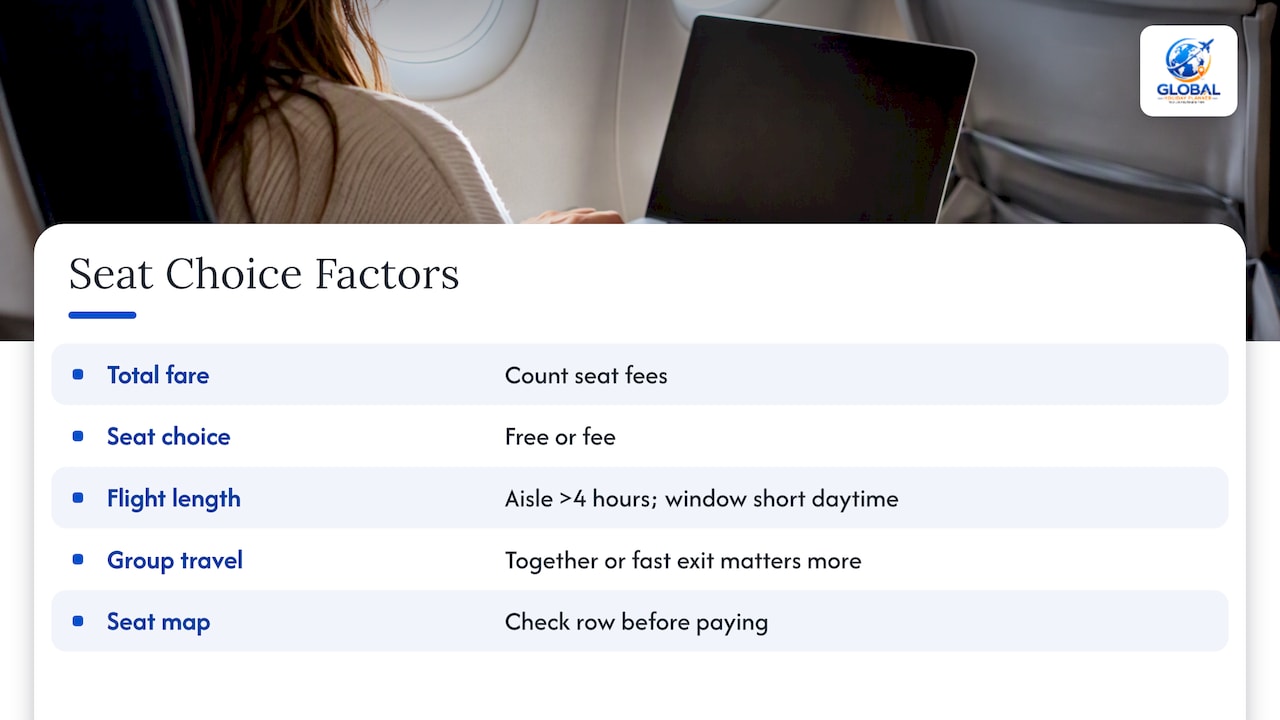
When we help travelers compare flights side by side, we encourage them to ask three things. What is the real total fare once seat fees are counted? Is the flight long enough that movement matters? And does the airline let you choose a seat free, or only for a fee? Often the cheapest fare is not the cheapest trip once you pay to sit where you want. For families, groups and business travelers, sitting together or getting off fast usually matters more than the side.
Our view: if you are undecided, take the aisle on flights over four hours and the window on short daytime hops. Then check the row on a seat map before you pay.
— Global
Compare flights and seat costs before you book
Seat choice is easier when you can see the whole fare. On Global Holiday Planner you can compare flights across airlines and look at the total cost, so you know what a seat-inclusive fare really costs before you commit. Pair it with a hotel, a car or an airport transfer and you can plan the whole trip in one place.

If you land after a long flight, you can also line up a ride in advance with our airport transfers.
Practical tips for a better seat
- Check the seat map when you book, not at the airport. The best seats are taken first.
- Look at the row, not only the letter. Recline, window alignment and nearby galleys vary.
- Know your fare’s rules. Many basic fares charge for seat selection or assign seats at check-in.
- Set an alert to check in early. Many airlines open check-in 24 hours before departure, and seats sometimes open up.
- Pack for the seat you get. A pillow and noise-canceling headphones help a window sleeper. A small stretch routine helps an aisle sitter.
- Be polite on swaps. If someone asks to switch, compare the row and the side first.
FAQ
Is a window or aisle seat better?
It depends on what you value. The window is better for sleeping, privacy and views, while the aisle is better for moving, using the bathroom and leaving the plane quickly. For flights longer than four hours, many travelers prefer the aisle for circulation. For short daytime flights, the window is a pleasant pick.
What does an aisle seat mean on a flight?
An aisle seat is a seat next to the main walkway of the cabin, so you can step out without climbing over anyone. A window seat is next to the aircraft wall. A middle seat sits between two others and has no direct access to either.
Where should you not sit on an airplane?
The last row is the usual one to avoid. It often has limited recline, sits near busy lavatories and galleys, and can feel more turbulence. Rows ahead of exit rows and seats with a missing window are also worth checking on a seat map.
How do I choose a seat on a plane?
Start with your priority: sleep, movement or view. Then open your airline’s seat map and compare rows, using a tool such as AeroLOPA or SeatMap.app for more detail. Finally, check whether the seat carries a fee and what the total fare comes to.
Is the aisle seat better on long-haul flights?
For many travelers, yes, because standing and walking every hour or two is easier. If you sleep deeply and rarely get up, a window seat can still work better. A middle-block aisle on a 2-3-2 wide-body is often the least disturbed aisle seat.
Sources
- NDTV: The flight seat debate, aisle or window
- SmarterTravel: Long-Haul Economy Survival Guide
- SmarterTravel: The Worst Seats on a Plane
- Condé Nast Traveler: 11 Golden Rules for Surviving Your Next Long-Haul Flight
- Condé Nast Traveler: United window seat boarding
- Condé Nast Traveler: Flying long haul with a toddler
- Qantas: Seat selection conditions
- FAA: Exit row seating requirements, 14 CFR 121.585