

CDW and LDW are not the same product wearing two names. In most rentals, CDW covers collision damage to the car, while LDW covers collision plus theft, and neither one is insurance. Both are contract waivers written into the rental agreement, and neither covers injuries or damage you cause to other people or their property. Before you decline either at the counter, check your personal auto policy and your credit card’s rental benefits.
TL;DR:
- Most rental car companies rename the same collision waivers, making it essential to clarify whether theft coverage (LDW) is included before declining.
- LDW generally covers theft in addition to collision damage, but coverage for vandalism, weather damage, and glass may vary by provider and contract details.
- Violating rental terms, such as allowing unauthorized drivers or driving off-road, can void the waiver and leave you responsible for full repair costs and additional fees.
- Your personal auto insurance and credit card benefits often already provide coverage that makes purchasing LDW or CDW unnecessary, but verify deductibles and exclusions beforehand.
- Comparing protection options in advance, including third-party insurers and bundled packages, helps avoid costly upsells at the rental counter and ensures adequate coverage based on your risk profile.
Table of Contents
- CDW vs LDW: The Core Differences at a Glance
- What CDW and LDW Actually Pay for
- Actions That Void Your Waiver Without You Realizing It
- How Your Own Insurance and Credit Card Fit into This
- Should You Buy CDW or LDW? A Decision Workflow That Actually Works
- What CDW and LDW Actually Cost You
- Our Take on Rental Waivers
- Compare Rental Protection Options Before You Book
- Sources
- FAQ
CDW vs LDW: The Core Differences at a Glance
Rental companies love to make this confusing by renaming the same basic products. Strip away the branding and the differences boil down to four things.
- CDW waives your financial responsibility for collision damage to the rental car. It’s a contractual release, not an insurance policy.
- LDW does everything CDW does, plus it typically adds theft protection, covering the vehicle if it’s stolen during your rental period.
- Neither one touches third-party liability or your personal belongings inside the car. That’s a separate coverage entirely.
- Labels shift by company and country. A “damage waiver” in Ireland might function like American LDW, and a supplier in Australia might call collision-only cover something else entirely.
The overlap is bigger than the gap. If you’re comparing a CDW insurance vs LDW insurance quote at the same counter, ask specifically whether theft is included, because that’s usually the whole story.
What CDW and LDW Actually Pay for
Both waivers exist to erase a bill you’d otherwise owe the rental company, but the size of that bill depends on what actually happened to the car.
CDW typically covers:
- Collision repair costs from an accident, regardless of fault
- Total-loss replacement if the car is damaged beyond repair
- Loss-of-use fees the rental company charges while the car sits in the shop (though this varies by contract)
LDW covers all of that, plus theft. LDW is generally the broader product, built to cover the car if it disappears from a parking lot, not just if you dent it.
Where things get messy is vandalism, glass damage, and weather. Some contracts fold these into the waiver automatically. Others carve them out as separate line items you’ll pay regardless of which waiver you bought. A cracked windshield from a highway rock might be covered under one company’s CDW and excluded under another’s, so read the actual rental agreement, not just the counter agent’s summary.
Here’s a concrete example: if someone breaks into your rental and steals the stereo but leaves the car untouched, CDW alone likely won’t help. LDW, because it includes theft, generally would. If the same car gets sideswiped in a parking lot, both waivers typically respond the same way.
Actions That Void Your Waiver Without You Realizing It
A waiver only protects you if you follow the rental agreement to the letter. Rental companies build in exclusions, and voiding conditions can leave you owing full repair costs plus extra fees on top.
Common ways to void CDW or LDW coverage:
- Letting an unauthorized driver, someone not listed on the contract, get behind the wheel
- Driving under the influence of alcohol or drugs
- Taking the car off-road or onto unpaved terrain the agreement excludes
- Using a personal rental for commercial purposes, like deliveries or ridesharing
- Failing to file a police report or notify the rental company promptly after an incident
If the waiver gets voided, you’re not just on the hook for repairs. You could face loss-of-use charges, administrative fees, and sometimes diminished-value claims stacked on top of each other, which can add up to more than the actual repair cost.
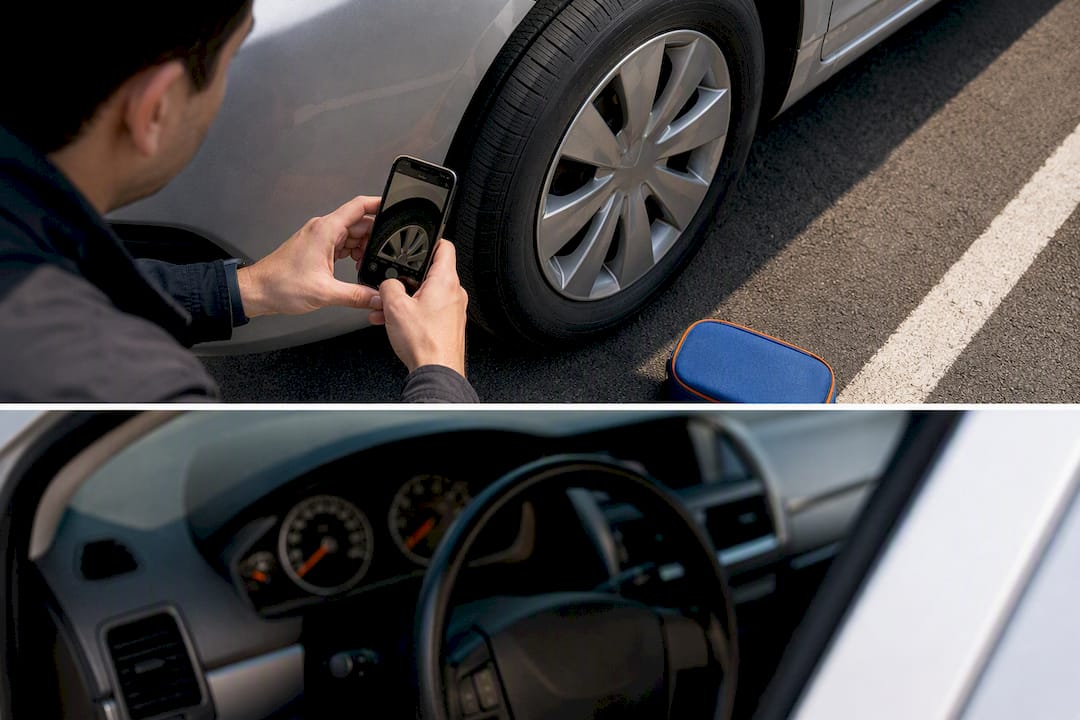
Pro Tip: Photograph every side of the car, the odometer, and the fuel gauge before you drive off the lot, then do it again when you return it. If anything happens during the rental, file a police report immediately and keep a copy of your signed rental agreement. Those three habits settle most disputes before they start.
How Your Own Insurance and Credit Card Fit into This
Before you hand over your card for a daily waiver fee, figure out what you’re already paying for elsewhere. There’s real overlap here, and skipping this step is how people pay twice for the same protection.
- Call your auto insurer. Personal collision and comprehensive coverage often extends to rental cars, but confirm your deductible and whether it applies to rentals specifically.
- Check your credit card’s benefits guide. Most cards offer secondary coverage, meaning your personal insurance pays first and the card covers what’s left. A handful of premium cards offer primary coverage, which skips your personal policy entirely.
- Confirm whether you’re renting for business. Personal auto coverage typically will not extend to commercial use. Business renters need a commercial auto policy with a hired-auto extension, or an HNOA endorsement, verified in writing before travel.
Even with solid personal coverage, loss-of-use charges may not be covered by your policy, which is exactly the gap that leads some fully-insured renters to buy the waiver anyway.
Should You Buy CDW or LDW? A Decision Workflow That Actually Works
Skip the guesswork at the counter. Run through this before you get to the rental desk, not while an agent is waiting on your answer.
- Confirm your personal policy’s rental extension and deductible. If your deductible is $1,500, and the theft rate in your destination is a real concern, that number alone might justify the waiver.
- Pull up your card’s rental coverage terms, specifically whether it’s primary or secondary, and whether it excludes trucks, exotic cars, or extended rentals (many cards cap coverage at 15 or 31 days).
- Do the math on worst-case exposure. Compare the daily waiver cost across your trip length against the deductible and fees you’d pay without it.
Buy the waiver when: you have no personal coverage, you’re renting in a high-theft area, or you’re driving something expensive enough that a deductible would hurt.
Decline it when: you’ve confirmed primary coverage from your card or insurer, and the deductible you’d pay is one you can comfortably absorb.
Pro Tip: Renting a car that costs more than a month’s rent to replace? Don’t rely on memory for your coverage terms. Screenshot your card’s benefits page and your insurance ID card before you leave home, so you have proof on hand if a rental agent disputes your decline.
What CDW and LDW Actually Cost You
Waiver pricing varies by company, vehicle class, and location, but the fee gets added to your daily rental rate regardless of when you buy it. Where you buy it changes your leverage more than the coverage itself.
- Prebooking during reservation often locks in a lower daily rate than a counter upsell, and it removes the pressure of deciding on the spot.
- Counter upsells tend to run higher, partly because agents are trained to sell add-ons and partly because you have less time to compare.
- Third-party excess insurers can cover the rental company’s deductible for a fraction of the daily waiver fee, functioning as an alternative to buying the waiver directly from the counter.
- Bundled protection packages that combine CDW/LDW with roadside assistance or personal effects coverage can be worth it, but only if you’d buy each piece separately anyway.
Our Take on Rental Waivers
Most advice on this topic treats CDW and LDW like a coin flip, buy one or the other and move on. That misses the actual decision, which isn’t CDW vs LDW at all. It’s whether you need a waiver in the first place, and most renters skip that question entirely because the counter agent frames it as urgent.
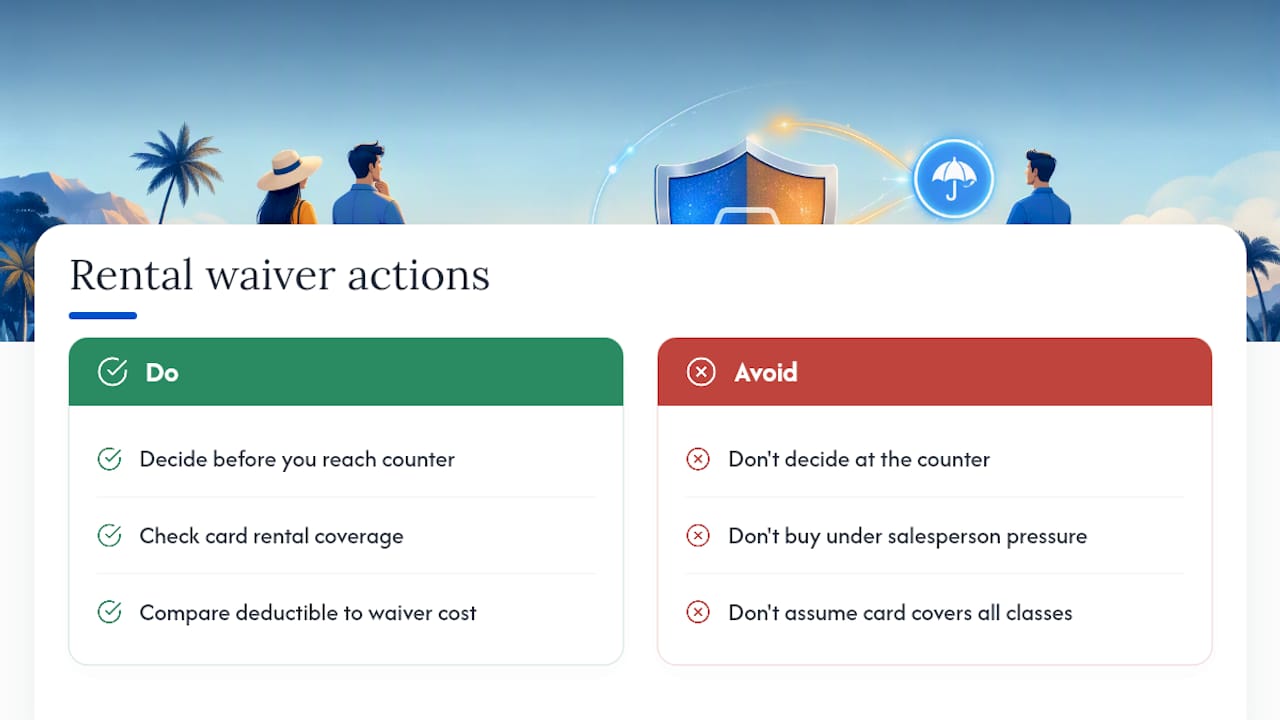
The waiver industry benefits from confusion. Renaming the same basic collision waiver five different ways across five rental brands isn’t an accident. It’s friction designed to make comparison shopping exhausting enough that you just buy whatever’s offered. The renters who come out ahead are the ones who treat the five minutes before arriving at the counter as the real decision point, not the moment the agent slides the add-on screen toward them.
We’d also push back on the idea that declining is always the “smart” move. If your credit card’s rental terms exclude the vehicle class you booked, or your personal deductible is higher than a week of waiver fees, buying the waiver is the rational choice, not the one that failed to do its homework. The goal isn’t to always decline. It’s to know exactly why you’re saying yes or no before you’re standing at the counter.
— Global
Compare Rental Protection Options Before You Book
Working out whether a rental already bundles protection, or leaves it as a pricey counter add-on, is exactly the kind of comparison Global Holiday Planner is built for. Our car rental search surfaces daily rates alongside supplier disclosures on optional CDW and LDW, so you can see what’s included before you commit, rather than discovering the upsell screen at the desk.

If you’re weighing a third-party alternative to counter waivers, it’s also worth comparing options through our travel insurance guide, which lays out plans that sometimes cover rental deductibles as part of a broader policy. Either way, the move is the same: compare your options before you’re standing at the rental desk with an agent waiting on an answer. Start by checking rates and protection details on our car rental page for your next trip.
Sources
- Credit cards and car rental insurance | Bankrate
- Damage waiver — Wikipedia
- Does car insurance cover rental cars? | GEICO
FAQ
Do I need CDW if I already have LDW?
No. LDW is the broader waiver and typically includes everything CDW covers, plus theft protection, so buying both is redundant.
Is LDW insurance worth it?
It depends on your existing coverage. If your personal auto policy or credit card already covers collision and theft on rentals, LDW may be an unnecessary expense; if you have neither, it can protect you from a large out-of-pocket bill.
What is the actual difference between CDW and LDW insurance?
CDW usually covers collision damage only, while LDW covers collision damage plus theft, and both are contractual waivers rather than regulated insurance products, per Wikipedia’s overview of damage waivers.
Should I buy CDW or LDW when renting a car?
Buy one if you lack personal or card coverage, you’re renting in a high-theft area, or the deductible you’d otherwise pay feels risky; decline if you’ve confirmed solid primary coverage elsewhere. You can compare rates and included protection for your specific rental through Global Holiday Planner’s car rental search before you travel.
Does either waiver cover liability if I hit another car?
No. Both CDW and LDW address damage to the rental vehicle itself, not injuries or property damage you cause to someone else, which requires separate liability coverage confirmed through your policy or an SLI add-on.
[…] someone not named on the contract is driving. Read your own contract for the exact wording. Our CDW vs LDW guide explains how these waivers work and how to verify what your own policy or card […]