
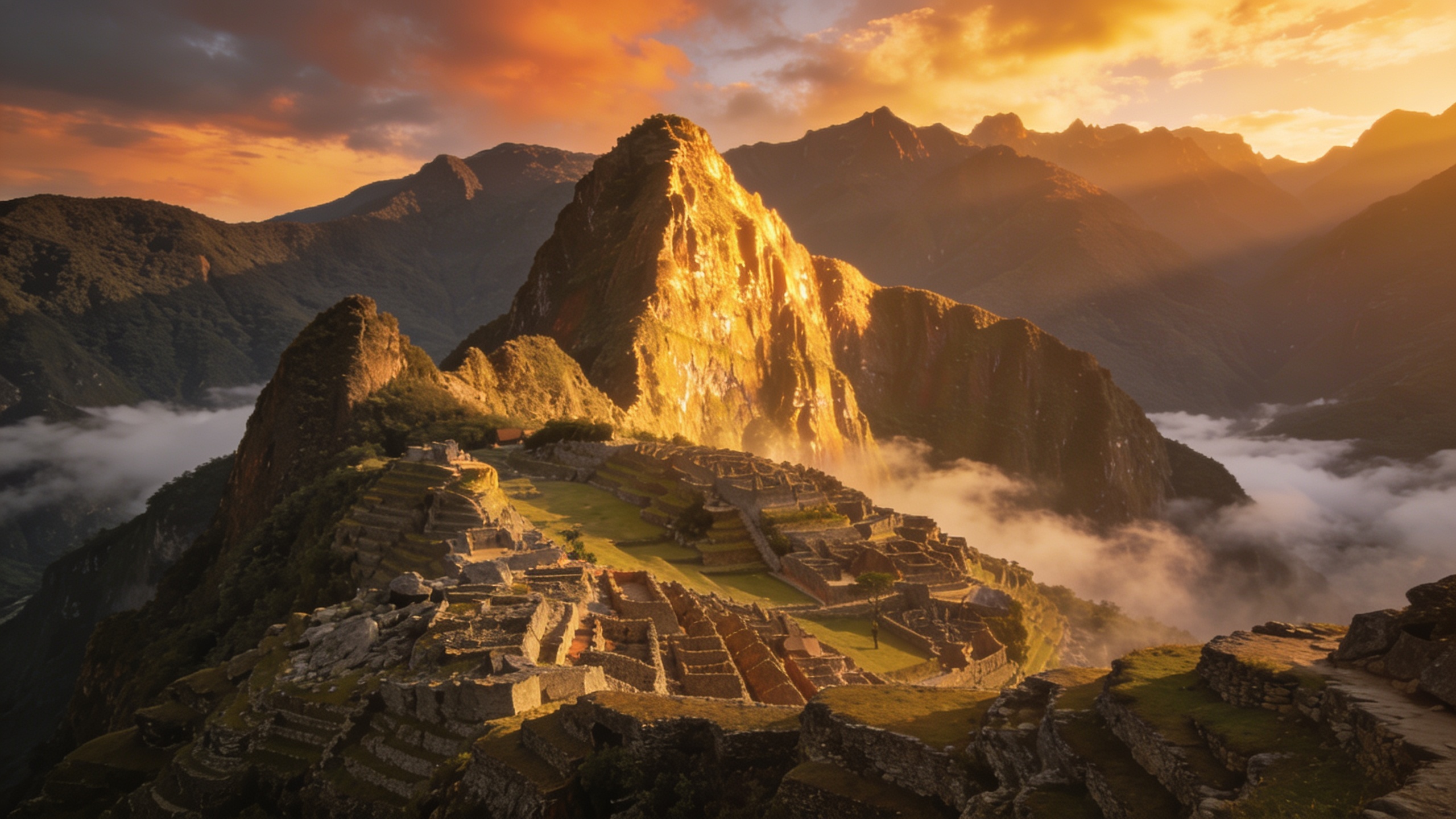
Everybody’s got that mental bucket list. You know the one. The places that feel almost made-up until you’re standing there, watching the sun crawl over Machu Picchu or floating above a reef in the Maldives so blue it looks Photoshopped. These are the trips people talk about for the rest of their lives. So I pulled together 20 of them here, grouped by the kind of experience they deliver, plus the practical stuff nobody tells you until it’s too late to do anything about it.

Table of Contents
- What Actually Makes a Place “Bucket List” Worthy?
- The Natural Wonders That’ll Ruin Every Other View for You
- The Ancient Landmarks Worth Crossing an Ocean For
- Islands and Beaches That Deserve the Hype
- For the Thrill Seekers: Wildlife and Adventure
- Cities That Belong on Everyone’s List
- So What Does All This Cost?
- How to Actually Plan One of These Trips
- FAQ
What Actually Makes a Place “Bucket List” Worthy?
A true bucket list destination is a place so rare, so overwhelming, or so emotionally loaded that seeing it feels less like a vacation and more like an accomplishment. That’s the short version. Most of them share three things: something you genuinely can’t find anywhere else on Earth, a pull that’s historical or emotional (sometimes both), and just enough difficulty getting there that arriving feels earned.
Here’s what surprises people, though. Not every one of these costs a fortune or eats a month of vacation days. Santorini and Kyoto? Very doable with a little planning. Antarctica or the Galápagos? Those’ll test your budget and your patience. But the thing that ties all 20 together is how people describe them afterward. Nobody says “yeah, it was nice.” They say it changed how they see the world. That’s the whole point.
The Natural Wonders That’ll Ruin Every Other View for You
Some landscapes are just too big for a camera. You take the photo, you look at it later, and it’s a fraction of what your eyeballs actually registered. These five are exactly that kind of place, and honestly, timing your visit around the right season matters more than most people realize.
Grand Canyon, United States
The Grand Canyon runs roughly 277 miles long and up to 18 miles across, carved out over millions of years by the Colorado River doing its slow, patient thing. Most first-timers go straight to the South Rim, which stays open all year and is the easiest to reach from Las Vegas or Phoenix. Go in spring or fall if you can. Summer up there is brutal, and hiking the rim trails in that heat is a good way to end your trip early and in an ambulance.
Iguazu Falls, Argentina and Brazil
Iguazu isn’t one waterfall. It’s a sprawling system of around 275 separate falls straddling the Argentina-Brazil border, and it makes both Niagara and Victoria Falls look modest. My advice? Do both sides. The Argentine side puts you right up against the water on walkways where you’ll get soaked and won’t care. The Brazilian side gives you those wide, jaw-dropping panoramas across the gorge. Wet season (December through March) means the most water thundering over the edge, but also the biggest crowds. Trade-offs.
Victoria Falls, Zambia and Zimbabwe
Victoria Falls is one of the largest waterfalls on the planet by combined width and height, and the locals call it “Mosi-oa-Tunya,” which translates to “The Smoke That Thunders.” Once you see the spray column rising from miles away, you get it. It sits on the Zambezi between Zambia and Zimbabwe, and you can visit from either country. Each gives you a different view plus its own menu of slightly terrifying activities like bungee jumping and white-water rafting. The falls peak right after the rainy season, usually April through June.
Northern Lights, Iceland and Norway
The aurora borealis happens when charged particles from the sun slam into Earth’s atmosphere near the poles, and Iceland and Norway are two of the most reliable places on Earth to catch it. Peak season runs late September through March, when the nights are long and pitch dark. Fair warning though: chasing the aurora takes patience and a fair bit of luck. You need clear skies and almost no light pollution, so most people base themselves well outside the cities and just… wait. Sometimes for hours. Sometimes for nothing. And then sometimes the whole sky goes green and it’s worth every cold minute.
Great Barrier Reef, Australia

Stretching more than 2,300 kilometers off the Queensland coast, the Great Barrier Reef is the biggest coral reef system on Earth and a UNESCO World Heritage Site. Snorkeling and dive boats head out daily from Cairns and Port Douglas, dropping you into coral gardens full of sea turtles and reef sharks (the harmless kind, mostly). Australian winter, June through October, usually gives you the calmest water and the clearest visibility.
The Ancient Landmarks Worth Crossing an Ocean For
There’s something about standing in front of a structure that’s outlived every civilization that built it. These five sites connect you to centuries, sometimes thousands of years, of human ambition frozen in stone. Millions of people show up for exactly that feeling.
Machu Picchu, Peru
Machu Picchu is a 15th-century Inca citadel tucked high in the Peruvian Andes, lost to the wider world until 1911 and named a UNESCO World Heritage Site in 1983. Getting there usually means a train to Aguas Calientes and then a bus or hike up, or if you’re feeling ambitious, the multi-day trek along the Inca Trail. Book your permits way ahead. They cap how many people can enter each day to protect the place, and those slots vanish fast.
Petra, Jordan
Petra is an entire ancient city carved directly into rose-colored sandstone by the Nabataeans over 2,000 years ago, and it landed on the UNESCO bucket list in 1985. The Treasury, that famous facade that appears at the end of a narrow slot canyon called the Siq, is one of the most photographed things in the whole Middle East. And when you finally see it revealed after that long walk through the canyon walls, you’ll understand why. Come in spring or fall. Summer in the Jordanian desert is no joke.
Taj Mahal, India
The Taj Mahal in Agra is a white marble mausoleum that Mughal emperor Shah Jahan built for his wife Mumtaz Mahal, constructed between 1632 and 1653. It’s widely considered the finest example of Mughal architecture anywhere, and people flock to it all year long. Go at sunrise if you possibly can. The light is softer, the marble glows, and the crowds are a shadow of what they become by midday. Pair it with Delhi and Jaipur and you’ve got the classic “Golden Triangle” loop through northern India.
Angkor Wat, Cambodia
Angkor Wat is a 12th-century temple complex built by the Khmer Empire near Siem Reap, and it’s still the largest religious monument in the world by land area. Sunrise over its towers, mirrored in the reflecting pools out front, is one of those iconic Southeast Asia moments that lives on a thousand postcards. Grab a multi-day pass so you can wander the wider Angkor Archaeological Park too. Ta Prohm (the one with trees eating the temple) and Angkor Thom are absolutely worth the extra time.
Pyramids of Giza, Egypt
Built around 2560 BC for Egyptian pharaohs, the Pyramids of Giza are the only surviving wonder of the ancient Seven Wonders of the World, sitting right on the edge of modern Cairo. The Great Pyramid of Khufu is the biggest of the three, and the Great Sphinx crouches nearby, carved from one solid limestone ridge. Get there early. You’ll dodge both the heat and the tour buses, and there’s nothing quite like having a few quiet minutes with something that old.
Islands and Beaches That Deserve the Hype
Tropical destinations scratch a completely different itch. This is less about accomplishment and more about switching your brain off entirely. These four consistently top the world’s best-beach bucket lists, and a couple of them are basically honeymoon shorthand at this point.
Maldives
The Maldives is a scatter of roughly 1,192 coral islands in the Indian Ocean, famous for overwater bungalows, impossibly turquoise lagoons, and diving that’ll spoil you for life. Most resorts take up their own private island, which is about as secluded as travel gets. Couples weighing their options often find it worth checking out a dedicated guide like the Top 10 Honeymoon Destinations for Couples in 2026, since the Maldives lands near the top of pretty much every romantic-getaway ranking out there.
Bora Bora, French Polynesia
Bora Bora, part of French Polynesia, is that turquoise lagoon wrapped in a coral reef with Mount Otemanu spiking up dramatically from the middle. The overwater bungalow resorts here are among the most photographed places to sleep anywhere on Earth, and snorkeling trips routinely bump into reef sharks and stingrays in water shallow enough to stand in. It’s remote, so most travelers connect through Tahiti’s Faa’a International Airport before a short hop over.
Santorini, Greece
Santorini is a volcanic island in Greece’s Cyclades, all whitewashed walls and blue domes clinging to cliffs above the Aegean. That surreal landscape was born from a massive volcanic eruption thousands of years ago, and the caldera views from Oia and Fira remain some of the most swooned-over sunset spots in the world. Late spring and early fall give you the warm weather without the summer crush. Honestly, August in Oia is a bit of a zoo.
Bali, Indonesia
Bali does a little of everything: terraced rice fields, Hindu temples, surf beaches, wellness retreats. That’s why it works for basically any kind of traveler. Ubud pulls in the yoga-and-culture crowd, while Seminyak and Canggu are where the surfers and the nightlife people end up. The dry season, April through October, is generally your best bet.
For the Thrill Seekers: Wildlife and Adventure
If your idea of a great trip involves getting a little closer to nature at its rawest, this is your section. These four remain the holy grail for people chasing wildlife, wide-open wilderness, and a physical challenge that leaves a mark.
Serengeti National Park, Tanzania
The Serengeti is famous for the Great Migration, that annual stampede of roughly 1.5 million wildebeest plus hundreds of thousands of zebra rolling across the plains chasing fresh grass. Safaris usually run June through October for the migration and dry-season game viewing, though frankly you’ll see incredible wildlife almost any time of year. Multi-day lodge or camping safaris are still the way most people experience it, and I’d argue the camping option gets you closer to the whole point.
Galápagos Islands, Ecuador
The Galápagos sit about 600 miles off Ecuador’s coast, and they’re famous for the strange, fearless wildlife that inspired Darwin’s theory of evolution after his 1835 visit. Giant tortoises, marine iguanas, blue-footed boobies, all living pretty much undisturbed by us. Strict conservation rules cap visitor numbers to keep it that way, which is exactly as it should be. Most people explore by small cruise ship with a certified naturalist guide, and those guides make an enormous difference to what you actually understand about the place.
Patagonia, Chile and Argentina
Patagonia is a huge, barely-populated stretch at the bottom of South America, split between Chile and Argentina, all jagged peaks and glaciers and wind that’ll knock you sideways. Torres del Paine in Chile and Los Glaciares in Argentina (home to the Perito Moreno Glacier) are the two big hubs for hikers. The Southern Hemisphere summer, November through March, gives you the most stable weather, which matters a lot when you’re out on the trail and the sky can turn on you in twenty minutes.
Antarctica
Antarctica is the coldest, most remote continent on the planet, and it’s quietly become one of the most coveted trips going, precisely because so few people will ever set foot there. Expedition cruises leave from Ushuaia, Argentina, crossing the notoriously rough Drake Passage to reach the Antarctic Peninsula, where you’ll meet penguins, seals, and ice formations that make you feel very, very small. The season only runs November through March, during the Antarctic summer, when landings are even possible.
Cities That Belong on Everyone’s List
Great cities earn their spot by mixing centuries of history with a culture that’s still very much alive and kicking. These two are permanent fixtures on just about every serious traveler’s bucket list, and for good reason.
Kyoto, Japan
Kyoto was Japan’s imperial capital for more than a thousand years, and it still holds around 2,000 temples and shrines, including the Fushimi Inari Shrine with its endless tunnel of vermilion torii gates. Cherry blossom season in late March and April, and the ferocious autumn colors in November, are the two most popular times to visit. They’re also the most packed, so pick your battles. Families doing Japan often stitch Kyoto together with Tokyo and Osaka, and if you’re planning a multi-generational trip, it’s worth skimming something like Family Vacation Planning: A Step-by-Step Guide for Parents before you lock in an itinerary, because kids and temple-hopping don’t always mix without some strategy.
Paris, France
Paris (the Eiffel Tower, the Louvre, Notre-Dame) is one of the most visited cities on Earth and a fixture on basically every travel bucket list ever written. The Eiffel Tower, finished in 1889 for the World’s Fair, still anchors the skyline and hands you a killer panoramic view from its upper platforms. Spring and early fall bring nicer weather and much shorter lines than the summer stampede. And yes, it lives up to the hype. Mostly.
So What Does All This Cost?

Costs swing wildly here depending on where you’re going, how you travel, and when. But a few patterns hold up. The remote, logistically painful destinations like Antarctica and the Galápagos command premium prices because access is limited and groups have to stay small. Meanwhile, places with solid budget infrastructure, like Southeast Asia and chunks of South America, give you way more room to travel cheap or splurge as you like.
| Destination | Best Time to Visit | Typical Trip Length | General Travel Style |
|---|---|---|---|
| Grand Canyon, USA | March–May, Sept–Nov | 2–4 days | Budget to mid-range |
| Machu Picchu, Peru | May–September (dry season) | 4–7 days | Mid-range to luxury |
| Maldives | November–April | 5–7 days | Luxury-focused |
| Bali, Indonesia | April–October | 7–10 days | Budget to mid-range |
| Serengeti, Tanzania | June–October | 5–8 days | Mid-range to luxury |
| Antarctica | November–March | 10–14 days | Luxury (expedition cruise) |
| Kyoto, Japan | March–April, November | 4–6 days | Mid-range |
| Santorini, Greece | May–June, Sept–Oct | 3–5 days | Mid-range to luxury |
Prices move constantly with airfare, season, and exchange rates, so do yourself a favor and compare flights, accommodations, and travel insurance side by side before you commit to dates. Don’t trust some estimate you found floating around online two years ago.
How to Actually Plan One of These Trips
Every one of these trips starts with three questions: when to go, how long you can realistically be away, and what paperwork or shots you need before you leave. Sort those out early and you sidestep about 90% of the last-minute panic that wrecks otherwise decent plans.
First thing, dig into the entry requirements for your specific destination. Visa rules, passport validity, health protocols, they all vary hugely country to country and they can change without much warning. The long-haul trips especially (Antarctica, the Galápagos, a Tanzania safari) really benefit from proper travel insurance covering trip interruption, medical evacuation, and lost luggage. When you’re that far from the nearest hospital or gear shop, it’s not a luxury.
One thing people forget: if you’re going away for weeks at a time, deal with home stuff before you leave, not after you drag yourself back through the door jet-lagged and useless. Some travelers actually use that long absence to knock out home projects they’ve been putting off, like exterior repainting. A company such as Minneapolis House Painting can handle a residential paint job while you’re off ticking Machu Picchu or the Serengeti off your list, so you come home to something fresh instead of a to-do list that never got shorter.
And the booking logistics matter just as much as the destination itself. Compare flights across different airlines and dates, actually read the hotel cancellation policies, and confirm whether airport transfers or train connections are included in whatever you’re booking. For multi-stop trips, say Kyoto plus Tokyo, or Santorini plus Athens, build in buffer days between connections. One delayed flight shouldn’t be able to topple your whole itinerary like dominoes. Families especially do better pacing things around kids’ energy and nap schedules instead of trying to cram in every single landmark, which is exactly why a bit of structure pays off so much on the bigger trips.
FAQ
What’s the single most popular bucket list destination?
There’s no official scoreboard, but Paris, the Maldives, Machu Picchu, and the Great Barrier Reef show up at or near the top of most global lists over and over. It’s that combo of natural beauty, deep history, and actually being reachable.
How far ahead should I book one of these?
Depends entirely on where you’re going. Places with daily visitor caps like Machu Picchu, or seasonal expedition cruises like Antarctica, often need booking six months to a year out. More accessible spots like Santorini or Kyoto you can sometimes swing a few months ahead, especially if you dodge peak season.
Are these always going to be expensive?
Nope. Bali, a lot of Southeast Asia, even the Grand Canyon, all offer genuinely good budget options. Others like the Maldives, Antarctica, and Bora Bora are just inherently pricey because they’re remote and there simply aren’t many rooms to go around.
When’s the best time to hit multiple destinations in one trip?
It hinges on the regions, since seasons flip depending on hemisphere and climate. As a rule though, the shoulder seasons (spring and fall) give you milder weather, thinner crowds, and lower prices across most of this bucket list. Safari and Antarctic travel play by their own rules, so check those separately.
Do I really need travel insurance?
For the remote or physically demanding trips like Antarctica, Patagonia, the Galápagos, or an African safari, yes, strongly recommend it. Medical evacuation out there can cost a fortune and hospitals are far away. Even for the tamer destinations, insurance covering cancellation and lost luggage is a cheap bit of peace of mind on any long international haul.
Look, ticking even a handful of these 20 off your list takes planning, patience, and a willingness to roll with the odd hiccup. But the payoff is a stack of memories no photo will ever fully capture. Whether your next one takes you into the mist of Victoria Falls or up onto the quiet stone terraces of Machu Picchu, the hardest part is just starting to plan. So start.